
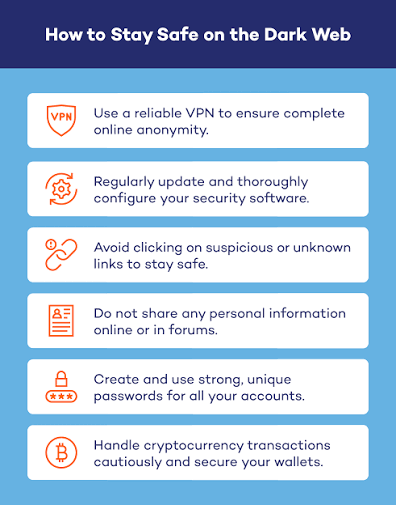
Introduction: Safe Darkweb Browsing Tips
Anonymous networks attract researchers, journalists, cybersecurity professionals, and privacy advocates seeking information beyond conventional search engines. However, these environments also expose users to unique security challenges, including fraudulent websites, malware distribution, phishing attacks, and operational security failures. Understanding safe darkweb browsing tips is therefore essential for anyone exploring privacy-focused networks. For a deeper review, please explore dark web anonymous browsing.
While many guides emphasize software installation and access methods, fewer explain the practical behaviors that reduce risk over time. Security on anonymized networks depends on a combination of technical controls, critical thinking, and consistent verification practices. Users who neglect one area often become vulnerable despite having strong protections elsewhere.
This guide examines the most effective approaches to maintaining security while researching hidden services, identifying trustworthy resources, and reducing exposure to malicious actors.
For more insight, please explore dark web safety overview.
Why Security Awareness Matters on Anonymous Networks
The hidden internet ecosystem differs substantially from the conventional web. Traditional websites rely on centralized infrastructure, domain registrars, and public oversight mechanisms. In contrast, onion services operate in decentralized environments where identity verification and institutional accountability remain limited. For more insight, please see cybersecurity risks associated with dark web activity.
Because of this structure, malicious actors exploit anonymity to distribute phishing pages, cloned marketplaces, malicious downloads, and fraudulent services. Consequently, users who rely exclusively on visual appearance or search engine listings often expose themselves to significant risks.
One major misconception involves assuming anonymity equals safety. Although privacy technologies help conceal user identity, they do not automatically verify the legitimacy of destinations. Therefore, operational security becomes equally important as technical anonymity. For more insight, please explore Tor Browser Security Recommendations.
Security researchers frequently identify several recurring threat categories:
- Fake onion domains
- Credential harvesting websites
- Malware distribution platforms
- Fraudulent service directories
- Impersonation and social engineering attacks
- Exit scams and reputation manipulation schemes
Furthermore, users often underestimate behavioral vulnerabilities. Curiosity, urgency, and trust in community recommendations frequently influence decision-making more than technical analysis.
To understand better, please review dark web link verification techniques.
Developing strong browsing habits significantly reduces these risks and establishes a foundation for safer exploration.
Essential Technical Preparations Before Browsing
One of the most important safe darkweb browsing tips involves preparing the browsing environment before accessing any hidden services. Security failures typically occur because users prioritize access speed over protective configuration.
The first layer of protection involves using dedicated browsing environments. Security professionals often separate anonymous research activities from personal computing environments. This separation minimizes data leakage and reduces the impact of potential compromise. For more details, please explore Europol’s Internet Organised Crime Threat Assessment (IOCTA) reports.
Additional protective measures include:
Operating System Isolation
Using isolated environments helps prevent malicious software from affecting primary systems. Virtualization and compartmentalization techniques reduce exposure while improving operational security practices.
Browser Integrity Verification
Users should always verify browser downloads through official channels and integrity signatures. Downloading privacy tools from unofficial mirrors creates opportunities for malware insertion and credential theft.
Network Exposure Reduction
Disabling unnecessary browser extensions, plugins, and external scripts minimizes attack surfaces. Moreover, reducing background network activity prevents accidental information disclosure.
Identity Separation
Maintaining distinct identities for anonymous browsing activities prevents cross-correlation attacks. Reusing usernames, email addresses, or behavioral patterns can undermine anonymity protections.
Security preparation should never be considered a one-time task. Instead, users should continuously reassess their operational security based on evolving threats and changing research objectives.
Recognizing Fake Onion Services and Clone Websites
A substantial portion of security incidents occurs because users fail to recognize fraudulent websites. Consequently, learning identification techniques represents one of the most practical safe darkweb browsing tips available.
Fraudulent onion services typically employ several deceptive strategies:
Domain Similarity Attacks
Attackers frequently create onion addresses that closely resemble trusted services. Minor character substitutions often escape visual detection, particularly when users copy addresses from unreliable sources.
Interface Cloning
Modern scam operators duplicate website layouts, logos, navigation systems, and user interfaces. As a result, visual appearance alone rarely serves as a reliable indicator of legitimacy.
Manipulated Reputation Indicators
Many fraudulent services create fabricated reviews, artificial ratings, and manufactured community endorsements. These tactics exploit psychological trust mechanisms rather than technical vulnerabilities.
Fake Security Warnings
Some malicious websites intentionally display alarming notifications to pressure users into immediate action. This urgency reduces careful evaluation and increases compliance.
To explore how cloned services, deceptive websites, impersonation, and manipulated trust signals contribute to online fraud, please explore avoiding darkweb scams.
Additionally, cross-verification remains one of the strongest defenses against deception. Comparing information across multiple independent sources significantly improves confidence in authenticity assessments.
Finding Reliable Information Sources
Locating trustworthy information represents one of the greatest challenges in anonymous environments. Search engines indexing onion services vary significantly in quality, coverage, and verification standards.
Users should avoid relying exclusively on a single directory or search engine. Instead, multiple reference points improve accuracy and reduce manipulation risks.
Similarly, understanding how indexing systems function helps users recognize why search results sometimes contain malicious or outdated content.
Reliable research practices include:
- Cross-referencing multiple sources
- Verifying publication history
- Examining historical uptime
- Reviewing independent discussions
- Checking for consistency over time
- Avoiding urgency-based decisions
By combining technical verification with critical evaluation, users substantially improve their ability to identify legitimate resources while minimizing exposure to harmful services.
Browser Configuration and Operational Security Practices
Technical preparation plays a major role in maintaining privacy while navigating hidden services. Although many people focus on downloading privacy tools, operational security habits often determine actual risk exposure. Consequently, effective security practices require consistent attention to browser settings, network behavior, and digital footprints.
When discussing safe darkweb browsing tips, security researchers frequently emphasize compartmentalization. Users should separate research activities from everyday online accounts, devices, and browsing habits. This approach reduces the possibility of linking identities across different platforms.
The official Tor Browser includes several built-in protections. However, additional precautions remain important. Users should avoid changing browser window sizes, installing extensions, enabling browser plugins, or modifying default fingerprinting protections. Each modification potentially creates unique identifiers that reduce anonymity.
Virtual machines provide another layer of isolation. Researchers often deploy disposable environments that can be reset after each session. Similarly, live operating systems reduce persistent data storage and limit forensic traces on host devices.
Network isolation also deserves attention. Public Wi-Fi networks introduce unique monitoring risks, while home connections may create identifiable patterns over time. Therefore, some analysts recommend using dedicated environments exclusively for research activities.
Authentication practices matter as well. Password reuse remains one of the most common operational security failures. Instead, users should rely on password managers and generate unique credentials for every service they access.
Additionally, encrypted communication channels help protect sensitive information exchanges. While encryption does not eliminate risk, it reduces opportunities for interception and unauthorized monitoring.
Researchers should also disable unnecessary file downloads whenever possible. Documents may contain hidden network requests, tracking mechanisms, or embedded metadata. As a result, opening files in isolated environments significantly improves security posture.
Recognizing Scams, Impersonation, and Malicious Services
Many security incidents occur because users trust websites that appear legitimate at first glance. However, sophisticated impersonation tactics continue evolving across anonymous networks. Understanding deception techniques therefore remains one of the most valuable safe darkweb browsing tips available.
Fraudulent mirror sites represent a widespread problem. Attackers frequently replicate trusted services, forums, and directories while modifying wallet addresses or authentication pages. Victims often discover the fraud only after losing funds or exposing sensitive information.
To understand better, please review dark web tracking methods, which examines how researchers analyze changing infrastructure, suspicious online activity, and patterns that may help identify deceptive services.
Similarly, cloned marketplaces frequently exploit established reputations. Visual similarities, copied branding, and fabricated reviews create convincing environments designed to attract inexperienced users.
Several warning indicators commonly appear during scam operations:
- Recently created domains with limited reputation history
- Missing cryptographic verification information
- Inconsistent administrative announcements
- Unusual payment requests
- Poorly maintained security documentation
- Sudden changes in service policies
- Excessive promotional language
Social engineering attacks also remain highly effective. Threat actors frequently exploit curiosity, urgency, or fear to encourage risky behavior. Consequently, researchers should maintain skepticism toward unsolicited messages, private invitations, or exclusive offers.
To get more context, please explore phishing on the darknet for a broader examination of deceptive messages, impersonated services, credential harvesting, and social engineering techniques.
Phishing campaigns increasingly target operational security weaknesses rather than software vulnerabilities. Attackers understand that manipulating human behavior often requires less effort than compromising technical systems.
Researchers can reduce exposure by independently verifying addresses, consulting multiple sources, and avoiding impulsive decisions. Although these precautions require additional time, they significantly reduce the probability of compromise.
Ethical Research Practices and Long-Term Security Awareness
Responsible research extends beyond technical protection measures. Ethical considerations, legal awareness, and risk assessment all contribute to sustainable investigative practices. Therefore, researchers should establish clear objectives before exploring anonymous networks.
Understanding the distinction between observation and participation remains particularly important. Many academic researchers, cybersecurity analysts, and journalists study darknet ecosystems without engaging in transactions or prohibited activities. This approach minimizes legal exposure while preserving research integrity.
To learn more about how compromised information can circulate through hidden online environments and create longer-term security consequences, please explore dark web data leak.
Documentation practices also deserve careful consideration. Researchers should maintain detailed notes, verify information across multiple sources, and avoid drawing conclusions from isolated observations. Because misinformation spreads rapidly in anonymous environments, corroboration remains essential.
Long-term digital security requires ongoing education. Threat landscapes continuously evolve, and attackers routinely adapt their tactics. Consequently, effective security practices depend upon continuous learning rather than static checklists.
For more insights into evolving fraud techniques, deceptive online services, and changing security threats affecting anonymous environments, please explore dark web product scams.
Researchers should also monitor developments involving browser security, cryptographic standards, operational security frameworks, and threat intelligence reporting. Maintaining current knowledge improves both analytical accuracy and personal safety.
Ultimately, successful anonymous network research combines technical preparation, critical thinking, and disciplined operational practices. While no strategy eliminates every risk, informed decision-making substantially improves security outcomes.
FAQ: Safe Darkweb Browsing Tips
What are the most important safe practices when accessing the dark web?
The most important practices include using the official Tor Browser, verifying onion addresses, avoiding downloads, and separating research activities from personal accounts. Researchers should also maintain updated software and avoid changing default anonymity settings. Additionally, using isolated environments such as virtual machines can reduce potential exposure. Combining multiple security measures produces stronger protection than relying on a single tool.
Why is onion link verification necessary?
Onion addresses consist of complex character strings that are difficult to remember and verify visually. Attackers exploit this challenge by creating fake domains that closely resemble legitimate services. Verification through trusted directories and cryptographic signatures helps reduce impersonation risks. Therefore, researchers should always confirm addresses before accessing sensitive resources.
Can Tor Browser alone guarantee anonymity?
No. Tor Browser provides strong anonymity protections, but user behavior significantly influences overall security. Logging into personal accounts, downloading malicious files, or sharing identifying information can undermine anonymity protections. Consequently, operational security practices remain equally important. Effective anonymity results from combining technology with disciplined behavior.
Why do researchers use virtual machines for dark web investigations?
Virtual machines provide isolated computing environments that reduce the impact of malicious software or accidental exposure. Researchers can separate investigative activities from their primary operating systems while maintaining greater control over data persistence. Additionally, disposable environments simplify recovery after potential security incidents. This isolation improves both privacy and operational security.
How can users identify fake darknet websites?
Users should verify onion addresses through multiple independent sources and remain cautious of recently created services. Unexpected payment requests, inconsistent announcements, and poor operational transparency often indicate fraudulent operations. Researchers should also compare cryptographic verification information whenever possible. Maintaining skepticism remains one of the most effective defensive strategies.
Conclusion: Safe Darkweb Browsing Tips
Navigating anonymous networks safely requires preparation, patience, and informed decision-making. The most effective safe darkweb browsing tips emphasize operational security, identity protection, verification procedures, and continuous learning. Although anonymous technologies provide valuable privacy protections, user behavior ultimately determines security outcomes. By combining technical safeguards with critical analysis and ethical research practices, individuals can significantly reduce risks while conducting responsible investigations.