
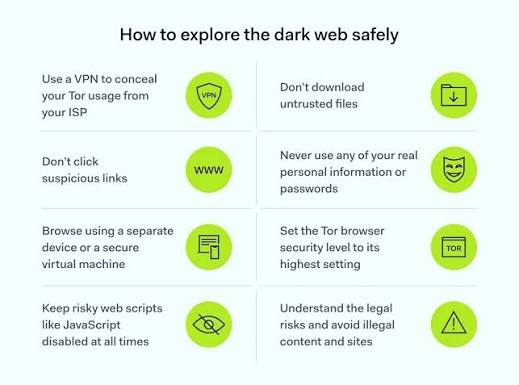
Introduction: Darkweb Safety Tips
Darkweb Safety Tips in accessing anonymous networks requires more than installing privacy software. Researchers, journalists, cybersecurity analysts, and curious internet users often underestimate the operational security challenges associated with hidden services. While anonymity technologies provide important protections, human error remains one of the most significant risk factors.
Understanding effective darkweb safety tips helps reduce exposure to scams, malware, identity correlation, and misinformation. Moreover, responsible browsing practices allow researchers to conduct investigations while minimizing unnecessary security risks. Anonymous networks continue to evolve, and consequently, defensive strategies must evolve as well.
Modern threat actors exploit technical vulnerabilities, social engineering techniques, and operational security mistakes. Therefore, anyone conducting dark web research should approach anonymous environments with preparation and caution rather than curiosity alone.
For more insight, please explore dark web search engines overview.
This guide examines practical security practices, verification procedures, operational security principles, and threat awareness strategies that contribute to safer anonymous network research.
Understanding Why Dark Web Safety Matters
The dark web presents a unique digital environment where anonymity, privacy, and risk coexist. Unlike conventional internet platforms, hidden services often operate without centralized oversight, creating opportunities for both legitimate privacy-focused activities and malicious operations. As a result, security awareness becomes essential. For a broader examination of fraud, deception, and malicious activity within these environments, please explore phishing on the darknet.
Many users mistakenly assume that anonymity networks automatically provide complete protection. However, technical anonymity does not eliminate operational security risks. Browser fingerprinting, phishing attacks, malicious downloads, and social engineering campaigns continue to affect inexperienced users.
One of the most important darkweb safety tips involves understanding threat models before accessing hidden services. Researchers should identify what information they seek, what risks they face, and what security measures they require. This preparation significantly reduces unnecessary exposure.
Several common risks affect anonymous network users:
- Fraudulent onion services
- Malware distribution campaigns
- Credential theft operations
- Cryptocurrency scams
- Identity correlation attacks
- Fake marketplace mirrors
- Social engineering schemes
Additionally, information reliability presents another challenge. Anonymous environments contain substantial misinformation, manipulated content, and fabricated reputations. Therefore, verification and cross-referencing remain essential research practices.
Ultimately, understanding the risk landscape represents the foundation of responsible anonymous network research.
Browser Security and Anonymous Access Configuration
Proper browser configuration remains one of the most important aspects of maintaining online anonymity. Although privacy tools provide strong technical protections, improper usage frequently undermines those protections. To understand the broader threats that can affect users and researchers, please explore cybersecurity risks linked to the dark web.
Among the most effective darkweb safety tips is maintaining default security configurations whenever possible. Users often install extensions, customize browser settings, or modify privacy protections without understanding the consequences. Unfortunately, these modifications can increase fingerprint uniqueness and reduce anonymity. For more insight, please explore Tor Browser Security Documentation.
The official Tor Browser incorporates multiple security mechanisms designed to protect users against tracking and surveillance. Nevertheless, operational discipline remains equally important. Researchers should avoid logging into personal accounts, accessing identifiable services, or sharing personal information during research activities.
Security professionals frequently recommend several browser safety practices:
- Keep Tor Browser updated
- Avoid installing browser extensions
- Disable unnecessary scripts when appropriate
- Never maximize browser windows
- Separate personal and research activities
- Clear temporary environments regularly
- Use isolated browsing sessions
Furthermore, downloading files presents additional risks. Documents, archives, and executable files may contain hidden tracking mechanisms or malicious payloads. Consequently, researchers should analyze downloaded content only within isolated environments.
To get more context, please explore safe darkweb browsing tips for practical guidance on reducing exposure while navigating anonymous environments.
Virtual machines and compartmentalized operating systems further strengthen operational security. By separating research environments from personal computing activities, users reduce the likelihood of accidental exposure or persistent compromise.
Operational Security Principles for Anonymous Research
Operational security, commonly referred to as OPSEC, represents the foundation of secure anonymous browsing. While technology provides essential privacy protections, user behavior often determines the actual level of security achieved. Therefore, understanding and applying operational security principles remains one of the most valuable darkweb safety tips available.
OPSEC involves identifying sensitive information, evaluating potential threats, and implementing procedures that reduce exposure. Researchers, journalists, and cybersecurity professionals frequently rely on compartmentalization to separate investigative activities from their personal digital identities. This separation minimizes the risk of identity correlation and accidental disclosure.
One effective strategy involves using dedicated hardware or isolated virtual environments exclusively for anonymous research. By separating activities across systems, researchers reduce the impact of malware infections, browser exploits, or operational mistakes. Additionally, disposable environments provide opportunities to reset configurations after each research session.
To understand how anonymity technologies and user behavior interact during hidden-network research, please review dark web anonymous browsing
Password management also plays a critical role in maintaining security. Reusing credentials across multiple platforms significantly increases risk exposure. Instead, researchers should generate unique passwords and securely store them using reputable password management solutions.
Several essential OPSEC practices include:
- Maintaining separate research identities
- Avoiding personal email accounts
- Preventing account cross-contamination
- Restricting metadata exposure
- Limiting persistent storage
- Encrypting sensitive communications
- Verifying operational procedures regularly
Furthermore, cryptocurrency transactions introduce additional privacy considerations. Blockchain transactions remain publicly visible, and therefore transaction analysis can sometimes reveal behavioral patterns. Researchers studying cryptocurrency ecosystems should understand blockchain transparency before conducting investigations.
Effective operational security requires continuous discipline rather than one-time preparation. Consequently, researchers must consistently evaluate their behaviors, assumptions, and security practices.
Identifying Scams, Fraudulent Services, and Security Threats
Scams remain among the most significant threats facing anonymous network users. Although technological vulnerabilities receive considerable attention, fraudulent services and social engineering attacks often produce greater harm. As a result, recognizing suspicious behavior forms an essential component of effective darkweb safety tips.
Fake onion services represent one of the most common attack methods. Threat actors frequently clone legitimate websites, reproduce user interfaces, and imitate trusted brands. Victims often fail to recognize the deception until they lose funds, credentials, or sensitive information.
To find out more about deceptive services, impersonation, and fraud prevention, please read avoiding darkweb scams
Marketplace impersonation campaigns have become increasingly sophisticated. Attackers exploit user trust by creating convincing copies of established services while manipulating payment information, login credentials, or communication channels. Consequently, researchers should verify every service independently rather than relying on appearance alone.
Several indicators may suggest fraudulent activity:
- Newly appearing mirror sites
- Missing verification signatures
- Inconsistent administrator communications
- Sudden changes in service policies
- Unverified cryptocurrency addresses
- Excessive promotional language
- Poor operational transparency
Exit scams also remain a persistent threat within anonymous ecosystems. Historically, some service operators have accumulated user funds before abruptly disappearing, leaving participants without recourse. Understanding these historical patterns helps researchers better interpret emerging threats.
To understand how fraudulent services and deceptive operations can exploit users within anonymous environments, please review dark web product scams.
Social engineering tactics present another substantial challenge. Attackers frequently exploit urgency, curiosity, fear, or trust to manipulate victims into making poor decisions. Therefore, skepticism remains an essential defensive tool during anonymous research activities.
Researchers should independently verify information through multiple sources whenever possible. Cross-referencing announcements, checking reputation histories, and validating cryptographic signatures significantly reduce exposure to fraudulent services.
Moreover, maintaining emotional detachment during investigations helps prevent impulsive actions. Attackers often exploit emotional responses because technical defenses alone cannot prevent poor decision-making.
Ultimately, recognizing scams requires both technical knowledge and behavioral awareness. By combining verification practices with disciplined operational security, researchers can substantially reduce their exposure to malicious actors operating within anonymous networks.
Long-Term Security Awareness and Responsible Dark Web Research
Maintaining security while conducting anonymous network research requires continuous education and disciplined decision-making. Although many individuals focus on immediate technical protections, long-term security awareness often determines overall success. Therefore, developing sustainable research habits remains one of the most important darkweb safety tips for both professionals and newcomers.
Anonymous ecosystems evolve rapidly. New technologies, threat actors, operational tactics, and investigative methods emerge continuously. Consequently, researchers should remain informed about cybersecurity developments, privacy technologies, and emerging threat intelligence trends.
Responsible research also requires ethical awareness. Journalists, academic researchers, and cybersecurity analysts frequently investigate anonymous networks for educational or professional purposes. However, maintaining clear legal and ethical boundaries remains essential throughout the research process.
Documentation practices further strengthen research quality. Researchers should maintain organized records, verify information through multiple independent sources, and distinguish observed facts from assumptions. Since misinformation spreads rapidly within anonymous environments, cross-validation becomes increasingly important.
To understand how researchers analyze changing infrastructure, online activity, and evolving patterns within anonymous environments, please review dark web tracking methods
Security professionals often recommend periodic reviews of operational security procedures. Browser configurations, authentication practices, network isolation techniques, and verification procedures should all undergo regular assessment. This process helps identify vulnerabilities before they become significant risks.
Additionally, researchers should avoid overconfidence. Familiarity with anonymous technologies does not eliminate exposure to evolving threats. Instead, successful long-term security depends on continuous learning, skepticism, and disciplined operational behavior.
Ultimately, safe and responsible anonymous network research combines technical knowledge, critical thinking, ethical awareness, and consistent operational security practices.
FAQ: Darkweb Safety Tips
What are the most important darkweb safety tips for beginners?
Beginners should prioritize anonymity, operational security, and verification practices. Using the official Tor Browser, maintaining updated software, avoiding personal account logins, and verifying onion addresses represent essential starting points. Additionally, researchers should avoid downloading unknown files and should maintain separate identities for research activities. These precautions significantly reduce common security risks.
Why should users verify onion links before visiting them?
Fake onion services remain one of the most common threats within anonymous networks. Attackers frequently create convincing copies of legitimate services to steal credentials, cryptocurrency, or sensitive information. Therefore, researchers should verify addresses through trusted directories, cryptographic signatures, and multiple independent sources. Verification reduces exposure to phishing and impersonation attacks.
Can Tor Browser alone guarantee complete anonymity?
No, Tor Browser cannot guarantee complete anonymity by itself. While Tor provides strong privacy protections, user behavior significantly influences overall security outcomes. Logging into personal accounts, revealing identifiable information, or downloading malicious files can compromise anonymity protections. Consequently, operational security practices remain equally important.
Why do cybersecurity researchers use virtual machines during investigations?
Virtual machines provide isolated environments that help contain malware, reduce persistent tracking, and separate investigative activities from personal computing environments. Researchers can safely reset virtual systems after investigations without affecting their primary operating systems. Additionally, compartmentalization improves both privacy and operational security management. This approach minimizes the consequences of accidental exposure.
How can users recognize scams on anonymous networks?
Several indicators commonly suggest fraudulent activity, including unverified addresses, inconsistent announcements, suspicious payment requests, and recently created services. Researchers should remain skeptical of urgent messages, exclusive offers, and unsolicited communications. Furthermore, cross-referencing information across multiple sources improves decision-making. Critical thinking remains one of the strongest defenses against deception.
Conclusion: Darkweb Safety Tips
Understanding and applying effective darkweb safety tips requires more than installing privacy software or using anonymous browsers. Successful anonymous network research depends on operational security, verification procedures, critical thinking, and continuous education. Although risks cannot be eliminated entirely, disciplined security practices significantly reduce exposure to fraud, surveillance, malware, and misinformation. By combining technical safeguards with responsible research methodologies, individuals can navigate anonymous environments more safely and effectively.