
Introduction: Verified Dark Web Links Safely
The process of identifying trustworthy onion resources has become increasingly complex as deceptive sites evolve their tactics. Many users search for structured methods to evaluate verified dark web links safely, especially when trying to distinguish legitimate resources from spoofed or malicious clones. However, without a reliable verification framework, even experienced researchers can fall victim to misinformation or phishing layers.
For more insight, please explore onion link verification overview.
In modern cybersecurity research, link authenticity is not just a technical concern but a trust signal. As onion networks grow, so do fake mirrors, outdated directories, and misleading indexing pages. Therefore, a structured evaluation approach is essential for anyone studying or analyzing dark web ecosystems. This article breaks down practical verification logic, risk indicators, and structured methodologies used by researchers to validate sources without exposing themselves to unnecessary threats.
The goal is to understand verified dark web links safely from an analytical and security-first perspective. Rather than relying on unverified directories, users must learn how link structures, metadata patterns, and external validation signals interact to form credibility. This foundational understanding supports safer navigation and stronger research integrity across onion-based environments.
Understanding Onion Link Validation Systems
Validating onion addresses requires more than checking a URL format. Instead, researchers examine consistency across multiple data sources and behavioral patterns. In many cases, legitimate resources maintain stable cryptographic identifiers, while fake pages often rely on frequent domain rotation or misleading mirrors.
To build a reliable foundation for verified dark web links safely, analysts often compare listings across independent indexes. This reduces the risk of trusting a single compromised directory. Additionally, reputable platforms rarely change identifiers without public signaling, making stability a key trust factor.
To explore more, please review verified onion links and understand how to find onion sites safely before relying on any directory or search result. Another critical step involves cross-referencing community validation signals. Researchers often observe whether multiple independent sources confirm the same onion endpoint. When discrepancies appear, further inspection is required. This layered validation method significantly improves accuracy and reduces exposure to phishing networks.
Finally, technical inspection of page behavior—such as load consistency, redirect patterns, and script execution—helps distinguish legitimate services from spoofed clones. These combined methods form the backbone of modern onion verification workflows.
Common Risks When Identifying Onion Links
Although onion networks are designed for anonymity, they are also prone to impersonation attacks. Many fraudulent pages attempt to replicate legitimate services by copying branding elements, layout structures, or outdated snapshots. As a result, users who attempt to evaluate verified dark web links safely without a structured method often encounter misleading environments.
One of the most common risks is link spoofing, where attackers create visually identical clones of trusted resources. These pages may appear legitimate at first glance, but subtle inconsistencies in structure or metadata often reveal their true nature. Additionally, phishing traps may attempt to collect sensitive identifiers or browsing patterns.
One of the most effective ways to reduce this risk is learning how to spot fake dark web links and avoid scams, particularly when cloned pages imitate legitimate services and rely on visual similarity to create false trust.
Another significant risk involves outdated directories. Many indexed lists remain online long after their original sources have changed or disappeared. This creates a false sense of reliability, leading users toward inactive or compromised endpoints. Consequently, relying on stale sources significantly increases exposure risk.
A third concern is automated redirection systems. Some malicious pages dynamically route users based on browser fingerprinting, making detection more difficult. Therefore, researchers must combine manual inspection with analytical validation techniques rather than relying solely on surface-level URL checks.
Building a Safe Verification Workflow
Creating a structured workflow is essential for maintaining accuracy when analyzing onion resources. Instead of treating each link independently, researchers build layered validation models that incorporate multiple verification points.
To establish verified dark web links safely, analysts often begin with trusted aggregation points and gradually narrow down validation through cross-source comparison. This reduces dependency on any single listing system and improves resilience against manipulation.
Researchers can also compare results across established dark web search engines, while remembering that appearing in a search index alone does not prove that an onion service is authentic. Additionally, behavioral analysis plays a major role. Legitimate onion services typically exhibit stable uptime patterns, predictable update cycles, and consistent metadata structures.. In contrast, fraudulent services often show irregular activity patterns or sudden structural changes.
To strengthen validation further, researchers frequently combine manual inspection with external confirmation systems. These systems may include archived snapshots, community reputation signals, or historical indexing comparisons. By integrating multiple layers of verification, the likelihood of encountering malicious endpoints decreases significantly.
Finally, safe workflow design emphasizes caution over speed. Rapid clicking through unknown directories increases exposure risk, while structured evaluation ensures higher accuracy and improved research outcomes.
When researchers need to compare indexed results, Ahmia dark web search can be examined as one example of how search and indexing tools may surface onion resources that still require independent verification.
Advanced Verification Signals for Onion Authenticity
Once basic validation steps are complete, deeper verification signals help refine accuracy. Researchers working with verified dark web links safely often move beyond surface-level checks and focus on structural and behavioral consistency across onion services.
One of the strongest indicators is long-term endpoint stability. Legitimate services tend to maintain consistent onion addresses over time, especially when backed by established communities or research organizations. In contrast, fraudulent pages often rotate identifiers frequently to avoid detection or blacklisting.
Another important signal is content coherence across sessions. When revisiting a legitimate onion service, users typically observe consistent layout structure, stable navigation paths, and predictable informational hierarchy. Any sudden redesign without notice can indicate either compromise or impersonation.
Researchers should also understand onion links vs clearnet when comparing how different web environments handle addresses, indexing, accessibility, and identity signals. Additionally, metadata consistency plays a key role.
Additionally, metadata consistency plays a key role. Authentic services often maintain uniform headers, stable encryption indicators, and predictable response behavior. These technical signals, when combined, significantly improve confidence in verified dark web links safely.
However, no single signal is sufficient alone. Instead, analysts combine multiple indicators into a weighted trust model. This reduces false positives and ensures that verification is based on patterns rather than assumptions.
Detecting Scam Infrastructure and Fake Clones
Scam infrastructure remains one of the most persistent challenges in onion ecosystems. Many fraudulent operators replicate legitimate services by cloning interfaces and injecting subtle manipulations designed to mislead users.
A common tactic involves mirror site poisoning, where attackers create near-perfect replicas of known pages. These clones may include identical branding and structure, but differ in cryptographic routing or hidden scripts. As a result, users attempting to identify verified dark web links safely without deeper inspection often fall victim to impersonation layers.
Another scam technique involves domain baiting, where attackers distribute multiple slightly altered onion addresses to confuse verification attempts. This fragmentation strategy reduces the effectiveness of simple whitelist-based checks and forces analysts to rely on behavioral analysis instead.
In addition, some malicious operators use time-based activation traps. These pages appear legitimate during initial access but activate malicious scripts only after repeated visits or delayed interaction patterns. Such behavior makes static analysis insufficient for full verification.
Because of these risks, researchers emphasize dynamic testing environments and isolated browsing contexts. This ensures that evaluation of verified dark web links safely does not expose the host system to unnecessary compromise.
Threat Modeling for Onion Research
Threat modeling is a structured method used to evaluate potential risks before interacting with unknown systems. In onion ecosystems, this approach becomes essential due to the unpredictable nature of service integrity and operator intent.
When analyzing verified dark web links safely, researchers typically begin by identifying possible attack surfaces. These may include browser vulnerabilities, script execution risks, or credential exposure vectors. Once identified, each surface is evaluated for potential exploitation pathways.
When evaluating search-based discovery risks, researchers may compare how tools such as Haystak dark web search organize and surface results, while still treating every discovered endpoint as unverified until independently confirmed.
A key part of threat modeling involves asset identification. Users must determine what information is most sensitive, such as IP traces, browsing patterns, or system metadata. By understanding what is at risk, analysts can design more effective isolation strategies.
Another critical element is attack likelihood estimation. Not all onion services pose equal risk. Some are passive informational pages, while others actively attempt interaction-based exploitation. Differentiating between these categories helps prioritize safety measures.
Finally, mitigation planning ensures that each identified risk has a corresponding protective action. This may include using isolated environments, disabling unnecessary browser features, or limiting session persistence. When combined, these strategies create a structured defense model for safely handling verified dark web links safely.
Research-Based Safety Practices
In professional cybersecurity research, safety is treated as a layered system rather than a single tool or method. Even advanced users rely on structured protocols to minimize exposure when evaluating onion-based resources.
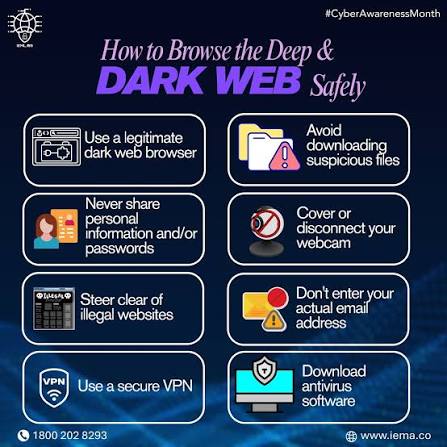
One widely used practice is session isolation, where each browsing session is separated from personal or production environments. This prevents cross-contamination in case of malicious activity. Another common method is non-persistent environments, which ensure that no data remains after a session ends.
Researchers comparing different discovery tools may also examine Torch dark web search, while maintaining the same verification standards regardless of where an onion address was discovered.
Researchers also rely heavily on behavioral monitoring, observing how a site responds to different interaction patterns. Sudden changes in response behavior often indicate unstable or malicious infrastructure.
Additionally, maintaining a strict no-download policy during verification significantly reduces exposure risk. Many compromised systems rely on file-based exploits, making avoidance an effective defensive strategy.
Together, these practices reinforce the concept of verified dark web links safely as a disciplined workflow rather than a simple search process.
External Authority Links: Verified Dark Web Links Safely
To strengthen the credibility and research grounding of onion link verification practices, it is important to reference established cybersecurity organizations and privacy-focused institutions. These sources provide independent validation of threat models, anonymity systems, and web safety research principles.
For more insight, please explore Tor Project documentation and privacy standards.
The Tor Project provides the foundational technology behind onion routing and maintains official documentation on how anonymity networks function. Their materials are essential for understanding how onion services operate, including routing, encryption layers, and network-level privacy protections. This makes it a primary reference point for anyone studying verified dark web links safely from a technical perspective.
For further information, please refer to Electronic Frontier Foundation (EFF) digital rights research.
The EFF is a leading digital rights organization that publishes research on online privacy, surveillance resistance, and encryption safety. Their work helps contextualize how anonymity systems are used in real-world environments and highlights risks associated with unsafe browsing behaviors. This supports a broader understanding of verification beyond surface-level link checking.
For more insights, please explore Europol cybercrime reports and darknet threat intelligence.
Europol provides high-level threat intelligence reports on cybercrime ecosystems, including darknet-related fraud, scams, and illicit infrastructure patterns. Their publications are valuable for understanding how malicious networks evolve and how fake services attempt to exploit users through deceptive onion links.
For additional technical breakdowns, please check BleepingComputer cybersecurity analysis.
BleepingComputer offers investigative reporting on malware, phishing campaigns, and emerging cyber threats. Their analysis often includes real-world examples of compromised systems and attack vectors, which helps reinforce practical awareness when evaluating onion-based resources.
FAQ: Verified Dark Web Links Safely
1. How can I identify verified dark web links safely without technical tools?
Identifying trustworthy onion resources starts with pattern recognition rather than software tools. You should focus on consistency across multiple independent sources and avoid relying on a single directory. Additionally, legitimate onion services tend to maintain stable structure, predictable navigation, and consistent identity over time.
When evaluating verified dark web links safely, users should also check whether the link appears across multiple reputable references. If only one unknown source lists it, the credibility is significantly lower. Furthermore, avoid pages that frequently change their identifiers without explanation, as this is often a sign of instability or impersonation.
Finally, behavioral observation helps. If a page behaves differently on each visit or redirects unexpectedly, it should be treated with caution. These combined signals form a practical, non-technical validation approach.
2. Why do fake onion links look identical to real ones?
Fake onion pages are often designed to replicate legitimate services with high precision. Attackers copy layouts, branding, and structure to create visual trust. However, while the appearance may be similar, underlying infrastructure usually differs significantly.
When studying verified dark web links safely, it becomes clear that visual similarity alone is not a reliable indicator. Fraudulent pages often reuse outdated snapshots or partially cloned templates. These replicas may also contain hidden scripts or tracking mechanisms that are not visible on the surface.
Moreover, subtle differences in navigation behavior, loading speed, or response consistency often reveal the truth. Therefore, visual inspection must always be combined with structural verification methods.
3. What is the safest way to verify onion links?
The safest method involves layered verification. First, cross-check the link across multiple independent sources. Next, evaluate structural consistency such as page behavior, uptime patterns, and navigation logic.
To improve safety when working with verified dark web links safely, researchers often use isolated environments and avoid interacting with unknown elements. This reduces exposure to malicious scripts or hidden exploit attempts.
Additionally, long-term stability is a strong trust signal. If a link has remained consistent over time and is referenced across multiple credible contexts, it is more likely to be legitimate.
4. Can onion links change over time?
Yes, onion links can and do change depending on operational security needs. Some services rotate addresses intentionally to prevent tracking or reduce exposure. Others may change due to infrastructure updates or compromise incidents.
Because of this, evaluating verified dark web links safely requires understanding that change alone does not indicate fraud. Instead, the context of the change matters. Sudden, unannounced changes combined with inconsistent behavior can be a warning sign.
Researchers often track historical patterns to determine whether changes are legitimate or suspicious. Stability trends are more important than static snapshots.
5. What mistakes should be avoided when checking dark web links?
One of the most common mistakes is relying on a single directory or list without verification. Another mistake is assuming that visual similarity guarantees authenticity. Both approaches can lead to exposure to malicious pages.
When handling verified dark web links safely, users should also avoid downloading files or interacting with unknown scripts. These actions significantly increase risk exposure.
Additionally, ignoring behavioral inconsistencies—such as redirect loops or unexpected prompts—can lead to compromised sessions. A cautious, structured approach always performs better than rapid browsing.
Conclusion: Verified Dark Web Links Safely
Understanding how to evaluate onion resources requires a structured and disciplined approach. Instead of relying on assumptions, users must focus on behavioral signals, structural consistency, and cross-source validation to maintain accuracy.
The concept of verified dark web links safely is not about finding a single “trusted list,” but about developing a repeatable verification workflow. When multiple signals align—stability, consistency, and external validation—the confidence level increases significantly.
However, even strong indicators should never replace caution. Onion ecosystems remain dynamic, and risks evolve continuously. Therefore, combining analytical methods with safe browsing practices ensures the most reliable long-term strategy for research and evaluation.
Ultimately, verification is not a one-time action but an ongoing process built on observation, comparison, and disciplined risk management.