
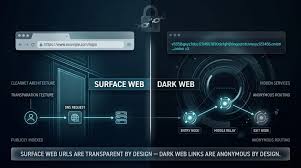
Introduction:Dark Web Link Verification
Researchers, journalists, cybersecurity analysts, and privacy advocates often encounter onion addresses while exploring hidden services. However, locating a link is only the first step. Determining whether that destination is authentic, operational, and trustworthy requires a structured approach. As a result, dark web link verification has become an important topic for anyone conducting responsible research.
Unlike traditional websites, onion services frequently change addresses, disappear without notice, or become targets for impersonation. Consequently, users must evaluate links carefully before relying on them as information sources. Understanding trust indicators, verification methods, and common warning signs can reduce confusion and improve research quality. Researchers examining these questions can also explore darkweb vendor trust to understand how reputation and credibility are evaluated in anonymous environments.
For more insight, please explore onion link verification resources.
Furthermore, researchers benefit from understanding how indexing systems, search platforms, and directory services discover hidden resources. A systematic process helps separate legitimate destinations from misleading or outdated listings.
Why Onion Link Verification Matters
The hidden web contains a wide range of content, including privacy tools, whistleblowing platforms, discussion forums, research archives, and anonymous communication services. Nevertheless, not every published onion address leads to the intended destination.
Many users assume that an onion URL appearing in a directory automatically indicates authenticity. In reality, outdated records, copied addresses, and lookalike domains often create confusion. Therefore, verification becomes essential before citing, bookmarking, or recommending any resource. Researchers should evaluate multiple independent signals rather than treating a single directory listing as proof of authenticity.
Researchers frequently encounter several challenges. First, onion addresses consist of long strings of characters that are difficult to remember. Second, hidden services may rotate infrastructure or publish updated addresses. Third, unofficial directories sometimes retain obsolete listings long after a service has moved.
Effective verification helps users:
- Identify authentic hidden services
- Reduce exposure to impersonation attempts
- Improve research accuracy
- Avoid outdated references
- Confirm service continuity over time
Additionally, verification strengthens the reliability of academic studies, threat intelligence reports, and investigative journalism projects. When sources can be validated independently, findings become easier to reproduce and trust.
Because hidden services operate differently from standard websites, researchers should view every newly discovered onion address as a claim that requires confirmation rather than immediate acceptance.
Understanding Trust Signals for Hidden Services
A major component of dark web link verification involves evaluating trust signals. These indicators help determine whether an onion destination appears legitimate and consistent with its stated purpose.
One useful signal is source consistency. When multiple independent directories reference the same onion address, confidence generally increases. However, consistency alone does not guarantee authenticity. For more insight, please review darknet market reputation systems and how feedback, historical activity, and reputation signals can influence perceptions of credibility.
Another indicator involves historical presence. Services that maintain a stable identity over long periods often generate references across forums, archives, and research publications. Consequently, researchers can compare current information against older records. These considerations are particularly relevant when researching darkweb vendor shops, where researchers may need to distinguish established storefront identities from copied, misleading, or short-lived representations.
Transparency also plays an important role. Legitimate projects frequently provide documentation, public communication channels, or published explanations of their services. While anonymity remains important, reputable operators often establish recognizable patterns of communication. Verification requirements can also differ depending on the organizational model being studied. Comparing darkweb vendor shops vs markets helps researchers understand why vendor identity, reputation signals, and link authenticity may appear differently across anonymous commerce environments.
Technical stability offers another clue. Reliable services tend to maintain predictable uptime and consistent branding. In contrast, suspicious destinations may appear briefly, disappear frequently, or change identity without explanation.
Researchers should also examine whether a hidden service appears in recognized search indexes. While index inclusion does not prove authenticity, it may provide additional context regarding visibility and longevity.
Ultimately, trust develops through multiple signals rather than a single factor. The strongest conclusions emerge when several independent indicators align.
Common Risks Associated With Unverified Links
Unverified onion addresses introduce several research risks. Although not every unknown destination is harmful, uncertainty can affect the quality and credibility of collected information.
One common issue involves impersonation. Some operators create addresses that resemble well-known services in order to attract visitors. Because onion URLs are complex, subtle differences may go unnoticed.
Another challenge involves outdated listings. Search indexes and directories occasionally retain addresses that no longer represent active services. Researchers who rely exclusively on old records may reach incorrect conclusions.
Misleading content presents another concern. Certain sites may claim affiliation with established projects despite lacking any legitimate connection. Therefore, independent confirmation remains necessary.
Researchers may also encounter:
- Broken hidden services
- Redirected resources
- Archived copies
- Incomplete mirrors
- Abandoned infrastructure
Furthermore, unreliable sources can distort investigations. When inaccurate references enter reports or articles, future readers may struggle to verify findings. These risks make fake onion links and impersonation techniques an important area of research when evaluating whether an unfamiliar onion address genuinely represents the service it claims to be.
Because hidden services often operate in dynamic environments, verification should occur periodically rather than only once. A link that appears valid today may become obsolete later.
Consequently, maintaining updated records and cross-checking information helps improve long-term accuracy.
Methods Used for Dark Web Link Verification
Successful dark web link verification depends on combining several validation techniques. Rather than relying on a single source, researchers benefit from a layered approach.
Cross-Referencing Multiple Sources
The simplest method involves comparing an onion address across several independent references. If directories, research publications, and community discussions all point to the same destination, confidence generally increases.
Evaluating Historical References
Historical context often reveals valuable information. Archived discussions, older research reports, and previous directory entries can help establish whether a service has maintained continuity over time. This approach also connects link verification with the history of darknet markets, where older records can help researchers understand how marketplace identities and infrastructure changed.
Reviewing Public Documentation
Legitimate projects frequently publish supporting information. Documentation may include mission statements, technical explanations, operational updates, or contact channels. These materials can assist verification efforts.
Monitoring Consistency
Researchers should examine visual branding, content structure, and communication patterns. Significant changes without explanation may warrant additional scrutiny.
Checking Search Index Presence
Hidden-service search engines provide another useful reference point. Although inclusion alone is not proof of legitimacy, index records may reveal longevity, discoverability, and historical visibility.
Combining these techniques creates a stronger assessment framework. Each method contributes evidence, allowing researchers to build conclusions based on multiple observations rather than assumptions.
Search Engines and Their Role in Verification
Search platforms play a significant role in hidden-service discovery. However, researchers should understand both their strengths and limitations.
Search engines help users locate onion resources that might otherwise remain difficult to find. They also organize content through categories, indexing systems, and searchable databases. Consequently, they serve as valuable starting points for exploration. This distinction becomes particularly important when researching darknet marketplaces, where search visibility, directory listings, and historical references can provide useful context but should not be treated as proof that a marketplace or onion address is authentic.
Yet search engines do not verify every listing. Many platforms rely on automated discovery processes, submitted URLs, or community contributions. Therefore, indexed content may include inactive or outdated entries.
Different indexing models produce different results. Some platforms prioritize breadth, while others emphasize quality and curation. Researchers should understand these distinctions when evaluating findings.
Additionally, comparing results across multiple search tools often reveals patterns that a single index may miss. When the same address appears consistently, confidence may improve. Conversely, conflicting records may indicate the need for further investigation.
Researchers should treat search engines as discovery tools rather than final authorities. Verification requires additional evidence beyond search visibility alone.
Building a Reliable Verification Workflow
A structured workflow improves consistency and reduces mistakes. Instead of evaluating links informally, researchers can follow repeatable steps.
Begin by collecting references from multiple independent sources. Next, compare the onion address across directories, search indexes, and published materials. Then review historical mentions and available documentation.
Afterward, evaluate operational stability. Does the service maintain a consistent identity? Has it existed for an extended period? Do references remain current? These questions also connect link verification with the darknet market lifecycle, since services can emerge, change, migrate, or disappear over time.
Researchers should also document findings carefully. Recording sources, dates, observations, and verification outcomes creates a transparent audit trail. As a result, future reviews become easier.
A mature workflow emphasizes evidence rather than assumptions. Each verification decision should rest on observable indicators and documented reasoning.
Over time, this approach strengthens research quality, improves reproducibility, and reduces dependence on unverified claims. Consequently, investigators can navigate hidden-service ecosystems with greater confidence and accuracy.
FAQ: Dark Web Link Verification
What is dark web link verification?
Dark web link verification is the process of evaluating whether an onion address genuinely represents the service it claims to be. Researchers use multiple indicators rather than relying on a single source. These indicators may include historical references, directory listings, documentation, and search index visibility. The goal is to improve confidence in the authenticity of a hidden service.
Why are onion addresses difficult to verify?
Onion addresses contain long character strings that are difficult to recognize and compare manually. Additionally, services may relocate, change infrastructure, or discontinue operations without notice. Because directories sometimes retain outdated records, confusion can occur. Therefore, verification requires cross-referencing several sources.
Can search engines guarantee that an onion link is authentic?
No. Search engines help users discover hidden services, but they generally do not guarantee authenticity. Many indexing systems rely on automated collection methods or user submissions. As a result, researchers should perform independent checks before trusting any listing.
What are the most common signs of a questionable onion address?
Frequent identity changes, inconsistent branding, limited documentation, and conflicting references often raise concerns. Additionally, services that appear suddenly without historical context may require closer examination. Researchers should compare findings across multiple sources before drawing conclusions.
How often should onion links be rechecked?
Verification should be an ongoing process. Hidden services may change status over time, and older records can become inaccurate. Periodic reviews help researchers maintain reliable datasets and current references. Regular reassessment improves long-term research accuracy.
Conclusion: Dark Web Link Verification
Accurate research depends on reliable sources, and that principle applies strongly to hidden-service ecosystems. Because onion addresses can change, disappear, or be copied, careful evaluation remains essential. A thoughtful approach to dark web link verification combines historical analysis, cross-referencing, search engine research, and trust-signal assessment.
Moreover, researchers should avoid relying on a single directory or index when assessing authenticity. Multiple independent confirmations provide stronger evidence and reduce uncertainty. As hidden-service environments continue evolving, verification practices will remain a critical component of responsible investigation.
By applying structured methods, documenting findings, and reviewing sources regularly, researchers can improve confidence in their conclusions while maintaining higher standards of accuracy and transparency.