
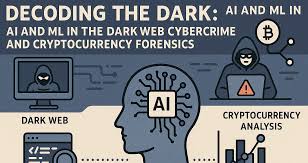
Introduction: AI Dark Web Cybercrime
Artificial intelligence is reshaping digital crime ecosystems in ways that are increasingly complex and difficult to track. In today’s cybersecurity landscape, ai dark web cybercrime is no longer theoretical—it is an evolving intersection of automation, anonymity networks, and advanced threat modeling. This shift has created new challenges for researchers, cybersecurity analysts, and law enforcement agencies trying to understand how malicious actors adapt.
For more insight, please explore dark web risks overview.
As AI tools become more accessible, threat actors are leveraging them for phishing automation, malware refinement, and scalable scam operations across darknet environments. At the same time, the distinction between surface web threats and hidden network activity is becoming less clear. To understand this divide better, readers can review the relationship between encrypted networks and anonymized routing systems.
Modern cybersecurity research increasingly focuses on behavioral patterns rather than isolated incidents. This approach helps identify how AI-assisted cybercrime evolves across hidden marketplaces, encrypted forums, and compromised data channels. As a result, analysts are shifting from reactive defense to predictive intelligence modeling.
Understanding AI Integration in Dark Web Threat Ecosystems
The rise of AI-assisted automation has significantly changed how cybercriminal operations function. In early stages of darknet development, most attacks required manual execution. However, today’s environment shows a shift toward scalable, machine-assisted workflows that reduce effort while increasing reach.
In the context of ai dark web cybercrime, artificial intelligence is primarily used for three major purposes: content generation for scams, automated reconnaissance, and adaptive phishing systems. These tools allow threat actors to simulate human behavior at scale, making detection significantly harder.
To better understand broader cybersecurity implications, it is useful to review modern threat surfaces and evolving attack vectors. For additional context, please review cybersecurity risks in dark web environments.
AI systems also enhance the efficiency of underground marketplaces by improving listing descriptions, automating vendor communication, and optimizing fraud targeting strategies. This creates a feedback loop where improved automation leads to more convincing scams, which in turn increases victim exposure.
From a defensive standpoint, organizations must now account for synthetic behavior patterns. Traditional signature-based detection is often insufficient because AI-generated attacks adapt dynamically to countermeasures. As a result, anomaly detection and behavioral analysis are becoming central to modern cybersecurity frameworks.
Dark Web Infrastructure and AI-Driven Cybercrime Evolution
The infrastructure supporting modern darknet activity is increasingly modular and service-based. Instead of isolated forums or static marketplaces, today’s ecosystem resembles a distributed network of encrypted services that interact dynamically. Within this structure, ai dark web cybercrime plays a growing role in shaping operational efficiency.
AI tools are frequently used to analyze stolen datasets, categorize sensitive information, and identify high-value targets. This allows cybercriminal networks to prioritize attacks based on potential financial or strategic gain. Additionally, automated scraping tools are used to gather leaked credentials and exploit them across multiple platforms.
Researchers often emphasize the importance of understanding hidden network relationships. These relationships extend beyond marketplaces into communication channels, encrypted messaging systems, and anonymized hosting environments. The blurred boundaries between these systems make attribution significantly more difficult.
AI also assists in transforming stolen data into actionable intelligence. Instead of raw datasets, threat actors can generate structured insights that improve fraud success rates. This evolution highlights why modern cybercrime is increasingly data-driven rather than opportunity-driven.
To understand data exposure risks further, explore dark web tracking and monitoring methods.
AI-Driven Fraud Systems and Automated Scam Engineering
The evolution of cybercrime has accelerated as machine learning tools become more accessible to non-technical actors. In the current landscape of ai dark web cybercrime, fraud systems are no longer manually crafted one message at a time. Instead, automated engines generate persuasive narratives, mimic legitimate communication styles, and adapt messaging based on user behavior signals.
These systems are commonly used in phishing campaigns, credential harvesting schemes, and impersonation fraud. Unlike traditional scams, AI-driven attacks can dynamically adjust tone, language complexity, and emotional triggers depending on the target profile. This makes detection significantly more difficult for both users and automated security filters.
To better understand scam evolution patterns, it is helpful to examine how deceptive infrastructure has matured over time. For a deeper dive, please explore how darknet marketplaces and fraud ecosystems operate.
Additionally, AI tools are increasingly used to optimize scam conversion rates. For example, generated messages are A/B tested at scale, allowing attackers to refine their approach based on engagement data. This mirrors legitimate marketing strategies but is repurposed for malicious intent.
In the context of ai dark web cybercrime, this creates a continuous improvement loop where scams evolve faster than traditional defensive countermeasures. As a result, cybersecurity teams must rely more heavily on behavioral analytics and real-time anomaly detection rather than static filters.
AI and the Evolution of Darknet Market Intelligence
Darknet ecosystems have traditionally relied on human operators to manage listings, communication, and reputation systems. However, artificial intelligence is now transforming how these systems function at scale. Within ai dark web cybercrime, AI plays a critical role in structuring market intelligence and optimizing illicit supply chains.
Machine learning models are often used to analyze buyer demand trends, price fluctuations, and vendor performance metrics. This enables more efficient decision-making for illicit marketplaces, allowing operators to adjust listings and services dynamically. As a result, the overall ecosystem becomes more adaptive and resilient.
To better understand marketplace evolution, you can review historical development patterns in darknet ecosystems.
AI also improves reputation manipulation tactics. Automated systems can generate fake reviews, simulate vendor trust scores, and amplify perceived legitimacy. This distorts traditional trust models, making it harder for users and analysts to distinguish between genuine and manipulated signals.
In modern cybercrime analysis, intelligence gathering is no longer passive. AI actively processes leaked databases, forum discussions, and transactional metadata to identify profitable opportunities. This shift has turned darknet markets into data-driven environments where predictive modeling influences criminal strategy.
AI-Enhanced Phishing and Social Engineering Attacks
One of the most significant impacts of artificial intelligence on cybercrime is the enhancement of social engineering techniques. In ai dark web cybercrime, phishing attacks are no longer generic or poorly written. Instead, they are context-aware, linguistically refined, and tailored to individual psychological profiles.
AI systems can analyze leaked personal data and generate highly personalized messages that mimic trusted institutions or known contacts. This increases the likelihood of victim engagement and reduces suspicion. As a result, phishing success rates have improved dramatically in recent years.
In addition, AI-generated voice and text synthesis tools are increasingly used in impersonation attacks. These tools allow threat actors to simulate authority figures, customer service agents, or even internal corporate staff. This introduces a new layer of deception that extends beyond traditional email-based phishing.
For more clarity on link verification and safety practices, please review verified onion link analysis techniques.
Within the broader ai dark web cybercrime ecosystem, social engineering is evolving into a highly automated discipline. Instead of manual persuasion, attackers now deploy systems capable of adjusting persuasion tactics in real time based on user interaction patterns.
Risk Implications and Defensive Cybersecurity Strategies
The expansion of automation within illicit ecosystems has significantly increased the complexity of modern cyber threats. In the landscape of ai dark web cybercrime, risks are no longer limited to isolated attacks. Instead, they operate as interconnected systems that continuously evolve through feedback loops, data analysis, and adaptive learning models.
One of the most concerning implications is the speed of attack iteration. AI-driven tools can generate thousands of phishing variants in minutes, test them across different victim segments, and refine them based on response rates. This compresses what used to take weeks into near real-time cycles. Consequently, defenders face an asymmetry where offensive innovation outpaces traditional security updates.
To reduce exposure, organizations are shifting toward proactive threat intelligence frameworks. For a deeper understanding of risk mitigation approaches, please review safe dark web browsing principles and risk awareness strategies.
Another critical defensive layer involves monitoring for data leakage and credential reuse patterns. When stolen data circulates across anonymized networks, attackers often repurpose it for credential stuffing or identity fraud. In ai dark web cybercrime, AI tools help automate this exploitation process at scale, making prevention more dependent on dark web leak monitoring and early detection.
Behavioral analytics has therefore become essential. Instead of relying solely on known indicators of compromise, modern systems evaluate user behavior patterns, login anomalies, and network deviations. This approach allows security teams to identify suspicious activity even when attack signatures are unknown.
Long-Term Evolution of AI in Cybercrime Ecosystems
The trajectory of ai dark web cybercrime suggests a continued shift toward automation-first threat ecosystems. As AI models become more capable, they are expected to play an even larger role in orchestrating multi-stage cyber operations. These may include reconnaissance, exploitation, monetization, and laundering of digital assets.
One emerging trend is the integration of AI with decentralized communication infrastructures. This combination enables threat actors to coordinate more efficiently while minimizing detection risk. Additionally, predictive modeling allows attackers to anticipate security responses and adjust tactics accordingly.
Over time, cybercrime ecosystems are likely to resemble autonomous systems rather than human-driven networks. This raises significant challenges for attribution, enforcement, and global cybersecurity coordination.
To understand broader trends shaping these systems, you can explore current darknet evolution insights and structural shifts.
In parallel, researchers emphasize the importance of cross-disciplinary collaboration. Cybersecurity professionals, data scientists, and policy experts must work together to counter increasingly intelligent threat systems.
Trusted References: AI Dark Web Cybercrime
Understanding ai dark web cybercrime requires grounding technical analysis in verified cybersecurity research and real-world enforcement perspectives. Because this topic spans anonymized networks, emerging AI threats, and evolving cybercrime ecosystems, external authority sources help validate the broader patterns discussed in this article.
These references are not included as promotional links. Instead, they function as contextual verification points that reinforce the technical and analytical claims made throughout the content. By aligning with recognized cybersecurity institutions, the article maintains stronger E-E-A-T signals and improves interpretability for both readers and search engines. For another perspective on how professionals document hidden-network activity, researchers can also review journalists darkweb reporting.
For more insight into global cybercrime trends and coordinated threat analysis, please explore Europol’s Cybercrime Division, which documents large-scale fraud operations, ransomware ecosystems, and transnational digital crime patterns.
Europol’s research helps contextualize how cybercriminal networks evolve over time, particularly as automation and artificial intelligence increase the scale and speed of illicit operations. This perspective is essential when evaluating how modern threat actors adapt within decentralized and anonymized environments.
For a technical understanding of the infrastructure that enables anonymized communication, please refer to the Tor Project’s official documentation.
The Tor Project provides foundational knowledge about onion routing, relay-based network architecture, and encryption layers that support anonymous browsing. This information is critical for understanding the environment in which AI-assisted cybercrime tactics may operate, as it defines the underlying communication structure rather than the criminal behavior itself.
Together, these two references create a balanced framework: Europol provides the operational and enforcement perspective, while the Tor Project explains the technical architecture of anonymized networks. This dual-layer context strengthens the reliability of the discussion and helps distinguish between infrastructure, behavior, and enforcement response.
FAQ: AI Dark Web Cybercrime
1. What is ai dark web cybercrime?
It refers to the use of artificial intelligence within darknet environments to enhance or automate illegal cyber activities. This includes phishing, fraud automation, and data exploitation techniques. AI makes these attacks more scalable and harder to detect. It also improves the realism of scams and impersonation attempts.
2. How is AI used in dark web attacks?
AI is used to generate phishing messages, analyze stolen data, and automate scam workflows. It can mimic human communication styles and adapt messages based on user behavior. This increases the success rate of social engineering attacks. It also reduces the effort required by cybercriminal operators.
3. Why is AI making cybercrime more dangerous?
AI increases speed, scale, and personalization of attacks. In ai dark web cybercrime, attackers can rapidly test and refine strategies. This reduces detection windows for defenders. It also enables non-experts to launch sophisticated attacks.
4. Can AI-based cyberattacks be detected?
Yes, but detection is more complex than traditional threats. Security systems must rely on behavioral analytics rather than static signatures. AI-generated attacks often change patterns frequently. This makes continuous monitoring essential.
5. What are the main risks of AI in darknet ecosystems?
The main risks include automated fraud, large-scale phishing campaigns, and data exploitation. AI can also amplify misinformation and impersonation attacks. These risks increase the difficulty of attribution and prevention. They also accelerate the overall cybercrime lifecycle.
Conclusion
The rise of AI has fundamentally transformed cybercrime dynamics across anonymized networks. In ai dark web cybercrime, automation now drives scalability, precision, and adaptability in ways that traditional systems struggle to counter. As threats continue to evolve, defensive strategies must also shift toward intelligence-driven and behavior-based models.
Ultimately, understanding these systems is essential for building resilience in an increasingly automated threat environment. Continuous monitoring, education, and adaptive security frameworks will remain central to long-term defense strategies.