
Introduction: Onion Links vs Clearnet
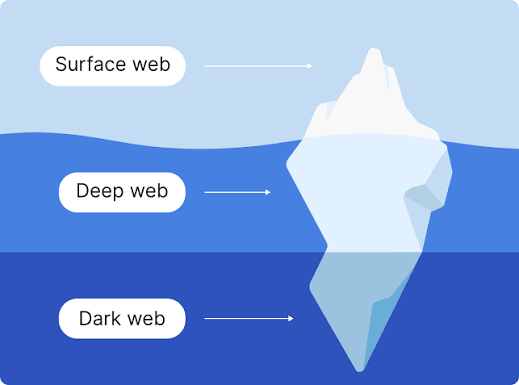
The modern internet is divided into visible and hidden layers, yet most users only interact with the surface. Understanding onion links vs clearnet is essential for anyone studying privacy networks, cybersecurity structures, or anonymized communication systems. While clearnet operates through indexed and publicly accessible domains, onion networks rely on layered routing that conceals both identity and location.
For more insight, please explore dark web research overview.
In practice, these two systems serve fundamentally different purposes. The clearnet prioritizes accessibility and speed, while onion networks emphasize anonymity and resistance to tracking. However, both share underlying internet protocols, which makes their separation more architectural than absolute.
Additionally, researchers often compare these environments to understand threat models, data exposure risks, and indexing limitations. As digital surveillance increases, interest in privacy-focused routing has grown significantly. Therefore, analyzing onion links vs clearnet helps clarify how information flows across different layers of the web and why certain content remains hidden from traditional search engines.
What Defines Onion Networks vs Clearnet Systems
The clearnet refers to the publicly indexed portion of the internet that is accessible through standard browsers and search engines. Websites here are designed for discoverability, SEO optimization, and open access. In contrast, onion networks operate through anonymized routing layers that mask both server identity and user location.
Understanding onion links vs clearnet begins with recognizing how access pathways differ. Clearnet domains use DNS-based resolution, while onion services rely on cryptographic identifiers that replace traditional domain naming systems. This structural difference is fundamental to how each network handles visibility and control.
Because discoverability differs significantly between public websites and hidden services, researchers should understand how dark web search engines approach the discovery and indexing of content that does not fit conventional search infrastructure.
Moreover, clearnet pages are typically indexed by search engines, making them discoverable within seconds. Onion services, however, are intentionally excluded from indexing systems, which limits exposure but increases reliance on direct access methods.
As a result, onion links vs clearnet comparisons often highlight trade-offs between transparency and anonymity. While clearnet enables efficient information distribution, onion networks prioritize privacy at the cost of usability and speed. This contrast defines the foundation of modern internet segmentation.
Structural and Technical Differences
From a technical standpoint, clearnet and onion systems operate using fundamentally different architectures. Clearnet websites rely on centralized DNS infrastructure, which translates human-readable domain names into IP addresses. Onion services bypass this system entirely, using cryptographic hash-based addresses instead.
When analyzing onion links vs clearnet, it becomes clear that routing mechanisms are the key differentiator. Onion networks use multi-layer encryption and relay nodes to obscure traffic origin, whereas clearnet traffic typically travels through direct or semi-direct routes.
To better understand how users discover hidden services within this technical environment, researchers can examine Ahmia dark web search, which provides useful context for the relationship between onion-service discovery and searchable indexing.
Additionally, clearnet infrastructure is optimized for speed and scalability. Content delivery networks (CDNs) and caching systems reduce latency and improve performance. Onion networks, however, prioritize anonymity over efficiency, often resulting in slower load times due to multiple encryption hops.
This architectural divergence explains why onion links vs clearnet comparisons frequently emphasize performance differences alongside privacy advantages. Each system is engineered for a distinct purpose, and neither is inherently superior outside its intended use case.
Privacy, Security, and Visibility Trade-offs
Privacy remains the most significant factor when comparing clearnet and onion environments. Clearnet platforms are highly visible but also more susceptible to tracking, profiling, and data collection. Conversely, onion networks provide stronger anonymity but introduce different operational risks.
In discussions around onion links vs clearnet, security trade-offs are often central. Clearnet users rely on encryption protocols like HTTPS to secure communications, but metadata exposure still exists. Onion networks attempt to reduce metadata visibility through layered routing, but they are not immune to endpoint vulnerabilities.
These differences in visibility also make verified dark web links important when researchers move between public websites and hidden services and need to assess whether a destination is authentic.
Furthermore, clearnet environments benefit from regulatory oversight, which improves trust and content moderation. Onion networks lack centralized governance, which can lead to inconsistent reliability across services.
As a result, onion links vs clearnet evaluations must consider both safety and control factors. One environment prioritizes accountability, while the other prioritizes resistance to surveillance. Understanding this balance is essential for accurate technical assessment.
How Users Interact With Each System
User interaction differs significantly between clearnet and onion environments. On the clearnet, users rely on search engines, hyperlinks, and structured navigation systems. Content discovery is algorithm-driven and highly optimized for accessibility.
In contrast, onion environments require direct knowledge of service addresses or trusted directories. This changes how users approach onion links vs clearnet navigation entirely. Instead of search-based discovery, onion systems rely on curated entry points and verification methods.
To understand how users locate hidden services more safely, researchers can examine how to find onion sites safely, particularly when comparing direct discovery methods with reliance on directories and search tools.
Additionally, clearnet browsing is generally stable and predictable, while onion navigation can vary based on service availability and network conditions. This unpredictability requires users to adopt more cautious browsing strategies.
Therefore, onion links vs clearnet comparisons also highlight usability differences. While clearnet offers convenience and speed, onion networks demand higher technical awareness and structured navigation habits.
Security Models Behind Onion Links vs Clearnet
Security design differs significantly between clearnet and onion environments, especially in how each system handles trust and exposure. Clearnet security relies heavily on centralized certificate authorities, HTTPS encryption, and browser-based protections. These systems are effective, but they still expose metadata such as IP addresses, traffic patterns, and behavioral signals.
In contrast, onion infrastructure distributes trust across multiple relay layers. When analyzing onion links vs clearnet, this layered routing model becomes a defining factor. Each request is encrypted multiple times and passed through several nodes before reaching its destination, reducing direct traceability.
However, this does not eliminate risk. Endpoint vulnerabilities still exist, and malicious operators can host deceptive services on both networks. As a result, security is not determined solely by infrastructure but also by user behavior and verification practices.
Because security does not automatically establish authenticity, researchers should also understand verified onion links and the additional checks required when evaluating hidden-service addresses.
Additionally, clearnet systems benefit from faster incident response and broader enforcement mechanisms. Onion networks, however, lack centralized moderation, which increases variability in trustworthiness across services.
Therefore, onion links vs clearnet security comparisons must account for both architectural protections and operational risks.
Anonymity Layers and Data Exposure Risks
Anonymity is one of the most discussed differences between clearnet and onion systems. On the clearnet, user identity is often indirectly exposed through cookies, IP tracking, browser fingerprinting, and third-party analytics. Even with encryption, metadata leakage remains a persistent issue.
When evaluating onion links vs clearnet, it becomes clear that onion routing attempts to minimize these exposure points. By separating entry, relay, and exit nodes, onion systems obscure direct associations between users and destinations.
Researchers examining these exposure risks should also understand how to spot fake dark web links and avoid scams, since deceptive destinations can undermine privacy regardless of the network architecture being used.
However, anonymity is not absolute. User errors, such as logging into personal accounts or downloading unsafe files, can still compromise identity. Therefore, system design alone does not guarantee protection.
Additionally, clearnet environments often prioritize personalization and user convenience, which inherently increases data collection. This creates a trade-off between usability and privacy that defines the onion links vs clearnet discussion.
In practice, researchers emphasize that anonymity depends on both infrastructure and discipline. Without proper operational hygiene, even strong privacy systems can be weakened significantly.
Trust, Verification, and Content Reliability
Trust models differ sharply between clearnet and onion ecosystems. On the clearnet, trust is reinforced through search engine indexing, domain reputation systems, and regulatory frameworks. These mechanisms help users evaluate credibility quickly.
In contrast, onion environments require manual verification and cross-referencing. This makes onion links vs clearnet comparisons especially relevant in cybersecurity research, where source validation is critical.
To understand how search-based discovery fits into these trust decisions, researchers can compare different hidden-service search tools, including Haystak dark web search, while remembering that discovery does not itself guarantee authenticity.
Moreover, clearnet content is often moderated or reviewed, which improves consistency but can introduce bias or ranking manipulation. Onion systems lack centralized moderation, which increases freedom but also introduces variability in reliability.
As a result, users must rely on indirect trust signals such as consistency, uptime stability, and external references. This makes verification more complex but also more flexible in decentralized environments.
Search tools can assist with discovery, and resources such as Torch dark web search illustrate why locating a hidden service and independently verifying its authenticity should be treated as separate research steps.
Therefore, onion links vs clearnet trust evaluation is not about choosing one system over another but understanding how each establishes credibility differently.
External Research References for Network Understanding
A deeper understanding of web architecture requires referencing both technical documentation and cybersecurity research. These sources help contextualize how anonymity networks and public internet systems coexist and evolve.
For more insight, please explore Tor Project architecture and onion routing principles.
The Tor Project provides foundational documentation on how onion routing works, including encryption layers, relay structures, and anonymity guarantees. This is essential for understanding how onion networks differ structurally from clearnet systems.
For further information, please refer to Electronic Frontier Foundation privacy research.
The EFF publishes extensive research on digital rights, surveillance resistance, and privacy-preserving technologies. Their analysis helps explain how clearnet tracking systems operate and why anonymity-focused alternatives emerged.
To understand broader cyber threat ecosystems, please explore Europol cybercrime reports.
Europol provides intelligence on cybercrime trends, including misuse of both clearnet and anonymized networks. Their reports help contextualize risks associated with poorly verified online environments.
To get a better idea, please check BleepingComputer cybersecurity analysis.
BleepingComputer offers real-world case studies of phishing, malware distribution, and network exploitation, which are relevant when comparing trust and exposure risks across systems.
FAQ: Onion Links vs Clearnet
1. What is the main difference between onion links vs clearnet?
The main difference lies in visibility and routing architecture. Clearnet websites are publicly indexed and accessible through standard browsers, while onion links operate through anonymized routing layers that conceal server identity. This makes clearnet more discoverable but less private.
When comparing onion links vs clearnet, the key distinction is how data travels across the network. Clearnet traffic is typically direct and traceable through ISPs, whereas onion traffic is layered and encrypted multiple times. This structural contrast defines their core purpose.
Additionally, clearnet prioritizes usability and speed, while onion systems prioritize anonymity and resistance to tracking.
2. Why are onion links not indexed like clearnet websites?
Onion services are intentionally excluded from traditional search engines because they are not designed for public indexing. Their structure uses cryptographic identifiers instead of DNS-based domains, which makes standard crawling ineffective.
In onion links vs clearnet comparisons, indexing is one of the most important differentiators. Clearnet relies heavily on SEO and discoverability, while onion networks rely on direct access or curated directories.
Furthermore, indexing would reduce anonymity benefits by increasing exposure and traceability. Therefore, onion environments are designed to remain outside conventional search systems.
3. Are onion links more secure than clearnet websites?
Security depends on context rather than absolute superiority. Onion networks provide stronger anonymity protections through layered routing, but they do not guarantee safe content or trustworthy operators. Clearnet sites, on the other hand, benefit from centralized security protocols like HTTPS and certificate validation.
When analyzing onion links vs clearnet, it becomes clear that both systems have strengths and weaknesses. Onion networks reduce metadata exposure, while clearnet offers better accountability and faster incident response.
However, user behavior remains the most critical factor in overall safety across both environments.
4. Can clearnet and onion networks be used together?
Yes, both systems can be used together depending on the purpose. Researchers often use clearnet for discovery and background research, then switch to onion environments for privacy-focused exploration or anonymous access.
In onion links vs clearnet workflows, this hybrid approach is common in cybersecurity research. Clearnet provides structure and indexing, while onion networks provide anonymized access layers.
However, switching between environments should be done carefully to avoid identity correlation risks or accidental data leakage.
5. What risks exist when using onion networks compared to clearnet?
Onion networks introduce unique risks such as fake directories, phishing clones, and unstable service availability. While clearnet also has risks, it benefits from stronger moderation and reporting systems.
In discussions of onion links vs clearnet, onion environments often require more manual verification because there is no centralized trust authority. This increases the chance of encountering misleading or malicious pages.
Additionally, users may face higher exposure risks if they download unknown files or interact with unverified services. Therefore, caution and structured verification are essential in onion environments.
Conclusion
Understanding the relationship between onion networks and the clearnet reveals a fundamental trade-off in modern internet architecture. The clearnet emphasizes accessibility, speed, and discoverability, while onion systems prioritize anonymity and resistance to tracking.
The comparison of onion links vs clearnet highlights that neither system is universally better. Instead, each serves a distinct role in the digital ecosystem. One supports open communication and indexing, while the other enables privacy-focused interaction and research environments.
Ultimately, effective use of either system depends on awareness, discipline, and risk understanding. By recognizing their structural differences, users can make more informed decisions about how they access and evaluate online information.