
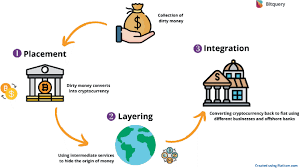
The topic of dark web money transfer has become increasingly relevant as digital payment systems evolve and cybercrime networks adopt more sophisticated financial techniques. While many assume transactions in hidden networks are untraceable, the reality is far more complex and often misunderstood. For more details, please checkout monitoring dark web threats linked to cybercrime
In practice, dark web money transfer involves a mix of cryptocurrencies, laundering layers, and informal escrow systems that attempt to obscure financial trails. However, law enforcement agencies and blockchain analysts have significantly improved their ability to track these flows. For more insight, please explore dark web risks overview.
Understanding how these systems work requires examining both technical infrastructure and human behavior behind illicit transactions. This article breaks down those mechanisms, risks, and enforcement realities in detail.
How Dark Web Money Transfer Systems Actually Work
The ecosystem behind dark web money transfer is not a single system but a layered combination of tools designed to obscure identity and transaction origin. Most transactions rely heavily on cryptocurrencies, particularly Bitcoin and privacy-focused coins like Monero. To know more, please see darknet stimulant transactions
Despite assumptions of anonymity, most financial flows leave traceable patterns. Blockchain analysis tools can identify wallet clustering, exchange entry points, and transaction timing patterns. These indicators often become critical evidence in investigations.
Another key component is escrow systems used within marketplaces. These systems hold funds temporarily until goods or services are delivered. However, they are frequently exploited in fraud schemes, where administrators disappear with deposited funds.
To understand this better, please review darknet market financial structures.
Additionally, mixers and tumblers are used to break transaction trails. While they add complexity, they do not guarantee anonymity, especially when operators themselves become compromised or monitored.
Risks Behind Dark Web Financial Transactions
The risks associated with dark web money transfer extend far beyond financial loss. One of the most common dangers is fraud through fake vendors or exit scams, where marketplace operators vanish with user funds.
Another major risk involves exposure to surveillance. Many users assume transactions are untraceable, but blockchain analytics firms regularly assist law enforcement in identifying suspicious activity. This creates long-term exposure risks for participants.
Phishing and impersonation are also widespread. Fake marketplaces often mimic legitimate platforms to capture deposits. Once funds are transferred, recovery is almost impossible due to the irreversible nature of blockchain transactions.
To explore further, please check avoiding dark web scams strategies.
In addition, operational security mistakes such as wallet reuse or IP leakage can link transactions to real-world identities. These mistakes are among the most common causes of exposure in financial investigations.
For more clarity, please see dark web exit scam patterns.
Law Enforcement Tracking and Financial Surveillance
Modern investigations into dark web money transfer rely heavily on advanced blockchain analytics and international cooperation. Agencies now use clustering algorithms to track wallet behaviors across multiple exchanges.
Even privacy coins are not immune. While they provide stronger anonymity, endpoint vulnerabilities such as exchange conversion points can still expose user identities.
Law enforcement also monitors fiat on-ramps and off-ramps. These include cryptocurrency exchanges, payment processors, and peer-to-peer platforms. Once funds enter regulated systems, they become significantly easier to trace.
To get more context, please explore dark web tracking methods.
Another important factor is undercover infiltration. Investigators often pose as vendors or buyers to observe transaction flows directly. This provides intelligence that complements blockchain analysis.
For deeper understanding, please review lessons from dark web takedowns.
Cryptocurrency’s Role in Dark Web Transfers
Cryptocurrency is central to dark web money transfer, but its role is often misunderstood. While it provides pseudonymity, it does not guarantee complete anonymity.
Bitcoin remains the most commonly used currency due to liquidity and accessibility. However, its transparent ledger makes it highly traceable when combined with forensic tools.
Monero and other privacy coins attempt to address this limitation through obfuscation techniques such as ring signatures and stealth addresses. Even so, external behavioral patterns can still reveal user activity.
To understand this further, please review dark web cryptocurrency usage patterns.
Market volatility also affects transaction behavior. Rapid price fluctuations often lead to timing-based analysis opportunities for investigators, linking financial activity to external market events.
For more insight, please explore darknet research chemicals markets.
Security Lessons from Financial Exposure Cases
Analysis of dark web money transfer cases reveals consistent operational mistakes that lead to exposure. One major issue is poor wallet hygiene, including reuse of addresses across multiple transactions.
Another lesson involves over-reliance on centralized marketplaces. When these platforms collapse or are seized, users often lose access to funds permanently.
Human error remains the biggest vulnerability. Even with advanced encryption tools, simple mistakes like sharing metadata or reusing credentials can expose entire financial networks.
To learn more, please explore safe dark web financial practices.
Security researchers emphasize layered protection strategies. These include segregated wallets, minimal transaction footprints, and strict operational discipline.
Cybercrime Financial Enforcement Insights
For more insight, please explore Europol cybercrime financial investigations.
Europol provides extensive documentation on financial crime networks, including cryptocurrency laundering, darknet marketplace takedowns, and international enforcement collaboration.
Privacy and Digital Rights Frameworks
For additional understanding, please explore Electronic Frontier Foundation digital privacy research.
EFF examines how financial surveillance intersects with privacy rights, encryption tools, and digital identity protection in modern cyber ecosystems.
Onion Infrastructure and Transaction Security
For technical clarity, please explore Tor Project network documentation.
The Tor Project explains how anonymized routing interacts with financial systems operating over hidden services and why infrastructure weaknesses matter in financial tracing.
Cybersecurity Incident Analysis
For further details, please refer to BleepingComputer cybersecurity reporting.
BleepingComputer regularly reports on ransomware payments, darknet financial seizures, and cryptocurrency-related cybercrime investigations.
FAQ: Dark Web Money Transfer
Why is dark web money transfer considered risky?
Dark web financial transactions are risky because they often involve unregulated systems and irreversible payments. Once funds are sent, recovery is nearly impossible. Additionally, many platforms are scams or controlled by law enforcement. This creates both financial and legal exposure risks for participants. The lack of consumer protection further increases vulnerability.
Can cryptocurrency transactions be traced?
Yes, most cryptocurrency transactions can be traced using blockchain analytics tools. Even though wallet addresses are pseudonymous, patterns can reveal user behavior. Exchanges also serve as entry and exit points for identification. Law enforcement agencies regularly use these methods in investigations. Only certain privacy-focused coins offer partial resistance.
What are escrow systems in dark web markets?
Escrow systems temporarily hold funds during transactions until both parties fulfill obligations. They are designed to reduce fraud between buyers and sellers. However, these systems are often manipulated or abandoned during exit scams. In many cases, administrators control the escrow process entirely. This makes them a frequent point of failure.
How do law enforcement agencies track transactions?
Agencies use a combination of blockchain analysis, undercover operations, and financial monitoring. They also track exchange activity and wallet clustering patterns. International cooperation enhances data sharing across jurisdictions. These combined methods allow authorities to reconstruct financial flows. As a result, anonymity is often less secure than assumed.
Are privacy coins completely untraceable?
Privacy coins are more difficult to trace but not completely untraceable. While they use advanced cryptographic techniques, external factors like exchange conversions can expose users. Behavioral analysis can also reveal patterns over time. Researchers continue to find vulnerabilities in implementation or usage. Therefore, they reduce visibility but do not eliminate risk.
Conclusion: Dark Web Money Transfer
The reality of dark web money transfer is far more complex than common assumptions about anonymity suggest. While encryption and cryptocurrency tools provide layers of obfuscation, they are not foolproof against modern analytical techniques.
As enforcement capabilities evolve, so does the sophistication of financial concealment strategies, creating an ongoing cycle of adaptation between investigators and illicit networks. Understanding this balance is essential for cybersecurity awareness.
Ultimately, dark web money transfer represents a high-risk financial environment where technical complexity does not guarantee safety or anonymity.