
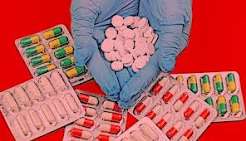
Introduction: Fake Drugs Online
The global rise of digital marketplaces has transformed how consumers access information, products, and services. Unfortunately, it has also created new opportunities for the distribution of counterfeit pharmaceuticals and fraudulent medical products. Researchers, public health organizations, and cybersecurity experts increasingly study fake drugs online to understand how deceptive supply chains operate and why consumers remain vulnerable to pharmaceutical fraud.
For more insight, please explore drug awareness overview.
Counterfeit medications are not limited to obscure websites or anonymous marketplaces. Instead, they can appear across a range of online environments, including fraudulent pharmacies, social media platforms, messaging applications, and illicit marketplaces. Moreover, advances in packaging technology and digital marketing have made fake pharmaceutical products more difficult to identify. For deeper insight, please checkout fake mescaline products online
Understanding the mechanisms behind online pharmaceutical fraud requires examining market behavior, consumer psychology, digital infrastructure, and public health risks. This article explores how counterfeit drug ecosystems function, why they persist, and what researchers have learned about their broader societal impact.
The Growth of Counterfeit Pharmaceutical Markets Online
The expansion of online commerce has created unprecedented opportunities for both legitimate and fraudulent pharmaceutical distribution networks. Over the past two decades, researchers have documented substantial growth in counterfeit medication activity across multiple digital ecosystems. For more insight, please explore fake Ayahuasca products online
The study of fake drugs online reveals that counterfeit pharmaceutical markets thrive because they exploit several interconnected factors. These include global supply chain complexity, consumer demand for lower-cost medications, limited regulatory oversight across jurisdictions, and the anonymity afforded by certain online platforms.
To understand broader marketplace evolution, please explore darknet marketplace ecosystems.
Additionally, advances in manufacturing and packaging technologies have enabled counterfeit producers to create products that closely resemble authentic pharmaceuticals. As a result, visual inspection alone is often insufficient to determine authenticity.
Researchers have also identified the role of digital advertising, search manipulation, and social engineering in facilitating counterfeit drug distribution. Fraudulent operators frequently exploit consumer trust by creating professional-looking storefronts and misleading health claims.
Consequently, counterfeit pharmaceutical markets continue to evolve alongside broader developments in digital commerce and cybersecurity.
Why Counterfeit Medications Are Difficult to Detect
One of the most significant challenges associated with online pharmaceutical fraud is the difficulty of identifying counterfeit products before consumption. Unlike many other forms of fraud, counterfeit medications may appear visually identical to legitimate products while containing harmful or ineffective substances.
When examining fake drugs online, researchers frequently observe sophisticated deception techniques designed to increase consumer confidence. Counterfeit packaging often mimics authentic branding, dosage information, safety warnings, and manufacturing details with remarkable accuracy.
To learn more about pharmaceutical market risks, please review dark web pharmaceutical products.
Furthermore, consumers often rely on indirect indicators of legitimacy, such as website appearance, customer reviews, or pricing structures. Unfortunately, these indicators can be manipulated through fabricated testimonials, cloned websites, and coordinated marketing campaigns.
To understand how fraudulent systems exploit trust mechanisms, please explore dark web product scams.
Researchers also note that counterfeit products frequently circulate through multiple distribution channels before reaching consumers. This fragmentation complicates efforts to trace product origins and identify responsible actors.
As a result, public health agencies increasingly emphasize education, verification systems, and international cooperation as essential tools for combating counterfeit pharmaceutical distribution.
Public Health Risks Associated With Counterfeit Drugs
Counterfeit pharmaceuticals present substantial risks to both individual consumers and broader healthcare systems. These risks extend beyond financial fraud and frequently involve serious medical consequences. For clarity, please review counterfeit drug risks & health concerns and dangers of counterfeit prescription medicines
Research into fake drugs online demonstrates that counterfeit medications may contain incorrect dosages, unexpected substances, contaminants, or no active ingredients at all. Consequently, patients may experience treatment failure, adverse reactions, poisoning events, or delayed medical intervention.
To better understand broader substance-related harms, please explore darknet drug risks.
Additionally, counterfeit pharmaceuticals contribute to wider public health concerns by undermining trust in healthcare systems and medication supply chains. Healthcare providers may also face diagnostic challenges when patients unknowingly consume fraudulent products.
Certain categories of medications appear particularly vulnerable to counterfeiting, including pain medications, stimulants, anti-anxiety drugs, and lifestyle medications. Researchers continue to investigate how consumer demand patterns influence counterfeit production and distribution networks.
As digital markets evolve, the public health implications of counterfeit pharmaceutical activity remain a critical area of interdisciplinary research.
How Online Counterfeit Drug Supply Chains Operate
The distribution of counterfeit pharmaceuticals through digital channels involves complex networks that span multiple jurisdictions, technologies, and intermediary actors. Researchers studying fake drugs online have identified supply chains that differ significantly from traditional pharmaceutical distribution systems.
Unlike regulated healthcare supply networks, counterfeit distribution ecosystems often rely on fragmented production, decentralized marketing, and anonymous transaction mechanisms. Manufacturers may operate in one region, distributors in another, and consumers in entirely different countries. This geographic separation complicates enforcement efforts and increases investigative challenges.
To understand how anonymous market ecosystems evolve, please review darknet market lifecycle analysis.
Additionally, counterfeit sellers frequently use layered marketing strategies. Products may first appear on private forums, encrypted messaging platforms, social media advertisements, or anonymous marketplaces before reaching consumers. This diversification reduces dependence on any single distribution channel.
Researchers have also documented the use of professional branding techniques, fabricated laboratory claims, and misleading medical information. These strategies increase perceived legitimacy while masking the absence of regulatory oversight. Consequently, consumers may underestimate the risks associated with unverified pharmaceutical sources.
As online commerce continues to expand globally, counterfeit pharmaceutical supply chains remain highly adaptive and difficult to disrupt permanently.
Consumer Behavior and the Demand for Counterfeit Pharmaceuticals
Understanding why individuals purchase counterfeit medications requires examining economic, psychological, and social factors. Research suggests that demand for unregulated pharmaceutical products often emerges from gaps in affordability, accessibility, and healthcare availability.
Studies of fake drugs online indicate that many consumers do not intentionally seek counterfeit products. Instead, they may believe they are purchasing authentic medications from seemingly trustworthy sources. Factors such as lower pricing, convenience, anonymity, and limited access to healthcare services can influence purchasing decisions.
To explore broader pharmaceutical risk trends, please review opioid market research.
Furthermore, online environments can amplify trust through user reviews, testimonials, and professional-looking interfaces. Fraudulent vendors frequently exploit these trust signals to create a false sense of security. Researchers have observed that consumers often rely on visual credibility indicators rather than formal verification processes.
To understand how deception affects online markets, please explore darknet drug scams.
Behavioral studies also demonstrate that risk perception varies significantly between individuals. Some users underestimate potential health consequences, while others incorrectly assume that anonymous or international vendors provide equivalent products at lower cost.
These findings highlight the importance of educational interventions and public awareness campaigns designed to improve digital health literacy.
Anonymous Marketplaces and Pharmaceutical Fraud
Anonymous online marketplaces have received considerable attention due to their role in facilitating illicit commerce and counterfeit product distribution. Although these platforms represent only one component of the broader counterfeit ecosystem, they provide valuable insights into digital fraud mechanisms.
When examining fake drugs online, researchers frequently analyze anonymous marketplaces because they generate publicly observable transaction data, vendor reputation systems, and user feedback patterns. These characteristics provide opportunities to study illicit market behavior in greater detail.
To understand marketplace reputation systems, please review darknet market reputation analysis.
Additionally, researchers have observed that vendor reputation mechanisms can create misleading perceptions of safety and reliability. Positive reviews, transaction histories, and trust scores do not guarantee product authenticity or quality. Instead, they often reflect social dynamics rather than objective verification.
To explore market adaptation and disruption patterns, please review future darknet market trends.
The continued evolution of anonymous marketplaces demonstrates how technological innovation can simultaneously increase access, reduce accountability, and complicate regulatory oversight. Consequently, experts increasingly advocate multidisciplinary approaches that combine public health, cybersecurity, and consumer protection strategies.
External and Internal Research References to Fake Drugs Online
Understanding counterfeit pharmaceutical ecosystems requires consulting established public health, cybersecurity, and law enforcement resources. These organizations provide critical insight into online fraud, pharmaceutical safety, and emerging digital threats.
For more insight, please explore Europol’s analysis of illicit online markets.
Europol regularly publishes intelligence reports on cyber-enabled crime, illicit trade networks, and online criminal ecosystems. Their findings help researchers understand how counterfeit pharmaceuticals move through international digital marketplaces and how criminal networks adapt to enforcement actions.
For further information, please refer to Electronic Frontier Foundation research on digital trust and online systems.
The Electronic Frontier Foundation provides valuable research on internet governance, digital trust mechanisms, privacy technologies, and online ecosystem behavior. Their work offers important context for understanding how users evaluate credibility and trust in digital environments.
For more insights, please explore BleepingComputer investigations into cybercrime and online fraud.
BleepingComputer regularly investigates phishing operations, online scams, malware campaigns, and digital fraud networks. These investigations provide practical examples of how deception and social engineering operate across modern online platforms.
FAQ: Fake Drugs Online
1. Why are counterfeit medications so common on the internet?
Counterfeit medications have become increasingly common online because digital platforms allow sellers to reach large audiences while minimizing traditional barriers to entry. Additionally, international supply chains and cross-border transactions make enforcement more difficult. Researchers have found that fraudulent operators often exploit gaps in regulation, consumer awareness, and platform oversight. As a result, counterfeit pharmaceutical ecosystems can adapt quickly to changing market conditions and enforcement efforts.
2. How can consumers identify potentially fraudulent online pharmaceutical sellers?
Identifying fraudulent pharmaceutical sellers can be challenging because many counterfeit operations invest heavily in professional branding and marketing. Warning signs may include unusually low prices, unverifiable business information, exaggerated medical claims, or a lack of regulatory credentials. However, appearance alone is not a reliable indicator of legitimacy. Therefore, public health agencies encourage consumers to rely on licensed providers and verified pharmaceutical channels whenever possible.
3. What substances are most frequently counterfeited online?
Research indicates that several categories of pharmaceuticals are frequently targeted by counterfeit producers. These include opioid pain medications, stimulants, anti-anxiety medications, erectile dysfunction treatments, and certain lifestyle drugs. Additionally, counterfeit products may contain incorrect dosages, substitute compounds, or potentially dangerous contaminants. The diversity of counterfeit products continues to create significant challenges for healthcare professionals and regulators.
4. Do anonymous marketplaces contribute significantly to Fake Drugs Online?
Anonymous marketplaces represent one component of the broader counterfeit pharmaceutical ecosystem. Researchers study these platforms because they provide insight into digital market behavior, vendor reputation systems, and transaction patterns. However, counterfeit pharmaceuticals also circulate through conventional websites, social media platforms, messaging applications, and fraudulent online pharmacies. Consequently, counterfeit drug distribution extends far beyond any single technological environment.
5. Why do researchers study counterfeit pharmaceutical markets?
Researchers analyze counterfeit pharmaceutical markets to better understand public health risks, criminal networks, consumer behavior, and digital commerce trends. These studies help identify emerging threats, improve surveillance systems, and inform policy development. Furthermore, interdisciplinary research supports the creation of educational initiatives and harm reduction strategies. Continued research remains essential because counterfeit pharmaceutical ecosystems evolve rapidly alongside technological change.
Conclusion: Fake Drugs Online
The growth of digital commerce has created both opportunities and challenges for consumers, healthcare systems, and regulators worldwide. Research into fake drugs online demonstrates how counterfeit pharmaceutical ecosystems exploit technological innovation, consumer trust, and global supply chain complexity.
At the same time, studies consistently show that counterfeit medications present significant health, economic, and societal risks. These risks extend beyond individual consumers and affect healthcare providers, regulatory agencies, and public health systems. Additionally, the increasing sophistication of online fraud techniques makes detection and prevention more difficult.
Understanding counterfeit pharmaceutical markets therefore requires an interdisciplinary perspective that combines public health research, cybersecurity analysis, consumer protection, and digital market studies. Continued research, education, and international cooperation remain essential for addressing the evolving challenges posed by online pharmaceutical fraud.