
Introduction: Mescaline Effects and Safety
Interest in psychedelic compounds has increased significantly in scientific literature, especially in relation to traditional plant-based substances used in cultural and ceremonial contexts. Among these, mescaline remains one of the most studied naturally occurring psychedelics derived from cacti species such as peyote and San Pedro. Understanding mescaline effects and safety requires reviewing both historical use and modern pharmacological research.
For more insight, please explore drug awareness overview.
Researchers continue to examine how mescaline interacts with serotonin receptors, perception pathways, and emotional processing systems. Additionally, studies explore its psychological, neurological, and physiological impact under controlled conditions. However, findings remain complex due to variability in dosage, environment, and individual sensitivity.
This article examines key scientific perspectives, documented effects, and known safety considerations associated with mescaline, with a focus on research-based understanding rather than experiential interpretation. To understand better, please see 2C-B effects and risks compared with mescaline
What Mescaline Is and How It Works in the Body
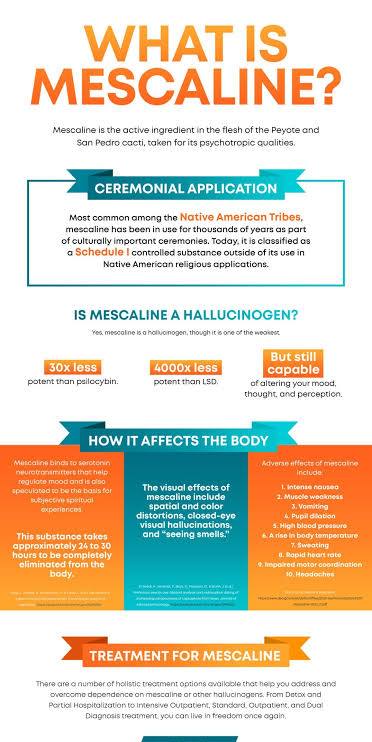
Mescaline is a naturally occurring psychedelic compound classified as a phenethylamine. It primarily affects serotonin receptors in the brain, especially the 5-HT2A receptor, which plays a central role in perception, mood, and cognition. Scientific analysis of mescaline effects and safety often begins with its pharmacological mechanism.
When consumed, mescaline is absorbed through the digestive system and metabolized in the liver. Its effects typically emerge gradually compared to other psychedelics, reflecting its slower onset and extended duration. Researchers have noted that this extended timeline influences both psychological experience and physiological response patterns.
To understand related psychoactive substance behavior, please review synthetic cannabinoid risk patterns.
Additionally, mescaline’s interaction with neural signaling pathways can alter sensory perception, spatial awareness, and emotional processing. These changes are studied in controlled clinical environments to better understand consciousness and cognition.
For a broader comparison of psychedelic substances, please explore LSD effects and risks analysis.
Although mescaline shares similarities with other psychedelics, its chemical structure and subjective effects differ significantly, making it a distinct subject of scientific interest.
Documented Psychological and Physical Effects
Research literature describes a range of psychological effects associated with mescaline exposure, including visual distortions, altered sense of time, and changes in emotional processing. Studies of mescaline effects and safety often highlight variability in user experiences depending on environment and mental state.
Physiological effects may include increased heart rate, mild nausea, and changes in blood pressure. These reactions are typically temporary, but they can vary depending on dosage and individual sensitivity. Scientists emphasize that controlled conditions are essential when evaluating these outcomes.
In addition, researchers have observed that psychological responses may range from introspective and emotionally meaningful experiences to anxiety or confusion. Set and setting remain critical variables in determining outcome variability.
For further context on related psychoactive substances, please review ayahuasca effects and risks analysis.
These findings illustrate that mescaline’s effects are not uniform and depend heavily on biological and environmental factors.
Safety Considerations and Health Risks
Safety research on mescaline focuses on both acute physiological effects and potential psychological risks. Although some studies suggest relatively low toxicity compared to certain other substances, risks still exist, particularly in uncontrolled environments. For a better understanding, please read 2C-I effects and safety considerations
When analyzing mescaline effects and safety, researchers emphasize cardiovascular strain as a key concern, especially for individuals with pre-existing conditions. Elevated heart rate and blood pressure may pose risks in vulnerable populations.
To understand broader risk patterns, please read on dark web drug safety frameworks.
Psychological risks include anxiety, confusion, and distressing perceptual experiences. In rare cases, individuals may experience prolonged psychological discomfort following intense experiences, though such outcomes remain insufficiently documented in long-term studies.
Researchers also stress the importance of substance purity and dosage accuracy, as variability in natural sources can influence both intensity and safety outcomes.
Overall, safety assessments remain incomplete due to limited large-scale clinical trials.
Research Limitations and Scientific Challenges
Scientific research on mescaline faces several methodological limitations, including small sample sizes, ethical restrictions, and variability in study conditions. As a result, conclusions about mescaline effects and safety remain partially constrained.
One major challenge is replicating consistent experimental conditions, as psychological outcomes depend heavily on environment and participant expectations. Additionally, long-term studies are limited, making it difficult to assess enduring psychological or neurological effects.
To understand broader psychedelic research frameworks, please explore dark web research methodologies.
Another limitation involves variability in natural sources, as mescaline concentration can differ significantly between cactus species and preparations. This complicates dosage standardization in research environments.
Despite these challenges, ongoing studies continue to improve understanding of psychedelic pharmacology and mental health applications.
External Authority Sources for Scientific Context
For additional scientific and policy context, researchers often reference global organizations and technical resources that study psychoactive substances, public health, and neurobiology.
For further information on digital privacy, research ethics, and online behavioral systems, please explore digital rights and safety research.
For technical background on anonymized communication systems and network privacy, please explore Tor network documentation.
For cybersecurity research and threat analysis related to online ecosystems, please explore security reporting and incident analysis.
These sources provide broader context for understanding how scientific research intersects with public health and digital environments.
FAQ: Mescaline Effects and Safety
What is mescaline and why is it studied scientifically?
Mescaline is a naturally occurring psychedelic compound found in certain cactus species. Researchers study it to understand its effects on perception, cognition, and emotional processing. In discussions of mescaline effects and safety, it is often examined in controlled laboratory settings rather than recreational contexts. Scientists are particularly interested in its interaction with serotonin receptors. These studies help inform broader understanding of psychedelic compounds and brain function.
What are the most common physical effects of mescaline?
Common physical effects include changes in heart rate, mild nausea, and variations in blood pressure. These effects are usually temporary but can vary depending on individual physiology and dosage. Research on mescaline effects and safety highlights that physical responses are generally less severe in controlled environments. However, variability remains a key factor in outcomes. Scientists continue studying how these effects interact with neurological processes.
Can mescaline cause psychological distress?
Yes, psychological distress is possible, particularly in uncontrolled or unfamiliar environments. Some individuals may experience anxiety, confusion, or overwhelming sensory perception. Studies of mescaline effects and safety emphasize that mental state and environment strongly influence outcomes. While some experiences are reported as positive or introspective, others can be challenging. Researchers highlight the importance of controlled conditions in clinical studies.
How does mescaline compare to other psychedelics?
Mescaline differs from substances like LSD or psilocybin in duration, onset, and subjective experience. It tends to have a slower onset and longer duration compared to some other psychedelics. Research comparing mescaline effects and safety with other compounds suggests both similarities and distinct differences in receptor activity. These distinctions make it an important subject in neuropharmacology. However, direct comparisons remain limited due to differing study designs.
Why is more research needed on mescaline?
More research is needed due to limited large-scale clinical trials and variability in study conditions. Current findings are based on small sample sizes and controlled environments. Studies on mescaline effects and safety continue to evolve as scientific interest in psychedelics grows. Researchers aim to better understand long-term effects, therapeutic potential, and risk factors. Expanded research could improve both medical understanding and harm reduction strategies.
Conclusion: Mescaline Effects and Safety
Scientific interest in mescaline continues to grow as researchers expand their understanding of psychedelic compounds and their effects on human cognition. Current evidence suggests that mescaline effects and safety depend heavily on dosage, environment, and individual biological factors.
Although studies have identified both psychological and physiological impacts, long-term data remains limited. This makes cautious interpretation essential when reviewing existing literature. Researchers continue to emphasize controlled conditions and standardized methodologies to improve reliability and safety assessments.
Overall, mescaline remains an important subject in psychedelic science due to its unique pharmacological profile and cultural history. Continued research will help clarify both its potential applications and associated risks, contributing to a more complete understanding of psychedelic substances in general.