
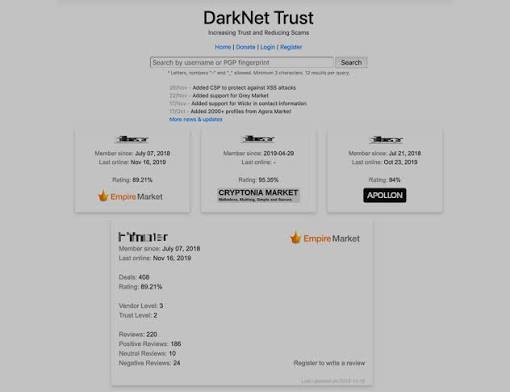
Introduction: Darkweb Vendor Trust
Trust is one of the most complex challenges in anonymous online environments. Unlike traditional digital platforms, hidden-service ecosystems often operate without familiar identity verification systems, consumer protections, or centralized accountability. As a result, researchers examine darkweb vendor trust to understand how reputation, credibility, and deception develop within these communities.
For more insight, please explore vendor verification overview.
Although trust mechanisms may appear similar to those found on conventional websites, they function under very different conditions. Reputation signals can be manipulated, identities can be copied, and historical records can disappear quickly. Therefore, cybersecurity researchers analyze behavioral patterns, technical indicators, and ecosystem changes rather than relying on simple ratings or public claims.
To understand how marketplace structures influence reputation, please explore the comparison between vendor shops and markets. Comparing these models helps researchers understand how centralized platforms and independent storefronts create different trust and accountability structures.
This article examines trust from a research and cybersecurity perspective. It focuses on reputation systems, fraud awareness, digital identity challenges, and the methods analysts use to study reliability in anonymous online environments. These issues are particularly relevant when researching darkweb vendor shops, where independent operators may rely on reputation and verification signals to establish credibility.
What Is Darkweb Vendor Trust?
The concept of darkweb vendor trust refers to the way online communities attempt to establish confidence between unknown participants operating within anonymous digital environments. In traditional commerce, trust often comes from legal protections, verified identities, established brands, and customer service systems. Anonymous networks remove many of these familiar signals.
Because of this difference, researchers study alternative trust indicators. These may include historical activity patterns, communication behavior, reputation history, and consistency over time. However, none of these factors can guarantee authenticity. Instead, they provide researchers with information about how online communities attempt to create order in environments where identity verification is limited.
To understand broader marketplace structures, researchers can explore darknet marketplaces and the systems that shape vendor relationships, reputation, and accountability.
The study of trust within anonymous ecosystems is not limited to one type of platform. It also applies to online fraud networks, underground forums, and other environments where participants interact without traditional accountability.
Furthermore, trust systems themselves can become targets of manipulation. False reviews, impersonation attempts, and fabricated reputations demonstrate why researchers approach anonymous reputation systems cautiously.
Therefore, the study of darkweb vendor trust is less about determining whether a specific participant is reliable and more about understanding how digital communities create, maintain, and exploit reputation signals.
How Reputation Systems Attempt to Build Trust
Reputation systems are a common feature across many online communities. Their purpose is to provide users with information about previous activity and encourage responsible behavior. In anonymous environments, however, reputation becomes more complicated because identities are difficult to verify.
Researchers analyzing darkweb vendor trust often examine how reputation systems function as social mechanisms. Feedback histories, transaction records, and community discussions may influence perceptions of credibility. Yet these systems are vulnerable to manipulation because the underlying identities may not be independently confirmed.
For a deeper look at darknet market reputation systems, researchers can examine how feedback, transaction history, community discussion, and reputation signals influence perceptions of credibility.
Additionally, reputation can create a false sense of security. A long history does not necessarily indicate legitimacy, while negative information may sometimes result from conflicts, misinformation, or coordinated attacks. Consequently, cybersecurity analysts treat reputation data as one piece of evidence rather than a final conclusion.
Modern digital investigations increasingly combine multiple forms of analysis. Researchers may examine technical infrastructure, communication patterns, historical events, and external intelligence sources to understand online behavior.
Moreover, reputation systems demonstrate a broader lesson about digital trust. Even on mainstream platforms, ratings and reviews require careful interpretation. Anonymous ecosystems simply highlight these challenges more clearly.
Why Darkweb Vendor Trust Is Difficult to Measure in Anonymous Ecosystems
Measuring trust becomes challenging when identity, accountability, and verification are limited. In conventional online services, organizations often confirm users through documents, payment records, or established reputation. Anonymous ecosystems remove many of these traditional verification methods.
As a result, darkweb vendor trust depends heavily on indirect signals. Researchers may study consistency, communication patterns, technical infrastructure, and historical behavior. However, these indicators remain imperfect because sophisticated actors can attempt to imitate legitimate behavior.
To understand how researchers evaluate misleading digital identities, please explore fake onion links and impersonation techniques that can make fraudulent services appear legitimate.
Another challenge involves the temporary nature of online communities. Platforms can disappear, records can become unavailable, and identities can change frequently. This creates difficulties for researchers attempting to build accurate historical timelines.
Furthermore, trust failures often reveal broader cybersecurity lessons. Identity theft, impersonation, social engineering, and reputation manipulation are not exclusive to hidden networks. Similar techniques appear across many forms of online fraud.
Therefore, studying trust within anonymous ecosystems provides valuable insight into a wider digital security issue: how people make decisions when reliable identity information is unavailable.
Common Darkweb Vendor Trust Failures and Reputation Abuse
Trust systems can create structure, but they can also become targets for abuse. Researchers studying darkweb vendor trust frequently examine how reputation manipulation, impersonation, and misleading identity signals affect anonymous online environments.
One major challenge is the difficulty of separating genuine reputation from manufactured credibility. In any online community, users may attempt to influence perceptions through false feedback, coordinated campaigns, or misleading claims. Anonymous environments create additional complications because verifying the origin of information becomes significantly harder.
Researchers must also consider how deceptive identities, false claims, and manipulated reputation signals can undermine trust. These problems demonstrate why reputation should be evaluated alongside behavioral, technical, and historical evidence rather than treated as definitive proof.
Furthermore, reputation abuse is not limited to individual actors. Entire platforms can experience trust failures when administrators, infrastructure providers, or community members lose credibility. Historical examples show that even established digital communities can collapse when users no longer believe that information systems are reliable.
Researchers therefore focus on patterns rather than individual claims. They examine changes in activity, communication behavior, technical infrastructure, and historical events. This approach helps separate temporary disputes from larger structural problems.
Another important issue involves identity continuity. In anonymous ecosystems, a digital identity may not always represent the same person or organization over time. This creates challenges for any system attempting to measure long-term reliability.
Consequently, cybersecurity professionals view trust as a dynamic process rather than a fixed reputation score. The same principle applies across the wider internet, where online identities, reviews, and digital communities require ongoing evaluation.
Cybersecurity Research Methods for Studying Darkweb Vendor Trust
Understanding anonymous online communities requires a combination of technical analysis, behavioral research, and historical investigation. Researchers do not rely on a single indicator when examining reputation systems or digital identity patterns.
The analysis of darkweb vendor trust often involves studying how information spreads, how communities respond to incidents, and how digital identities behave over time. These methods help researchers understand broader ecosystem trends without depending solely on user-generated claims.
For more clarity, researchers can examine how technical analysis, behavioral observation, historical records, and independent intelligence sources contribute to a broader understanding of anonymous online communities.
Technical analysis may include examining infrastructure changes, communication patterns, domain history, and security events. Meanwhile, behavioral research focuses on interaction patterns, reputation changes, and community responses.
Additionally, researchers compare current events with historical examples. This allows analysts to identify recurring patterns, including reputation failures, impersonation attempts, and infrastructure disruptions.
Importantly, responsible research avoids assuming that every anonymous service or privacy-focused technology is connected to criminal activity. Privacy tools, encrypted communication, and anonymous systems can have legitimate uses in journalism, research, and personal security.
Therefore, studying trust within anonymous environments requires careful separation between technology, user behavior, and illegal activity. This balanced approach creates more accurate cybersecurity analysis.
How Anonymous Ecosystems Change Over Time
Digital ecosystems rarely remain static. As technology changes, communities adapt, and researchers observe continuous shifts in communication methods, infrastructure choices, and reputation models.
Historical analysis of darkweb vendor trust shows that trust systems often evolve after major disruptions. When communities experience fraud, security incidents, or enforcement activity, participants may change how they evaluate information and credibility. These changes are also part of the broader darknet market lifecycle, where platforms and vendor relationships can evolve as the surrounding ecosystem changes.
For additional context, researchers can explore the history of darknet markets to understand how marketplace disruptions, migrations, and changing reputation systems have influenced anonymous online ecosystems.
Over time, researchers have observed movement toward more complex reputation mechanisms, stronger identity signals, and alternative methods of establishing credibility. However, every new system introduces different challenges.
Technology also influences these changes. Advances in automation, artificial intelligence, and blockchain analysis have transformed how cybersecurity professionals study anonymous networks. At the same time, malicious actors may attempt to use new technologies for deception or manipulation.
Moreover, ecosystem changes demonstrate that trust is not only a social issue but also a technical one. Digital communities depend on infrastructure, communication systems, and information accuracy.
By studying these developments, researchers gain insight into broader questions about online identity, reputation management, and cybersecurity resilience.
The Role of Verification in Digital Reputation Research
Verification is a central concept when studying trust online. In traditional systems, verification may involve government records, business registration, or established identity providers. Anonymous environments lack many of these conventional mechanisms.
As a result, researchers examine alternative verification concepts. These may include consistency of behavior, technical evidence, historical records, and independent information sources. However, verification methods must always be evaluated carefully because no single signal provides complete certainty.
For a closer look at digital verification challenges, please explore dark web link verification practices and the methods researchers can use to evaluate the consistency and authenticity of unfamiliar online identities.
The broader lesson extends beyond anonymous networks. Modern internet users regularly encounter uncertain information, fake profiles, manipulated reviews, and misleading digital identities.
Therefore, the study of darkweb vendor trust provides a useful example of a much larger cybersecurity challenge: determining reliability in environments where information quality varies.
Effective digital trust research combines multiple perspectives. Technical analysis, human behavior, historical context, and independent verification all contribute to stronger conclusions.
External References for Contextual Research in Darkweb Vendor Trust
Research into anonymous online ecosystems requires reliable external sources that explain both the technical foundations of privacy networks and the broader cybersecurity landscape. The following references provide additional context for understanding digital trust, online anonymity, cybercrime research, and responsible security analysis.
These sources are included to support educational discussion. They help distinguish between privacy technologies, cybersecurity research, and the misuse of online systems. By combining technical documentation with threat intelligence resources, researchers can develop a more accurate understanding of how trust and reputation challenges appear across digital environments.
Europol – Cybercrime Intelligence and Online Threat Research
For more insight, please explore Europol cybercrime intelligence resources.
Europol provides research and operational analysis covering organized cybercrime, online fraud, financial crime, and international cooperation between law enforcement agencies. Its publications offer valuable context for understanding how digital criminal ecosystems evolve and how investigators analyze patterns of online activity.
This perspective is particularly useful when examining reputation failures, fraudulent identities, and trust-related risks. Cybercrime investigations frequently involve analyzing relationships between accounts, infrastructure, communication patterns, and financial activity.
Tor Project – Understanding Privacy Network Technology
For more insight, please explore Tor Project documentation.
The Tor Project provides technical explanations of onion routing, relay networks, and privacy-focused communication technology. Understanding this infrastructure is important because the technology itself is separate from how individuals or groups choose to use it.
From a research perspective, studying privacy technology helps analysts avoid inaccurate assumptions. Anonymous communication systems can support legitimate activities such as journalism, research, and privacy protection while also presenting challenges for cybersecurity investigations.
Electronic Frontier Foundation – Digital Privacy and Security Research
For more insight, please explore Electronic Frontier Foundation privacy resources.
The Electronic Frontier Foundation publishes research related to digital rights, encryption, surveillance, and online privacy. Its work provides important context for discussions about identity, anonymity, and responsible technology use.
These references together create a balanced framework. Europol contributes the cybercrime intelligence perspective, the Tor Project explains technical infrastructure, and the EFF provides broader privacy and digital rights analysis.
FAQ: Darkweb Vendor Trust
1. What does darkweb vendor trust mean from a cybersecurity perspective?
From a cybersecurity perspective, darkweb vendor trust refers to how anonymous online communities attempt to evaluate reliability without traditional identity verification systems. Researchers study reputation signals, communication patterns, historical behavior, and technical indicators to understand how trust develops. However, these signals are not guarantees of authenticity because anonymous environments allow manipulation. The topic is mainly examined to understand digital reputation challenges and online fraud risks.
2. Why is trust difficult to establish in anonymous online environments?
Trust becomes difficult when participants cannot easily verify identities or rely on established institutions. Traditional online platforms often use account verification, customer protections, and legal accountability mechanisms. Anonymous ecosystems remove many of these safeguards, creating uncertainty around information accuracy. As a result, researchers examine broader patterns instead of relying on individual reputation indicators.
3. Can online reputation systems be manipulated?
Yes, reputation systems across the internet can be manipulated through false reviews, fake identities, coordinated campaigns, and misleading information. Anonymous environments make these problems more difficult because identity verification is limited. Researchers therefore analyze multiple sources of evidence rather than treating ratings or feedback as definitive proof. This approach also applies to mainstream platforms where digital reputation can influence user decisions.
4. How do researchers study trust in hidden online communities?
Researchers combine several methods, including technical analysis, historical research, behavioral observation, and cybersecurity intelligence. They examine infrastructure changes, communication patterns, and ecosystem trends over time. This helps identify broader developments without depending on unverified claims. The goal is understanding digital behavior and security risks rather than creating simple trust rankings.
5. Why is studying anonymous digital trust important?
Studying anonymous digital trust provides insight into larger cybersecurity issues affecting the entire internet. Problems such as impersonation, misinformation, fake reviews, and identity abuse appear across many online platforms. Research in anonymous environments highlights how difficult it can be to evaluate information without reliable verification. These lessons help improve digital safety awareness and security practices.
Conclusion: Darkweb Vendor Trust
The study of darkweb vendor trust reveals important lessons about how digital communities attempt to create reliability in environments where identity verification is limited. Reputation systems, historical activity, and technical indicators can provide useful information, but they must always be evaluated carefully.
Modern cybersecurity research increasingly recognizes that trust is not created by one feature alone. Instead, it develops through a combination of technical evidence, behavioral patterns, transparency, and independent analysis.
By examining darkweb vendor trust through a research perspective, analysts can better understand broader challenges involving digital identity, online reputation, and cybersecurity resilience. These lessons extend beyond anonymous networks and apply to many areas of modern internet activity.