
Introduction
Without ahmia dark web search, finding information on the Tor network presents unique challenges. Unlike the public internet, hidden services are not easily discoverable through mainstream search engines. Many onion sites change addresses, disappear without notice, or deliberately avoid visibility. As a result, specialized search platforms have emerged to help users locate resources across anonymous networks.
Among these tools, ahmia dark web search has become one of the most recognized options for discovering publicly accessible onion services. Researchers, journalists, cybersecurity professionals, and privacy advocates often reference Ahmia because of its structured approach to indexing content on the Tor network. Rather than acting as a simple directory, it attempts to organize searchable information while filtering content that violates its indexing policies.
For more insight, please explore dark web search engines overview and how to find onion sites safely, particularly when search results need to be combined with careful source evaluation.
Understanding how Ahmia operates helps explain the broader challenges of hidden service discovery and highlights the role search engines play within decentralized online environments.
What Is Ahmia Dark Web Search?
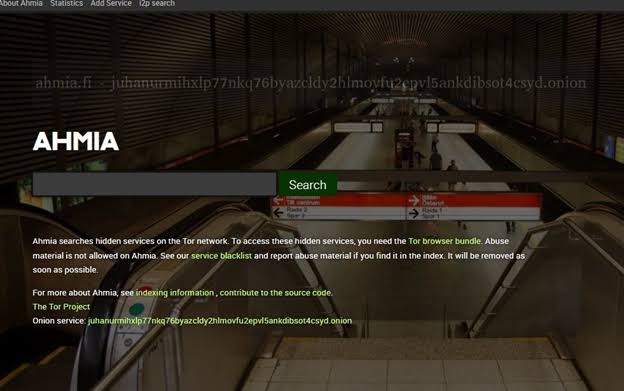
The term ahmia dark web search refers to a specialized search engine designed to index and organize information from publicly accessible onion services. Developed with a focus on accessibility and transparency, Ahmia aims to help users discover hidden websites while maintaining clear indexing standards.
Unlike many darknet directories that simply collect links, Ahmia attempts to provide searchable results based on indexed content. This approach allows users to locate information through keywords and topics rather than manually browsing through large collections of onion addresses.
One factor that distinguishes Ahmia from many alternatives is its emphasis on filtering harmful or abusive content. While no search engine can achieve perfect coverage, Ahmia has historically focused on creating a more research-oriented search environment.
To learn more, please explore Haystak dark web search and Torch dark web search when comparing discovery tools across the hidden web.
Because onion services frequently appear and disappear, search platforms like Ahmia provide an important layer of discoverability that would otherwise require extensive manual navigation. Consequently, it has become a widely referenced resource in discussions about darknet search technology.
How Ahmia Indexes Onion Services
Understanding ahmia dark web search requires examining how indexing works inside privacy-focused networks. Traditional search engines crawl publicly available websites through stable infrastructure. Hidden services operate differently and create significant technical challenges.
Many onion websites experience intermittent availability. Some remain online for years, while others disappear within days. Therefore, maintaining an accurate search index requires continuous monitoring and verification.
Ahmia attempts to identify and catalog accessible onion resources through automated indexing methods. However, not every hidden service can or should be indexed. Some site operators intentionally block crawlers, while others restrict access entirely.
As a result, search coverage remains incomplete by design. Nevertheless, searchable indexing provides substantial value because it helps users locate active content more efficiently than relying on manually maintained directories.
Because search discovery and direct navigation involve different access models, it is also useful to understand onion links vs clearnet when examining why hidden services require specialized indexing approaches.
Researchers often compare Ahmia with other onion search platforms to evaluate result quality, indexing depth, uptime reliability, and content discoverability across the Tor ecosystem.
Benefits of Using Ahmia for Research
Several characteristics explain why ahmia dark web search receives attention from researchers and cybersecurity professionals. First, it provides a structured approach to locating information within a network that lacks conventional navigation tools.
Search functionality significantly improves efficiency. Instead of manually exploring countless onion directories, users can search for topics, services, and resources directly through indexed results. This saves time and improves research workflows.
Another advantage involves transparency. Ahmia has historically published information regarding its indexing approach and content policies. This transparency helps researchers understand how search results are generated and what limitations may exist. For more insight, please explore verified onion links and verified dark web links, particularly when a discovered address needs to be evaluated independently before it is treated as authentic.
Additionally, searchable indexing contributes to ecosystem analysis. Researchers often use search engine visibility as one indicator of hidden service activity, network growth, and content availability. Consequently, Ahmia provides value beyond simple website discovery.
For more insight, please explore Tor Project.
Because hidden networks evolve continuously, tools that improve visibility remain important components of cybersecurity research and anonymous network analysis.
Limitations and Challenges of Ahmia
Despite its usefulness, ahmia dark web search faces limitations that affect every onion search engine. The most significant challenge involves coverage. Many hidden services intentionally avoid indexing, while others disappear before they can be cataloged.
Search result freshness presents another obstacle. Since onion services frequently change status, some indexed results may become inactive before updates occur. Therefore, users should verify availability independently and understand how to spot fake dark web links and avoid scams when outdated or misleading search results point toward deceptive destinations.
Content quality also varies considerably. Search engines can identify and organize information, but they cannot always determine reliability or credibility. Consequently, critical findings should be cross-referenced whenever possible.
To understand better, please review dark web search engines.
Technical instability further complicates indexing efforts. Network disruptions, changing addresses, and crawler limitations make complete coverage impossible. However, these constraints reflect the nature of anonymous networks rather than shortcomings unique to Ahmia.
Recognizing these limitations allows users to approach search results with realistic expectations and better research practices.
Ahmia’s Role in the Future of Onion Discovery
The future of hidden service discovery depends heavily on improvements in indexing, verification, and search quality. Platforms such as Ahmia demonstrate how structured discovery can function within decentralized networks.
As anonymous ecosystems continue evolving, demand for reliable search tools is likely to increase. Users expect better result relevance, improved uptime monitoring, and stronger filtering capabilities. Consequently, search platforms will continue adapting to meet these expectations.
At the same time, privacy-focused infrastructure creates constraints that differ from those faced by mainstream search engines. Complete indexing remains unrealistic because many onion services intentionally limit visibility.
Even so, ahmia dark web search illustrates how specialized search technology can improve accessibility while respecting the unique characteristics of anonymous networks. Its continued development contributes to broader understanding of information discovery within the Tor ecosystem.
For more insight, please explore Electronic Frontier Foundation.
FAQ
What is Ahmia dark web search?
Ahmia is a search engine designed to index publicly accessible onion services on the Tor network. It helps users discover hidden websites through searchable results rather than relying solely on directories. Researchers often use it to explore and analyze hidden service ecosystems.
How is Ahmia different from other dark web search engines?
Ahmia focuses on searchable indexing and maintains content filtering policies that influence what appears in results. Some other onion search engines emphasize broader indexing or different discovery methods. These differences affect coverage, result quality, and user experience.
Can Ahmia search the entire dark web?
No. No search engine can index every hidden service. Many websites block crawlers, restrict access, or disappear before indexing occurs. Consequently, search coverage remains incomplete across all darknet search tools.
Why do some Ahmia search results stop working?
Onion services frequently change addresses, experience downtime, or shut down permanently. Search engines must constantly update their databases to reflect these changes. Therefore, some results may become unavailable before updates occur.
Is Ahmia useful for cybersecurity research?
Yes. Cybersecurity researchers often use onion search engines to identify hidden services, study network trends, and evaluate ecosystem visibility. Ahmia provides a structured discovery tool that can improve efficiency during investigative and research activities.
Conclusion
The value of ahmia dark web search extends beyond basic website discovery. It represents an effort to bring structure and accessibility to a network where information can be difficult to locate. Through searchable indexing and organized results, Ahmia helps users navigate a constantly changing ecosystem of hidden services.
Although complete coverage remains impossible, Ahmia continues to serve as an important resource for researchers, journalists, privacy advocates, and cybersecurity professionals. As onion search technology evolves, ahmia dark web search will likely remain a significant reference point for understanding information discovery across anonymous networks.