
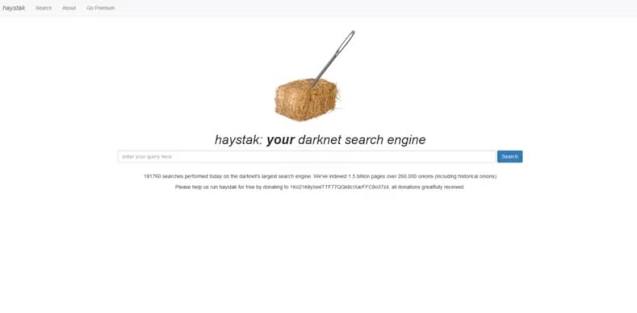
Introduction To Haystak Dark Web Search
Search engines like Haystak Dark Web Search play a critical role in helping users discover information across decentralized networks. Within the Tor ecosystem, locating active onion services can be challenging because websites frequently change, disappear, or intentionally avoid public indexing. As a result, specialized search tools have emerged to improve discoverability and provide structured access to hidden services. To understand how discovered addresses should be assessed before they are trusted, explore verified dark web links.
Among these tools, haystak dark web search has become one of the most frequently referenced onion search platforms. Researchers, cybersecurity professionals, journalists, and privacy advocates often examine its indexing methods when studying hidden web infrastructure. Unlike traditional search engines, Haystak operates in an environment where data availability is constantly changing and complete indexing is impossible.
For more insight, please explore dark web search engines overview and Ahmia vs Haystak search engines
Understanding how Haystak works provides valuable insight into the broader challenges of onion site discovery. It also highlights the technical limitations and opportunities that shape modern darknet search technology.
What Is Haystak Dark Web Search?
The term haystak dark web search refers to a search platform designed to index and organize content from onion services accessible through the Tor network. Unlike conventional search engines that crawl billions of public webpages, Haystak focuses specifically on hidden services that operate within privacy-focused infrastructure.
Its primary goal is improving discoverability. Since many onion websites are difficult to locate through standard navigation methods, search engines like Haystak provide a centralized way to identify resources that would otherwise remain hidden. This functionality makes it valuable for research, analysis, and understanding the structure of the darknet ecosystem.
One notable characteristic of Haystak is its emphasis on searchable content rather than simple directory listings. Instead of functioning solely as a manually curated collection of links, it attempts to index and categorize information from accessible onion resources. However, discovering an address through a search tool does not automatically establish authenticity, which is why researchers should also understand how verified onion links are authenticated before being trusted.
This approach allows researchers to identify trends, study network behavior, and evaluate hidden service visibility more efficiently than through manual exploration alone.
How Haystak Dark Web Search Indexes Onion Services
Understanding haystak dark web search requires examining how indexing works within anonymous networks. Traditional search engines benefit from stable infrastructure and publicly accessible websites. Onion services present a completely different challenge.
Many hidden services frequently change addresses or become inactive. Consequently, search engines operating in this environment must continuously verify availability and update their databases. This process requires significantly more maintenance than conventional web indexing.
Haystak attempts to gather information through automated discovery methods combined with publicly accessible onion resources. However, it cannot index every hidden service. Some websites deliberately restrict visibility, while others remain operational only for short periods.
As a result, search coverage remains inherently incomplete. Nevertheless, searchable indexing still provides substantial value because it helps users locate active content more efficiently.
To learn more about the broader discovery process, please explore best darkweb search engines and finding onion sites safely, particularly when evaluating how search results should be approached before unfamiliar addresses are trusted.
Researchers often compare Haystak’s indexing methods with other onion search tools to evaluate coverage, freshness, and result quality across different platforms.
Strengths of Haystak for Dark Web Research
Several characteristics explain why haystak dark web search receives attention within cybersecurity and research communities. First, it provides a structured method for discovering hidden resources. Without search engines, finding onion services would require extensive manual navigation.
Another advantage involves content accessibility. Search functionality allows users to identify relevant resources more quickly than browsing through large collections of directories or link repositories. Consequently, research workflows become more efficient.
Haystak also contributes to ecosystem visibility. By indexing publicly accessible hidden services, it helps researchers understand which categories of content remain active and how hidden networks evolve over time.
Additionally, searchable indexing supports trend analysis. Researchers studying anonymous communication systems often examine search coverage as an indicator of ecosystem growth or decline. This perspective provides useful context for understanding darknet infrastructure.
Although no search platform offers complete visibility, Haystak remains a valuable reference point when evaluating the discoverability of onion-based resources. For additional context, darknet indexing and search databases can help explain how discovery systems operate, while comparing onion links vs clearnet helps clarify why hidden services require fundamentally different discovery and access methods from publicly indexed websites.
Limitations and Challenges Of Haystak Dark Web Search
Despite its usefulness, haystak dark web search operates under significant constraints. The most important limitation is incomplete coverage. Many onion services intentionally avoid indexing, while others disappear before search engines can catalog them.
Freshness also presents a challenge. Since hidden services frequently go offline, search results can become outdated quickly. Therefore, users should verify information independently rather than assuming every result remains active. This is particularly important when search results lead to unfamiliar addresses, since learning how to spot fake dark web links and avoid scams can help researchers distinguish outdated or deceptive results from services supported by stronger verification evidence.
Another issue involves content quality. Search engines can index information, but they cannot always determine reliability. Consequently, users must evaluate sources carefully and cross-reference important findings whenever possible.
To understand this better, please review Torch dark web search.
Technical instability further complicates indexing efforts. Because onion networks prioritize anonymity over discoverability, search platforms often face obstacles that do not exist on the public internet.
These limitations do not eliminate Haystak’s value. Instead, they highlight the unique environment in which onion search engines operate.
Haystak and the Future of Onion Search
The future of onion discovery will likely depend on improved indexing, better verification systems, and enhanced result quality. Search engines such as Haystak provide a foundation for these developments by demonstrating how hidden services can be organized and explored. Within this broader ecosystem, dark web search engines collectively illustrate the different approaches used to improve discovery across anonymous networks.
As darknet ecosystems evolve, users increasingly expect more accurate search functionality. This demand encourages ongoing improvements in indexing methods and uptime monitoring. Consequently, future search platforms may offer more reliable discovery experiences.
Researchers also continue exploring automated techniques that improve result relevance while respecting anonymity requirements. However, privacy-focused infrastructure creates constraints that do not affect mainstream search engines.
For more insight, please explore Tor Project.
Even with technological advances, complete indexing will remain unlikely. Nevertheless, search engines like Haystak will continue serving an important role by helping users navigate complex and constantly changing hidden networks.
FAQ To Haystak Dark Web Search
What is Haystak dark web search?
Haystak is a search platform designed to index onion services accessible through the Tor network. Its goal is to improve discoverability within an environment where websites frequently change or disappear. Researchers often use it to locate publicly indexed hidden services and study darknet infrastructure.
How does Haystak differ from traditional search engines?
Traditional search engines crawl publicly accessible websites across the internet. Haystak focuses specifically on onion services that operate within privacy-focused networks. Because hidden services are less stable and more difficult to index, search coverage is naturally more limited.
Is Haystak useful for cybersecurity research?
Yes. Researchers frequently use onion search engines to understand hidden service visibility, network behavior, and ecosystem trends. Haystak provides searchable access to indexed resources, which can help analysts study anonymous online environments more effectively.
Can Haystak index every onion website?
No. Many hidden services intentionally avoid indexing, while others appear only briefly before disappearing. Consequently, no dark web search engine can provide complete visibility into the entire Tor ecosystem.
Why do search results sometimes become outdated?
Onion services often experience downtime, address changes, or permanent shutdowns. Search engines must constantly update their databases to maintain accuracy. Therefore, users should verify current availability before relying on any search result.
Conclusion
The role of haystak dark web search extends beyond simple website discovery. It represents an important effort to organize information within a decentralized environment where traditional search methods are often ineffective. By indexing publicly accessible onion services, Haystak helps researchers, analysts, and privacy-focused users better understand hidden network ecosystems.
Although indexing limitations remain unavoidable, Haystak continues to demonstrate the value of structured discovery tools within anonymous networks. As search technology evolves, platforms like Haystak will remain important reference points for understanding how information can be located, categorized, and analyzed across the Tor ecosystem.