
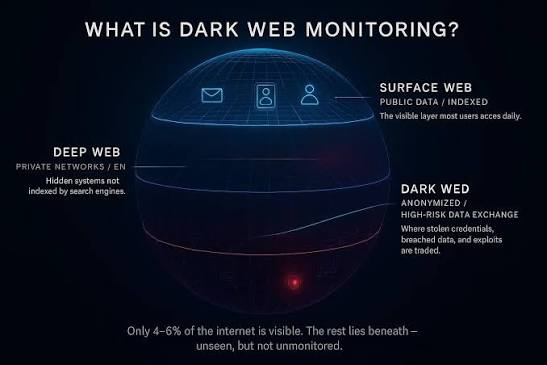
Introduction: Dark Web Leak Monitoring
Talking about Dark web leak monitoring, bear in mind that data breaches have become a major cybersecurity concern as organizations and individuals continue to store more sensitive information online. When stolen information appears in hidden online communities, researchers and security teams need reliable methods to identify potential exposure and understand the impact.
Dark web leak monitoring refers to the process of tracking publicly available indicators of compromised information across hidden online environments and threat intelligence sources. The goal is not to access illegal services but to understand emerging risks, protect affected users, and improve security responses. Because leaked information can spread quickly, early awareness plays an important role in reducing potential harm.
Modern cybersecurity research combines automated monitoring systems, threat intelligence analysis, and verification techniques. These methods help organizations identify possible data exposure while avoiding unreliable claims or outdated information.
Understanding how leak monitoring works provides valuable insight into breach detection, identity protection, and the wider challenges of managing online security threats.
What Is Dark Web Leak Monitoring and Why Does It Matter?
The internet contains many places where stolen information may appear after a security incident. While some data breaches become public through news reports, others may circulate privately before being discovered. Monitoring systems attempt to identify warning signs and provide information that helps organizations respond.
Dark web leak monitoring focuses on observing indicators associated with exposed credentials, personal information, corporate data, and other compromised records. Security professionals often use specialized intelligence platforms that collect signals from multiple sources and analyze potential threats.
However, monitoring does not mean that every hidden website can be tracked. Many online communities operate privately, change frequently, or restrict access. Therefore, cybersecurity teams usually combine multiple intelligence methods instead of depending on a single source.
For a deeper dive, please explore dark web data leaks and how exposed information creates security challenges.
Leak monitoring is valuable because stolen data can create several risks:
- Unauthorized account access
- Identity theft attempts
- Targeted phishing campaigns
- Corporate security threats
- Reputation damage
Additionally, monitoring helps organizations understand whether security controls are working effectively. If compromised credentials appear after an incident, companies can encourage password changes, strengthen authentication policies, and investigate possible entry points.
For more clarity, please see cybersecurity risks associated with dark web activity and how researchers evaluate online threats.
How Dark Web Leak Monitoring Systems Collect Information
Monitoring systems rely on different intelligence sources to identify possible data exposure. These systems may analyze security reports, publicly available information, threat intelligence feeds, and other indicators linked to cyber incidents.
The process usually begins with data collection. Security researchers gather signals connected to compromised accounts, leaked databases, malware activity, or suspicious online discussions. Next, automated tools help organize large amounts of information and identify patterns.
When reviewing dark web leak monitoring methods, it is important to understand that accuracy depends on verification. Not every reported leak contains genuine information. Some claims involve fake databases, recycled credentials, or incomplete records.
For additional knowledge, please read about dark web tracking methods and how researchers analyze online activity patterns.
A typical monitoring process may include:
- Collecting threat intelligence indicators
- Comparing exposed data with known breaches
- Checking whether information matches previous incidents
- Alerting affected organizations
- Supporting incident response decisions
Furthermore, responsible monitoring focuses on reducing harm. Security professionals do not need unrestricted access to hidden networks to understand risks. Instead, they analyze available intelligence and verify information through appropriate cybersecurity practices.
This approach makes leak monitoring useful for businesses, researchers, and individuals who want to improve their security awareness.
The Difference Between Data Breach Monitoring and Dark Web Monitoring
Although the terms are often used together, data breach monitoring and dark web monitoring are not exactly the same. Data breach monitoring focuses on identifying security incidents, while dark web monitoring examines whether compromised information appears within hidden online environments.
A company may discover a breach through internal security tools before any leaked information becomes visible elsewhere. Conversely, exposed data may appear online before the affected organization realizes an incident occurred.
The relationship between these areas makes dark web leak monitoring an important part of modern cybersecurity strategies. It provides another layer of awareness by helping organizations identify possible consequences after information exposure.
For more details, please explore dark web trends and how online threat environments continue to evolve.
Additionally, monitoring systems must consider the difference between genuine exposure and false alerts. Cybersecurity researchers evaluate evidence carefully because inaccurate information can create unnecessary concern.
Important factors include:
- The reliability of the source
- The age of the information
- Whether credentials remain active
- Whether affected users have taken protective actions
Therefore, leak monitoring should be viewed as a risk management tool rather than a guarantee of complete protection. It helps identify potential problems earlier, but strong security practices remain essential.
How Organizations Use Leak Monitoring for Cybersecurity Protection
Organizations increasingly rely on threat intelligence to understand where sensitive information may appear after a security incident. As businesses collect more customer records, employee information, and operational data, the consequences of exposure become more significant.
Dark web leak monitoring supports cybersecurity teams by providing additional visibility into possible data exposure events. Instead of waiting for customers, employees, or external researchers to discover leaked information, organizations can receive alerts that allow faster investigation.
Monitoring solutions are commonly used alongside other security practices, including:
- Multi-factor authentication
- Employee security training
- Password management policies
- Incident response planning
- Network monitoring
These measures work together because leak detection alone cannot prevent every cyber incident. However, early awareness can reduce the time between exposure and response.
For more information, please explore dark web anonymous browsing and the privacy challenges researchers consider when studying hidden online environments.
Furthermore, organizations often use monitoring data to identify repeated security weaknesses. For example, if employee credentials appear after multiple incidents, security teams may review password policies or authentication controls.
Leak monitoring also supports compliance efforts. Many industries require organizations to protect customer information and respond appropriately when personal data is compromised.
However, businesses must interpret monitoring results carefully. A detected record does not always indicate an active threat. Information may be outdated, incomplete, or already addressed through previous security actions.
Therefore, effective monitoring combines technology, human analysis, and established cybersecurity procedures.
Understanding the Types of Information Found in Data Leaks
Not all leaked information creates the same level of risk. The potential impact depends on the type of data exposed, how current it is, and whether attackers can use it for harmful activities.
Common categories of leaked information include:
- Email addresses
- Usernames
- Password combinations
- Personal identification details
- Business documents
- Customer records
- Internal communications
The importance of dark web leak monitoring comes from identifying these different exposure types and understanding their possible consequences. A leaked email address may increase phishing risks, while exposed authentication details may create immediate account security concerns.
For a closer look, please check dark web product scams and how deceptive online activity can affect users.
Additionally, some leaks contain old information that has limited value, while others involve recently compromised data. Cybersecurity analysts examine context before determining the severity of an incident.
Researchers often evaluate questions such as:
- When was the information exposed?
- Is the data authentic?
- Are affected accounts still active?
- Has the organization responded?
This process prevents unnecessary alarm and improves decision-making.
Moreover, understanding leaked data categories helps individuals take practical security actions. Changing passwords, enabling stronger authentication, and reviewing account activity are examples of protective measures that can reduce exposure risks.
Challenges and Limitations of Dark Web Leak Monitoring
Although monitoring tools provide valuable intelligence, they also face several challenges. The hidden nature of many online communities makes complete visibility impossible. Some information may never become publicly discoverable, while other data may appear only briefly.
One challenge in dark web leak monitoring is distinguishing meaningful threats from inaccurate information. Cybersecurity researchers frequently encounter false claims, duplicate records, or outdated databases. Therefore, verification remains one of the most important parts of the process.
Another challenge involves the changing nature of online threats. Attackers frequently adjust their methods, move between platforms, and develop new ways to distribute stolen information.
For more insight, please explore dark web money transfer risks and how online financial threats are analyzed.
Additional limitations include:
- Limited visibility into private communities
- Changing online infrastructure
- Difficult source verification
- Large amounts of unstructured information
Because of these factors, monitoring should support broader cybersecurity strategies rather than replace them.
Furthermore, privacy considerations are important. Security researchers must handle information responsibly and avoid unnecessary collection or exposure of personal data.
A reliable monitoring approach focuses on prevention, awareness, and response. The purpose is to reduce harm by identifying potential risks early, not to provide unlimited access to hidden online spaces.
The Role of Researchers and Threat Intelligence Teams
Threat intelligence researchers play an important role in understanding how leaked information affects the wider cybersecurity landscape. Their work involves analyzing patterns, validating reports, and identifying emerging risks.
Unlike automated systems, human analysts can provide context. They can determine whether a data exposure event represents a significant security concern or simply contains outdated information with limited impact.
Dark web leak monitoring becomes more effective when technology and expert analysis work together. Automated tools can process large volumes of information, while researchers evaluate accuracy and relevance. This relationship is also important when examining how AI shapes dark web cybercrime and changes the way emerging threats are analyzed.
For more details, please explore journalists darkweb reporting and how professionals analyze online security events.
Threat intelligence teams may examine:
- Breach patterns
- Malware-related activity
- Credential exposure trends
- Cybercriminal tactics
- Industry-specific risks
Additionally, researchers help organizations understand how attackers use leaked information. A compromised password database, for example, may become part of phishing campaigns or account takeover attempts.
The goal of threat intelligence is not simply finding exposed information. Instead, it focuses on transforming collected data into useful security decisions.
Authoritative References for Further Research: Dark Web Leak Monitoring
Understanding cybersecurity threats requires reliable information from organizations focused on privacy, security, and digital rights.
For more insight, please explore Tor Project resources about privacy technology and how anonymous communication systems operate.
Additionally, please review Electronic Frontier Foundation resources covering digital privacy, online security, and user protection.
To dive deeper, please explore BleepingComputer cybersecurity reporting to understand current security incidents and emerging online threats.
FAQ: Dark Web Leak Monitoring
What is dark web leak monitoring used for?
Dark web leak monitoring is used to identify possible exposure of sensitive information after security incidents. It helps organizations and individuals understand whether credentials, personal details, or business data may have appeared in online threat environments. The process supports early awareness and allows security teams to investigate potential risks. However, monitoring does not guarantee that every leaked record will be discovered because many sources remain unavailable or difficult to verify.
Can dark web monitoring prevent data breaches?
No, dark web monitoring cannot prevent a breach from happening. Instead, it helps detect possible consequences after information has been exposed. Strong cybersecurity practices, including secure passwords, authentication controls, and employee awareness, remain essential for prevention. Monitoring provides additional visibility so organizations can respond faster when problems occur.
How accurate are dark web leak alerts?
The accuracy of leak alerts depends on the quality of the information source and the verification process. Some alerts may involve genuine exposed records, while others may contain outdated or incorrect data. Security professionals review context, timestamps, and available evidence before making decisions. Therefore, alerts should be treated as indicators that require analysis rather than automatic proof of compromise.
What type of data appears in online leaks?
Online leaks may contain different types of information, including usernames, email addresses, passwords, personal records, and business documents. The level of risk depends on how sensitive the information is and whether it remains usable. For example, exposed credentials can create account security concerns if users have reused passwords. Understanding the type of exposed information helps determine the appropriate response.
Is dark web monitoring only useful for large companies?
No, dark web monitoring can benefit organizations of different sizes as well as individuals. Small businesses may face serious risks because they often have fewer security resources. Individuals can also benefit from understanding whether their personal information has appeared in known exposure events. The value comes from improving awareness and responding quickly when potential risks are identified.
Conclusion: Dark Web Leak Monitoring
As digital threats continue to evolve, organizations and individuals need better visibility into how exposed information can create security risks. Dark web leak monitoring provides an additional layer of awareness by helping identify possible data exposure, understand breach consequences, and support faster response decisions.
However, monitoring should not be viewed as a complete cybersecurity solution. It works best alongside strong security practices, including authentication improvements, employee education, secure data handling, and regular risk assessments.
The value of leak monitoring comes from turning scattered threat information into useful security insights. By analyzing potential exposure carefully, researchers and security teams can reduce uncertainty and improve their ability to respond to emerging risks.
Ultimately, understanding leaked data, online threats, and digital exposure patterns helps create a more proactive approach to cybersecurity. Reliable monitoring, combined with responsible analysis, allows organizations and users to better protect sensitive information in an increasingly connected environment.