
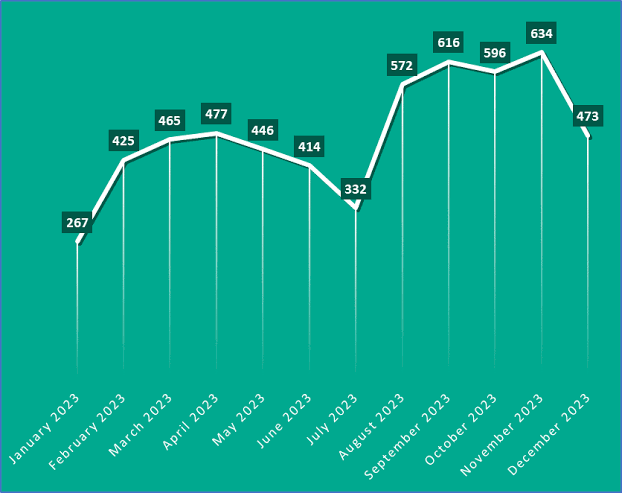
Introduction: Dark Web Trends
The hidden internet ecosystem continues to evolve rapidly, creating new challenges and research opportunities for cybersecurity professionals, investigators, journalists, and academic researchers. Understanding dark web trends requires examining technological developments, underground market behavior, privacy-enhancing tools, law enforcement strategies, and changing user activity patterns across anonymous networks. To know more, please see emerging dark web data leak trends, emerging dark web cybersecurity threats and AI trends shaping dark web cybercrime
Over the past decade, researchers have documented substantial shifts in darknet ecosystems. Traditional marketplace structures have transformed, communication methods have diversified, and operational security practices have become increasingly sophisticated. At the same time, law enforcement agencies and cybersecurity organizations have developed more advanced investigative capabilities.
To understand how anonymous content discovery operates across hidden services, please review dark web research overview.
Studying these developments helps researchers better understand cybercrime ecosystems, privacy technologies, digital underground economies, and the broader impact of anonymous internet infrastructure on global cybersecurity.
How Dark Web Ecosystems Continue to Evolve
The dark web environment today differs significantly from the ecosystem that existed during the early growth period of anonymous marketplaces. Earlier platforms often focused on centralized operations with relatively simple security mechanisms. However, contemporary platforms increasingly emphasize decentralization, operational compartmentalization, and advanced anonymity practices. To understand better, please explore emerging trends in DMT discussions and broader research chemical trends
Several technological factors have contributed to these changes. Improved encryption standards, enhanced anonymity networks, cryptocurrency privacy features, and stronger operational security practices have reshaped how users interact within hidden services. Consequently, researchers monitoring underground activity must adapt their methodologies continuously.
One of the most important dark web trends involves the migration from large centralized platforms toward smaller specialized communities. Rather than relying exclusively on major marketplaces, users increasingly participate in invitation-based forums, encrypted communication channels, and niche vendor ecosystems.
To explore further, please check darknet market lifecycle.
Additionally, researchers have observed significant changes in marketplace resilience strategies. Platform operators frequently implement mirror systems, backup infrastructure, and distributed communication channels to reduce disruption risks.
These developments demonstrate that hidden service ecosystems remain highly adaptive. As enforcement strategies evolve, underground communities continue modifying their operational structures, creating an ongoing cycle of innovation and disruption.
Market Activity and Commercial Behavior Patterns
Underground commercial activity remains one of the most researched areas within darknet investigations. Marketplaces regularly experience shifts in product categories, vendor reputation systems, payment mechanisms, and security requirements. These changes provide valuable insight into broader digital underground economies.
Recent research suggests that trust mechanisms have become increasingly important within anonymous marketplaces. Vendor reputation scoring, escrow systems, community verification methods, and independent review forums all contribute to market participation decisions. Consequently, reputation management now represents a critical operational factor.
To understand this process, please review darknet market reputation system.
Another important aspect of current dark web trends involves marketplace fragmentation. Rather than dominating through scale alone, many platforms focus on specific niches, user communities, or geographic markets. This fragmentation creates both operational advantages and investigative challenges.
Researchers also continue monitoring fraud patterns, marketplace shutdowns, and exit scam incidents. Such events significantly influence user trust and marketplace migration behavior across anonymous networks.
Furthermore, investigators increasingly examine how financial technologies influence underground commerce. Cryptocurrency adoption patterns, transaction obfuscation techniques, and evolving payment methods continue shaping the future structure of darknet economic activity.
Understanding these commercial patterns remains essential for researchers, cybersecurity professionals, and policymakers attempting to assess long-term developments within anonymous digital marketplaces.
Privacy Technologies and Anonymous Communication Trends
The evolution of privacy technologies remains one of the the most influential drivers shaping modern hidden networks. Researchers studying anonymous ecosystems have observed significant improvements in encryption protocols, decentralized communication systems, and privacy-preserving browsing methods over recent years.
One notable development involves the increasing adoption of compartmentalized operational security practices. Users frequently separate identities, devices, communication channels, and financial transactions to reduce exposure risks. Consequently, investigators and cybersecurity analysts now face increasingly complex attribution challenges.
Another important aspect of current dark web trends concerns the growing use of privacy-focused communication platforms alongside traditional onion services. Encrypted messaging applications, decentralized forums, and temporary communication channels have become more common throughout underground communities.
To understand better, please review dark web anonymous browsing.
Researchers have also documented increasing interest in anonymous search technologies and hidden service indexing methods. These tools affect how information spreads throughout darknet communities and influence the accessibility of underground services.
At the same time, security researchers continue examining how privacy-enhancing technologies can support legitimate uses, including journalism, human rights advocacy, whistleblower protection, and academic investigation. This dual-use nature remains a defining characteristic of anonymous internet technologies.
As anonymity tools become more sophisticated, both defenders and investigators must continually adapt their analytical approaches and technical capabilities.
Cybersecurity Threats and Emerging Criminal Methodologies
Cybersecurity researchers regularly monitor hidden services to identify emerging attack techniques, fraud operations, and criminal business models. Because underground communities often adopt new technologies rapidly, these environments can provide early indicators of broader cybercrime trends.
One significant observation involves the commercialization of cybercrime services. Rather than operating independently, threat actors increasingly purchase specialized services, including malware development, infrastructure access, credential harvesting tools, and operational consulting. This specialization has lowered barriers to entry for many cybercriminal operations.
Another critical area within contemporary dark web trends involves the growth of deception-based activities. Fraud schemes frequently exploit fake marketplaces, counterfeit products, cloned services, and manipulated reputation systems to target inexperienced users.
To learn more about this, please explore dark web product scams.
Researchers have also identified sophisticated phishing ecosystems designed specifically for anonymous networks. These campaigns often imitate trusted services, marketplaces, and verification platforms to steal credentials and financial assets.
To dig deeper, please explore how to spot fake dark web links and avoid scams like a pro.
Similarly, fake hidden services continue presenting substantial operational risks to users and investigators alike.
Moreover, cybersecurity analysts increasingly focus on infrastructure resilience, attack automation, and criminal collaboration networks. These factors collectively influence how underground ecosystems evolve and adapt to defensive measures.
Law Enforcement, Research, and Future Developments
International law enforcement agencies have significantly expanded their investigative capabilities over the past decade. Coordinated operations, digital forensics improvements, blockchain analysis techniques, and intelligence-sharing partnerships have reshaped the enforcement landscape.
Several major operations have demonstrated that anonymous platforms remain vulnerable to operational mistakes, infrastructure weaknesses, and human error. Consequently, researchers studying dark web trends increasingly emphasize operational security failures as a major factor in successful investigations.
To see how enforcement strategies have evolved, please explore lessons from darkweb takedowns.
Additionally, domain seizures and infrastructure disruptions continue influencing how hidden services operate and adapt.
Researchers anticipate several developments may shape future anonymous ecosystems, including decentralized marketplace architectures, enhanced privacy technologies, artificial intelligence integration, and more sophisticated fraud detection systems. However, predicting long-term outcomes remains challenging because technological innovation and enforcement capabilities continue evolving simultaneously.
Academic researchers, journalists, and cybersecurity professionals therefore remain essential contributors to understanding hidden digital ecosystems. Their work provides valuable insights into criminal activity patterns, privacy technologies, cybersecurity threats, and emerging online behaviors.
Trusted Authority References: Dark Web Trends
Independent research organizations and public institutions continue to play an important role in documenting the evolution of anonymous networks, cybercrime ecosystems, privacy technologies, and online security threats. The following resources provide valuable context for researchers, journalists, cybersecurity professionals, and policy analysts studying emerging developments.
Tor Project: Research on Anonymous Networks and Privacy Technologies
The Tor Project remains one of the most important organizations involved in privacy-enhancing technologies and anonymous communication research. Its publications, technical documentation, and research initiatives provide insight into how anonymity networks function, how they evolve, and how users and researchers interact with hidden services.
For more insight, please explore Tor Project research and documentation.
Researchers can use these materials to better understand onion routing, hidden service architecture, privacy protections, censorship circumvention technologies, and the broader evolution of anonymous internet infrastructure.
Europol: Cybercrime Intelligence and Threat Assessments
The European Union Agency for Law Enforcement Cooperation regularly publishes intelligence reports, strategic assessments, and investigative findings related to cybercrime operations, darknet marketplaces, ransomware groups, financial crime networks, and emerging online threats.
For further information, please refer to Europol’s cybercrime threat assessments.
These reports help researchers identify long-term behavioral patterns, understand enforcement strategies, and evaluate how criminal ecosystems adapt following major disruptions, marketplace seizures, and international investigations.
Electronic Frontier Foundation: Privacy and Digital Rights Research
The Electronic Frontier Foundation provides extensive research and educational resources related to digital privacy, online security, encryption policy, anonymity technologies, and internet freedom. Its publications offer valuable context for understanding both the benefits and challenges associated with privacy-enhancing technologies.
For additional knowledge, please explore Electronic Frontier Foundation privacy resources.
These materials assist researchers and policymakers in examining the balance between digital privacy protections, cybersecurity concerns, surveillance practices, and civil liberties within evolving online environments.
FAQ: Dark Web Trends
What are the most significant dark web trends observed in recent years?
Several developments have reshaped anonymous online ecosystems over the past decade. Researchers have documented increased marketplace fragmentation, stronger operational security practices, wider adoption of encrypted communication platforms, and more sophisticated fraud prevention mechanisms. Additionally, privacy technologies and cryptocurrency tools continue evolving rapidly. These factors collectively influence how underground communities operate and adapt to external pressures.
Why do dark web marketplaces frequently disappear or change?
Darknet marketplaces experience constant operational challenges, including law enforcement actions, infrastructure failures, administrator decisions, and internal fraud incidents. As a result, platforms often close unexpectedly or migrate to new environments. Many operators also establish backup systems and alternative communication channels to reduce disruption risks. Consequently, researchers must continuously monitor changes within the ecosystem.
How do cybersecurity researchers study hidden online networks?
Researchers use a combination of open-source intelligence, network analysis, behavioral studies, historical data collection, and cybersecurity monitoring techniques. Academic institutions, private security firms, and investigative journalists frequently collaborate to analyze patterns and trends. Furthermore, researchers examine technological developments, community behaviors, and criminal methodologies. This multidisciplinary approach provides a broader understanding of anonymous digital environments.
Are privacy technologies on the dark web always associated with criminal activity?
No. Privacy-enhancing technologies have many legitimate uses beyond criminal activity. Journalists, activists, researchers, whistleblowers, and individuals living under restrictive governments often rely on anonymity tools for protection and secure communication. While criminal actors also use these technologies, researchers generally view privacy tools as neutral technologies with multiple applications. Their impact depends largely on how users choose to employ them.
How are law enforcement agencies adapting to changing darknet environments?
Law enforcement organizations have expanded their technical capabilities significantly in recent years. Investigators now use advanced digital forensics, blockchain analysis, international intelligence sharing, and operational infiltration techniques. Additionally, cross-border cooperation has become increasingly important when targeting global cybercrime operations. These developments continue influencing how underground communities evolve and modify their operational practices.
Conclusion: Dark Web Trends
Understanding dark web trends requires examining technological innovation, criminal adaptation, privacy developments, and law enforcement responses simultaneously. Hidden online ecosystems continue evolving through changes in marketplace structures, communication technologies, operational security practices, and investigative methodologies. Consequently, researchers, cybersecurity professionals, journalists, and policymakers must remain adaptable and informed. Ongoing research and careful analysis remain essential for understanding both the risks and broader societal implications associated with anonymous digital environments.