
Introduction
The concept of torch dark web search is often associated with early onion directory-style search systems designed to index hidden services on the Tor network. Unlike standard search engines, these tools focus on non-public websites that are not accessible through traditional browsers, making them part of a broader ecosystem of privacy-focused discovery tools. Understanding how they function helps clarify both their utility and their limitations in modern dark web research.
For more insight, please explore dark web search engines overview and Haystak dark web search as another example of how specialized tools approach onion-service discovery.
In practice, torch dark web search is less about a single tool and more about a category of indexing methods used to locate .onion resources. However, due to the fragmented and unstable nature of hidden services, results are often inconsistent. This creates a need for careful interpretation, structured research methods, and awareness of risks when navigating Tor-based environments.
Modern users, researchers, and cybersecurity analysts often study these systems to understand how hidden content discovery evolves over time. At the same time, they rely on official privacy frameworks like the Tor Project to ensure safe browsing practices. This article breaks down how torch-style search systems work, where they fit in the darknet ecosystem, and what limitations users should expect.
What Torch Dark Web Search Means in the Onion Ecosystem
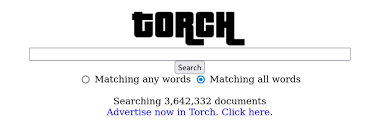
The term torch dark web search originally refers to one of the earliest Tor directory-style engines that attempted to index .onion websites. Instead of crawling the open web like Google, it focused on manually curated or semi-automated listings of hidden services. This made it a reference point for early darknet navigation.
Unlike modern search engines, these systems do not guarantee indexing completeness. Many onion sites are temporary, frequently offline, or intentionally unlisted. As a result, search coverage tends to fluctuate significantly. This makes torch-style systems more of a directory than a comprehensive search engine.
Additionally, modern darknet environments have shifted toward more specialized indexing tools and community-driven directories. While the original Torch concept influenced later platforms, its direct functionality has become less dominant. However, it remains an important historical reference for understanding how onion discovery evolved.
In this context, torch dark web search is often used as a general phrase describing any lightweight Tor-based search system rather than a single active engine. Researchers often compare it to other indexing tools when studying accessibility patterns and hidden service visibility. For additional context, explore Ahmia dark web search and verified dark web links to understand how discovery tools and verification practices work together.
How Torch-Style Onion Search Systems Operate
Understanding torch dark web search requires examining how onion indexing works at a technical level. Unlike traditional crawling systems, Tor-based search tools operate under strict limitations due to network anonymity and site instability. Crawlers must respect robots-like restrictions and avoid overloading hidden services.
Most onion search systems rely on a combination of manual submissions and periodic crawling. Since .onion sites can disappear without notice, indexing freshness is a major challenge. As a result, search results may include outdated or unreachable pages.
Another key factor is metadata scarcity. Many hidden services intentionally limit visible content to reduce exposure. This forces search engines to rely heavily on titles, basic descriptions, and link structures rather than full-page analysis. Consequently, relevance ranking is less accurate than on the surface web.
Security frameworks also play a major role. Organizations like the Electronic Frontier Foundation emphasize privacy-first design principles that influence how such systems are evaluated. Similarly, the Tor Project provides guidance on safe onion browsing practices.
In this environment, torch dark web search serves as a simplified discovery layer rather than a fully reliable indexing engine. Users must interpret results cautiously and verify sources independently whenever possible. Understanding verified onion links can also help researchers evaluate whether discovered addresses deserve additional trust.
Use Cases and Limitations of Torch-Based Search Tools
The practical applications of torch dark web search are mostly centered around research, cybersecurity monitoring, and academic study of hidden web structures. Analysts often use these systems to understand how onion services are distributed and how accessibility changes over time.
One common use case is mapping darknet structure. Researchers track how often certain categories of sites appear in directories and how long they remain active. This helps identify volatility patterns within the Tor ecosystem.
However, limitations are significant. Indexing gaps mean that many legitimate sites may never appear in results. At the same time, outdated listings can lead to dead links or irrelevant pages. This reduces reliability for any task requiring comprehensive coverage.
Furthermore, content classification is often minimal. Unlike modern search engines, there is little semantic filtering, which increases the risk of encountering misleading or low-quality entries. For this reason, professionals often combine multiple tools, including curated lists and security reports from sources like BleepingComputer.
Despite these issues, torch dark web search remains useful for observational research. It provides a snapshot of hidden web availability at a given time, even if that snapshot is incomplete. Researchers looking beyond individual search results can also explore dark web search engines to understand the broader range of tools used for hidden-service discovery.
Safety Considerations When Using Onion Search Engines
Security is a critical concern when discussing torch dark web search, as onion environments often contain unstable or unverified content. Users should prioritize anonymity tools and avoid interacting with unknown services without proper validation.
One of the primary risks is exposure to malicious or deceptive sites. Because onion domains can be created anonymously, verification is difficult. This makes it essential to rely on trusted navigation frameworks, learn how to find onion sites safely, and follow official guidance from organizations such as the European Union Agency for Cybersecurity.
Another important consideration is traffic analysis risks. Even though Tor provides anonymity layers, improper usage or external plugins can weaken protection. Security experts consistently recommend minimal browser configuration changes and adherence to official Tor guidelines.
Additionally, misinformation is common in darknet indexing systems. Since torch dark web search results may include outdated or unverified listings, users should treat all entries as potentially unreliable until confirmed through multiple sources and understand how to spot fake dark web links and avoid scams when deceptive results imitate legitimate services.
Finally, legal awareness is important. While accessing the Tor network is legal in many regions, engaging with certain content may violate local laws. Understanding jurisdictional boundaries is essential before exploring any onion-based search results.
Comparing Torch With Modern Dark Web Search Tools
Modern darknet search tools have evolved significantly beyond early torch-style systems. Today’s platforms often incorporate better crawling logic, improved uptime tracking, and more structured indexing methods. This makes them more reliable for research purposes. These differences also become clearer when comparing onion links vs clearnet, particularly in how each environment handles discovery, indexing, visibility, and access.
Unlike traditional torch dark web search implementations, newer systems may integrate community feedback, automated uptime verification, and categorized directories. These improvements reduce the number of dead links and improve overall usability.
However, even advanced tools still face inherent limitations due to the decentralized nature of the Tor network. Sites remain volatile, and indexing completeness can never fully match the surface web.
In comparison, torch-style systems remain valuable as a baseline model. They help illustrate the early architecture of onion discovery and highlight how far darknet indexing has progressed. For deeper technical understanding, the Tor Project remains the most authoritative reference for network design and privacy architecture.
In summary, torch dark web search represents both a historical and conceptual foundation for modern onion search engines, even if it is no longer the most advanced option available.
FAQ
1. What is torch dark web search used for?
Torch dark web search is primarily used as a concept for locating .onion sites through directory-based indexing. It helps users understand how hidden services are discovered within the Tor ecosystem. However, it is not a fully reliable search engine and should be used mainly for research and informational purposes.
2. Is torch dark web search still active today?
In most cases, torch-style search engines are no longer actively maintained or widely used in their original form. Modern alternatives have replaced many of their functions. However, the term is still used to describe early onion search directory systems.
3. How accurate are results from torch-style onion search tools?
Accuracy is generally limited due to the unstable nature of .onion sites. Many listings may be outdated, inactive, or incomplete. As a result, users should always verify information through multiple sources before relying on it.
4. Is it safe to use torch dark web search engines?
Safety depends on user behavior and awareness. While accessing Tor is legal in many regions, onion sites may contain unverified or harmful content. Using proper privacy tools and following official guidance from trusted organizations is essential for safer browsing.
Conclusion
The concept of torch dark web search provides important insight into the early structure of onion-based indexing systems and how hidden services were originally discovered. Although modern tools have surpassed these early directories in functionality, the underlying principles remain relevant for understanding darknet navigation.
Today, researchers and security analysts view these systems as historical frameworks that shaped current onion search technologies. They highlight both the strengths and limitations of decentralized indexing in anonymous environments. Ultimately, torch dark web search remains a foundational reference point for anyone studying the evolution of Tor-based search ecosystems.