
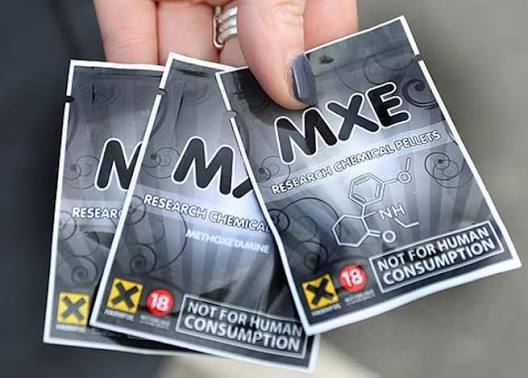
MXE, short for methoxetamine, is a synthetic dissociative substance that emerged as a so-called research chemical and later drew attention from toxicologists and drug-monitoring groups. Searches for mxe effects and risks often reflect a need for clear information about dissociation, mental health effects, toxicity, and legal status. For a deeper dive, please checkout risks associated with PCP analogs
This article examines what is known without promoting use or giving unsafe advice. For more insight, please explore the drug awareness overview.
What Is MXE?
Methoxetamine is a dissociative compound chemically related to ketamine and PCP-like substances. It affects brain signaling in ways that can alter perception, awareness, memory, and the sense of connection to the body. However, a chemical similarity does not make its effects predictable or safe.
MXE became widely discussed during the rise of novel psychoactive substances, often called NPS. Its rapid appearance in online drug markets created a major information problem: users, clinicians, and researchers frequently lacked reliable data about identity, purity, strength, or toxicity.
The term “research chemical” can also create a misleading impression. It does not mean that a substance has been proven safe through controlled medical research. To understand the broader category, please review novel psychoactive substances.
MXE Effects and Risks: Short-Term Changes and Acute Dangers
The acute effects of MXE can differ widely between people and situations. Dissociative substances may produce a feeling of detachment from the body or surroundings, distorted time perception, confusion, and impaired coordination. Some people may also experience anxiety, agitation, unusual thought patterns, or intense changes in perception.
Reported short-term effects may include:
- Dissociation and detachment from surroundings
- Confusion and impaired judgment
- Dizziness or poor coordination
- Changes in perception
- Nausea or vomiting
- Anxiety or panic
- Increased heart rate
- Elevated blood pressure
- Difficulty communicating clearly
These effects can create secondary dangers. A person who is confused or disconnected from their surroundings may fall, become injured, wander into unsafe areas, or struggle to recognize a medical emergency.
The phrase “dissociative drug effects” therefore covers more than unusual perceptions. Impaired awareness can affect decision-making at the same time.
Why MXE Effects and Risks Are Hard to Predict
One of the biggest challenges with methoxetamine is uncertainty. Unregulated substances may vary in identity and purity, and a product represented as one chemical may contain another. This makes individual reports difficult to compare and complicates medical assessment.
Potency can also vary across materials. As a result, people may experience unexpected effects even when they believe they know what they have encountered. Product misrepresentation, contamination, and drug substitution add further risk.
For a deeper dive into related online safety concerns, please explore darknet drug scams.
Another important factor is polysubstance exposure. Combining dissociatives with alcohol, opioids, stimulants, sedatives, or other psychoactive substances can produce unpredictable interactions. When several drugs affect consciousness, breathing, coordination, or the cardiovascular system, the medical picture becomes harder to predict.
How Does MXE Affect the Brain?
MXE is generally discussed as an NMDA receptor antagonist, placing it in a broad pharmacological category that includes other dissociative substances. NMDA receptors play a role in normal brain signaling, including processes linked to learning and perception.
Blocking or altering this signaling can contribute to dissociation and perceptual changes. However, researchers should avoid treating all NMDA antagonists as interchangeable. Differences in chemistry, metabolism, potency, and other receptor activity can lead to different effects and risks.
A useful distinction is that a reported experience does not establish a predictable medical outcome. Online anecdotes can describe how a substance felt to one person, but they cannot reliably determine what another person will experience or whether an exposure is safe.
For more context, please read dissociative research chemicals.
MXE Effects and Risks: Mental Health and Cognitive Concerns
Dissociative experiences can feel profoundly different from ordinary consciousness. For some people, that altered state may involve confusion, fear, paranoia, or severe disorientation. People with a history of mental health problems may face additional concerns, although individual outcomes remain difficult to predict.
Cognitive impairment can continue after the most noticeable effects appear to fade. Problems with attention, memory, judgment, and coordination may affect a person’s ability to travel safely, work, or make decisions.
Warning signs that should not be ignored include:
- Extreme confusion or inability to respond normally
- Severe agitation, panic, or unusual behavior
- Loss of consciousness
- Breathing problems
- Chest pain or serious cardiovascular symptoms
- Seizures or repeated vomiting
- Signs of injury during an altered state
These symptoms require urgent medical attention. In an emergency, contacting local emergency services is safer than waiting for the situation to resolve on its own.
What Are the Long-Term Risks of MXE?
The long-term health effects of MXE remain less certain than those of better-studied drugs. That lack of evidence is itself important. Limited research does not prove that long-term exposure is harmless.
Researchers examining emerging synthetic drugs often face a moving target. New compounds may appear faster than controlled studies can be completed. In addition, people may be exposed to mixtures or mislabeled substances, making cause and effect difficult to establish.
Potential long-term concerns discussed in relation to repeated dissociative drug exposure include changes in memory, mood, cognition, urinary health, and patterns of compulsive use. Still, MXE-specific evidence should be separated from broader evidence about related substances.
To understand better, please review ketamine analogs explained.
Why “Research Chemical” Is a Warning Sign, Not a Safety Label
The label “research chemical” is often used online to describe substances that sit outside established medical use and traditional drug markets. In practice, the term can hide major gaps in evidence.
A substance may have:
- Limited human research
- No established therapeutic use
- Uncertain long-term toxicity
- Variable legal status
- Inconsistent manufacturing standards
- A history of mislabeling or substitution
This creates an information gap. A compound can circulate online before scientists understand its full toxicology or before public-health systems have reliable data on patterns of harm.
The problem becomes more serious when marketing language suggests that a compound is “pure,” “legal,” or “safer.” Such claims can change quickly and may not be independently verified.
MXE Effects and Risks in the Context of Online Drug Trends
MXE also offers a useful case study in how online drug trends develop. Interest in novel substances can move quickly through forums, marketplaces, social platforms, and search results. Yet popularity does not equal scientific evidence.
Online visibility can also amplify misinformation. Descriptions may focus on desirable experiences while minimizing uncertainty, adverse events, or the risks created by mislabeled products. Consequently, readers should distinguish between anecdotal reports, vendor claims, journalism, and evidence from medical or scientific sources.
To explore further, please check dark web trends.
The wider lesson is that online drug information should be evaluated carefully. Anonymous reviews and informal reports may help identify emerging concerns, but they should not replace toxicology evidence, clinical guidance, or public-health alerts.
Is MXE Legal?
MXE’s legal status depends on the country or jurisdiction. In many places, methoxetamine is specifically controlled or may fall under broader laws that regulate psychoactive substances or chemical analogues.
Laws can change, so older web pages may provide outdated information. Legal status also does not determine health risk. A controlled substance can be dangerous, but an uncontrolled or newly emerging substance may carry serious uncertainty as well.
When researching darknet or online drug trends, it is also important to separate market visibility from legality. For additional knowledge, please read darknet stimulants, which examines how different categories of psychoactive substances can appear within broader online drug ecosystems.
What to Do in a Suspected MXE Emergency
If someone is experiencing severe symptoms after possible exposure, seek emergency medical help immediately. Do not rely on online advice to diagnose the situation.
While waiting for help:
- Stay with the person if it is safe to do so.
- Move them away from traffic, heights, water, and other hazards.
- Do not encourage driving or other risky activity.
- Do not assume they will “sleep it off.”
- Give emergency responders clear information about known or suspected exposure.
- Avoid confrontational behavior if the person is confused or frightened.
Medical professionals can respond more effectively when they know the suspected substance and any other drugs involved. However, if the identity is uncertain, it is still essential to report what is known.
How to Evaluate Information About Emerging Drugs
Reliable drug awareness starts with source quality. Look for information from public-health agencies, medical institutions, toxicology services, peer-reviewed research, and established harm-monitoring organizations.
Be cautious with sources that:
- Promise guaranteed safety
- Present personal stories as medical proof
- Hide uncertainty
- Use aggressive marketing language
- Claim laboratory quality without independent evidence
- Treat “legal” as a synonym for “safe”
Search results should also be read in context. A page may rank highly because of strong SEO rather than strong evidence. Comparing several authoritative sources can help readers identify where facts are established and where uncertainty remains.
MXE Effects and Risks: Key Takeaways
The most important point is that mxe effects and risks cannot be reduced to a simple list of sensations. MXE is an incompletely understood dissociative substance associated with altered perception, impaired judgment, acute toxicity concerns, and significant uncertainty around long-term outcomes.
Its history also shows why emerging drugs require careful research. Online interest can outpace medical knowledge, while product misrepresentation can make exposure even less predictable. When reliable evidence is limited, uncertainty should increase caution rather than encourage experimentation.
If severe symptoms occur after suspected exposure, emergency medical care is the appropriate response. For long-term awareness, readers should prioritize credible public-health information over vendor claims, viral posts, or anonymous anecdotal reports.
External authority links
- European Monitoring Centre for Drugs and Drug Addiction — useful for European drug monitoring and emerging psychoactive substance context.
- UNODC Early Warning Advisory — useful for global monitoring of novel psychoactive substances.
- U.S. National Library of Medicine — useful for linking relevant peer-reviewed literature where a suitable MXE-specific study is cited.
Frequently Asked Questions About MXE
What does MXE stand for?
MXE stands for methoxetamine, a synthetic dissociative substance. It became known as part of the broader novel psychoactive substance and research-chemical landscape.
Is MXE the same as ketamine?
No. MXE and ketamine share some pharmacological similarities, but they are different chemicals. Similarity does not mean identical effects, potency, duration, or health risks.
Why is MXE considered risky?
Risks include impaired judgment, severe confusion, accidents, possible cardiovascular effects, product uncertainty, and potentially dangerous interactions with other substances. Long-term effects are also less well understood.
Can MXE cause an overdose?
Severe or life-threatening toxicity can occur with psychoactive substances, especially when identity, purity, or exposure circumstances are uncertain. Polysubstance use can further increase danger. Anyone with severe symptoms needs urgent medical attention.
Is “research chemical” a sign that a substance is safe?
No. The term often indicates that human research and long-term safety data are limited. It should not be treated as a medical approval or safety guarantee.
Why is information about MXE sometimes inconsistent?
Evidence may be limited, older reports may differ in quality, and substances sold under a particular name may not always contain what they claim. Scientific studies and toxicology sources generally provide stronger evidence than anonymous online reports.
Conclusion
Understanding mxe effects and risks requires looking beyond online descriptions of the experience. The strongest evidence points to a dissociative substance with unpredictable acute effects, significant uncertainty, and the potential for serious harm in some circumstances.
A responsible approach combines accurate definitions, medical evidence, awareness of changing drug trends, and skepticism toward unverified claims. That approach gives readers a stronger foundation for evaluating emerging psychoactive substances without glamorizing, purchasing, or promoting their use.