
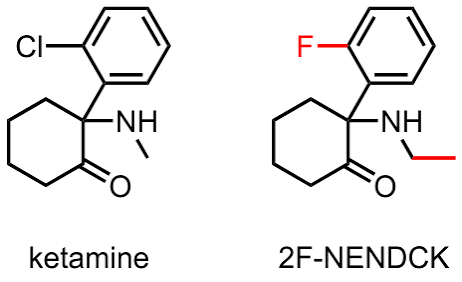
PCP analogs are a group of dissociative new psychoactive substances related to phencyclidine. They can alter perception, coordination, memory, and awareness of the body and surroundings. Some compounds appear in research settings, while others have emerged as unregulated recreational drugs. The key concern is uncertainty: chemical changes can produce very different effects, and human safety data often remain limited. For more insight, please explore the drug awareness overview.
What Are PCP Analogs?
PCP analogs are compounds designed around the chemical framework associated with phencyclidine and related arylcyclohexylamines. The wider family includes substances that may act on NMDA receptors, which help regulate communication between nerve cells. Blocking these receptors can produce dissociation, altered sensory processing, and changes in consciousness. However, similar structures do not guarantee similar strength, duration, metabolism, or toxicity.
The term can also create confusion because online sources use it broadly. Some discussions include classic PCP derivatives, while others group ketamine-related compounds and other dissociatives under the same umbrella. Scientific reviews therefore tend to use terms such as arylcyclohexylamines and new psychoactive substances. This distinction matters because evidence for one compound cannot automatically establish the safety of another.
PCP Analogs and the Dissociative Drug Class
A dissociative drug can make a person feel detached from the body or environment. PCP itself can cause hallucinations, impaired coordination, changes in behavior, and serious psychological effects. Medical sources also describe possible cardiovascular changes, seizures, kidney injury, and prolonged psychiatric problems after severe exposure. These risks provide useful context, but they should not be treated as a complete profile for every related compound.
Research on arylcyclohexylamines shows why caution is necessary. A review in PubMed notes that many newer compounds lack detailed toxicity data. It also reports that structural changes can alter pharmacokinetic and pharmacodynamic properties. In other words, a small molecular change may affect how a substance is absorbed, processed, and experienced. That uncertainty is central to understanding novel dissociatives.
How Do PCP Analogs Affect the Brain?
Many PCP-type substances are associated with NMDA receptor antagonism. NMDA receptors are involved in learning, memory, perception, and neural signaling. Interfering with that signaling can contribute to dissociation and unusual sensory experiences. Depending on the compound, users may report distorted time, detachment, confusion, impaired movement, or hallucinations.
The effects are not limited to perception. PCP exposure can also affect heart rate, blood pressure, breathing, temperature regulation, and muscle control. Some people may experience agitation, paranoia, or psychosis. These outcomes become especially concerning when the substance is unknown, mislabeled, or mixed with other drugs.
This is why the phrase “research chemical effects” should never imply predictable results. Products described by a chemical name may contain a different compound or an unexpected mixture. Without reliable testing, the actual exposure can be uncertain. That creates a risk separate from the pharmacology of the intended substance.
PCP Analogs: Common Effects and Warning Signs
Reported effects vary widely across compounds, but several themes appear in clinical and toxicological literature. Dissociation is one of the defining effects, often accompanied by impaired judgment and reduced coordination. Some compounds may also produce stimulation, sedation, sensory distortion, anxiety, or confusion. The same person can experience different outcomes across separate exposures.
Potential warning signs can include:
- severe confusion or disorientation
- hallucinations or loss of contact with reality
- extreme agitation or unusual behavior
- loss of coordination or uncontrolled movement
- seizures or loss of consciousness
- abnormal heart rate or blood pressure
- dangerous overheating or muscle rigidity
These signs require urgent attention when severe or rapidly worsening. MedlinePlus advises emergency medical help for suspected PCP overdose, especially when consciousness, seizures, psychosis, or severe agitation are involved. A person experiencing a medical emergency should receive professional care rather than home treatment.
Why PCP Analogs Can Be Difficult to Assess
One major issue is the lack of consistent human evidence. Established medicines often have years of clinical data, standardized manufacturing, and controlled dosing. Novel psychoactive substances may lack those safeguards. Researchers can have limited information about toxicity, interactions, long-term effects, or how the body metabolizes a newer compound.
Another issue is product identity. A label may describe a chemical class rather than a verified laboratory result. Mislabeling can make an apparent PCP analog something else entirely. Contamination can add another layer of risk, particularly when multiple psychoactive substances are present.
For a deeper dive, please explore the overview of novel psychoactive substances. It helps explain why emerging compounds can appear faster than regulators and researchers can evaluate them.
PCP Analogs and Long-Term Health Concerns
Long-term risks are harder to define than short-term effects. PCP itself has been associated with memory problems, mood changes, anxiety, and persistent psychiatric symptoms after repeated use. However, researchers cannot simply transfer every finding from PCP to every analogue. The available evidence varies considerably between compounds.
Dependence is another concern. Dissociative substances can create psychological problems for some users, particularly when use becomes repetitive or difficult to control. Withdrawal experiences may also occur after frequent PCP exposure. For newer analogs, the evidence base is less complete, which makes confident risk estimates difficult.
This uncertainty does not mean every compound has the same danger. Instead, it means risk assessments should reflect the quality of available evidence. A lack of reported harm is not proof of safety, especially when a substance has limited surveillance.
PCP Analogs and the New Psychoactive Substance Market
PCP-related compounds fit into a wider trend involving novel psychoactive substances. Online markets and informal distribution channels can accelerate the appearance of unfamiliar chemicals. That creates challenges for toxicologists, emergency departments, regulators, and public health agencies.
The European Union Drugs Agency has used early-warning systems to track new substances and assess emerging threats. Methoxetamine, for example, received formal attention because of concerns about its health and social risks. Such monitoring shows how evidence develops over time rather than appearing all at once.
For additional context, please review the article on ketamine analogs explained. It provides a useful comparison of how related dissociative compounds can differ in evidence, effects, and uncertainty.
Researchers and readers can also compare related substances without assuming they share identical risks. For example, the discussion of MXE effects and risks provides another example of why individual compounds require separate evidence reviews.
What Should Researchers and Readers Look For?
A reliable source should separate established evidence from speculation. It should identify the compound clearly, cite scientific or government sources, and explain where evidence remains limited. This approach is especially important when discussing substances that have multiple names or inconsistent online descriptions.
A useful evidence checklist includes:
- Is the chemical identity clearly established?
- Are the claims supported by peer-reviewed research?
- Are human data available, or are claims based mainly on animal or laboratory studies?
- Does the source distinguish one compound from another?
- Does it discuss uncertainty and adverse effects?
- Is the legal information current for the relevant location?
This method can also help readers identify misleading drug information online. Sensational claims often focus on unusual experiences while ignoring toxicity, interactions, or uncertainty. Balanced reporting does the opposite by presenting harms, evidence, and limitations together.
For more context on this wider category, please explore the guide to dissociative research chemicals. The comparison can help readers understand why chemical similarity does not establish identical effects.
Authority references PCP Analogs
For the article’s scientific foundation, I recommend keeping these three contextual references:
- PubMed review on arylcyclohexylamine derivatives — supports the discussion of pharmacology, emerging compounds, and limited toxicity data.
- MedlinePlus PCP information — supports effects, dependence concerns, and health risks.
- EUDA Early Warning System on new psychoactive substances — supports the monitoring and regulatory discussion.
PCP Analogs: Frequently Asked Questions
Are PCP analogs the same as PCP?
No. PCP is a specific chemical, while the term PCP analogs can describe structurally related compounds. Related substances may share some pharmacological features without producing identical effects. Their potency, duration, metabolism, and risks can differ.
Are PCP analogs safe?
There is no single safety answer for the entire group. Some compounds have very limited human research, while others have more documented toxicology. The lack of evidence for harm should not be interpreted as evidence of safety.
What are PCP analogs used for?
Some related compounds have appeared in scientific or pharmacological research. Others have been developed or encountered as novel psychoactive substances. Research status does not mean a substance is approved for human use.
What are the main risks of PCP-type dissociatives?
Potential concerns include impaired coordination, confusion, hallucinations, agitation, cardiovascular changes, seizures, and psychological effects. Severe poisoning can become a medical emergency. Risks can increase when the compound is unknown or combined with other substances.
Why are new dissociatives hard to study?
Researchers may lack controlled human studies, standardized samples, long-term follow-up, and reliable information about real-world exposure. New compounds can also appear faster than formal assessments can be completed. The EU Early Warning System illustrates the importance of monitoring these emerging substances.
What should someone do during a suspected overdose?
Seek emergency medical help immediately. Severe agitation, seizures, unconsciousness, psychosis, breathing problems, or dangerous behavior require professional assessment. In the United States, Poison Help can also provide guidance at 1-800-222-1222.
Final Takeaway
PCP analogs deserve careful attention because they combine dissociative pharmacology with substantial evidence gaps. Their effects can involve perception, coordination, mood, cardiovascular function, and consciousness. Most importantly, one analogue cannot be treated as interchangeable with another. Reliable research, current legal information, and cautious interpretation are therefore essential when evaluating claims about these substances.