
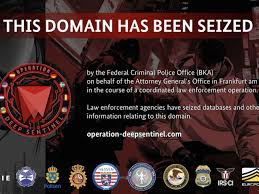
The topic of darkweb domain seizure has become increasingly important as law enforcement agencies expand their digital investigative capabilities. These operations often target hidden services, illicit marketplaces, and anonymized infrastructure across the dark web ecosystem. The process involves coordinated technical disruption, legal authority, and cross-border intelligence sharing.
In the context of cybersecurity research and threat intelligence, darkweb domain seizure represents a critical intersection of law enforcement and anonymity technologies. These operations also help explain why darknet market shutdowns can rapidly change marketplace infrastructure and user behavior.
Understanding how domains are taken offline helps explain broader questions such as how hidden services are tracked, why marketplaces disappear suddenly, and what technical vulnerabilities exist within onion-based infrastructures. This article explores those mechanisms in depth, along with their implications for users, investigators, and cybersecurity professionals.
How Darkweb Domain Seizures Work in Practice
The process of darkweb domain seizure typically begins with intelligence gathering from multiple sources, including undercover operations, blockchain tracing, and server infiltration. Once authorities identify a target, they coordinate with hosting providers, domain registrars, and sometimes international agencies.
In many cases, seizure does not mean decryption or direct access to hidden services. Instead, infrastructure disruption is achieved by replacing landing pages or redirecting traffic to enforcement banners. This approach is widely used in cases involving illicit marketplaces or fraud networks.
The concept of darkweb domain seizure also extends to onion services, which are not controlled by traditional DNS systems. Instead, investigators rely on operational security mistakes, metadata leaks, and traffic correlation analysis to locate servers. These methods often expose weaknesses in supposedly anonymous systems.
To understand this better, please review how active darknet markets can respond to infrastructure disruption and enforcement pressure
Additionally, technical analysts often study how exit nodes and relay behavior contribute to exposure. Over time, patterns emerge that allow agencies to predict infrastructure relationships between vendors, administrators, and hosting layers.
Legal Framework Behind Domain Seizure Operations
Legal authority plays a central role in darkweb domain seizure operations. Law enforcement agencies must typically obtain warrants or judicial approval before taking control of infrastructure. This ensures that digital evidence is admissible in court proceedings.
Different jurisdictions handle cyber enforcement differently. In the United States and Europe, agencies such as Europol and the FBI often collaborate on cross-border investigations. These collaborations help overcome jurisdictional limitations that would otherwise protect anonymized infrastructure.
The legal process also includes evidence preservation. Once a seizure occurs, forensic teams image servers, extract logs, and preserve transactional data. This step is essential for building criminal cases tied to illegal marketplaces or communication networks.
For further insight, researchers can examine lessons from darknet takedowns and how coordinated enforcement operations affect hidden-service infrastructure.
Another important factor is proportional enforcement. Authorities must balance privacy rights with criminal investigations, ensuring that legal boundaries are not exceeded during data acquisition or infrastructure shutdown.
Technical Indicators That Lead to Seizures
One of the most overlooked aspects of darkweb domain seizure is the role of technical intelligence. Many seizures occur not because of direct infiltration but due to operational mistakes made by administrators.
Common indicators include reused server configurations, poor encryption practices, and misconfigured onion routing setups. These weaknesses allow investigators to correlate hidden services with surface-level infrastructure.
Another key factor is traffic correlation analysis. By observing entry and exit patterns across the Tor network, analysts can sometimes identify timing overlaps that reveal server locations. Although not always precise, this method has proven effective in several high-profile cases.
In addition, compromised vendor communications and leaked metadata often accelerate investigations. Once a single node is exposed, entire networks can become vulnerable to cascading identification.
For a closer look at how enforcement pressure can affect marketplace infrastructure, researchers can also examine new dark web marketplaces and the emergence of replacement platforms after disruption
Impact of Domain Seizures on Darkweb Ecosystems
The impact of darkweb domain seizure extends beyond a single website or marketplace. Entire ecosystems can collapse when key infrastructure is removed or compromised.
Vendor trust is often disrupted first. Users begin to question whether marketplaces are legitimate or controlled by law enforcement. This uncertainty is particularly important when assessing trusted dark web marketplaces because perceived stability can change rapidly after enforcement disruption.
Over time, repeated seizures contribute to fragmentation of darknet ecosystems. Smaller, decentralized platforms replace large centralized marketplaces, making enforcement more complex but also reducing user trust. In some cases, disruption also creates opportunities for new dark web marketplaces to emerge
Additionally, exit scams often increase after seizures because administrators attempt to capitalize on uncertainty before disappearing. This cycle reinforces instability across hidden service networks. For a deeper understanding, please read dark web exit scam patterns.
Security Lessons from Domain Seizure Cases
Cybersecurity researchers analyze darkweb domain seizure events to understand system weaknesses and improve defensive strategies. These cases reveal how anonymity systems fail when operational discipline is weak.
One key lesson is that technology alone cannot guarantee anonymity. Human error remains the most common vulnerability. Poor operational security, reused credentials, and metadata leaks frequently lead to exposure.
Another lesson involves infrastructure redundancy. Many hidden services fail to implement proper failover systems, making them easier to disrupt once identified.
Researchers also emphasize the importance of network hygiene. Regular rotation of keys, secure communication channels, and minimal metadata exposure significantly reduce risk of detection.
Global Cybercrime Enforcement Insights
Europol provides detailed documentation on multinational cybercrime operations, including domain seizures, infrastructure takedowns, and coordinated darknet investigations. These reports help contextualize how agencies collaborate across borders to dismantle hidden services. The broader enforcement pattern is also examined in lessons from darknet takedown.
Digital Rights and Privacy Frameworks
For additional understanding, please explore Electronic Frontier Foundation privacy research.
EFF analyzes how enforcement actions intersect with encryption, surveillance, and user privacy rights. Their work highlights tensions between cybersecurity enforcement and civil liberties.
Onion Infrastructure and Network Design
For technical clarity, please explore Tor Project onion service documentation.
The Tor Project provides foundational explanations of onion routing, hidden service architecture, and network anonymity. This helps explain why some domains are harder to trace and how vulnerabilities emerge.
Cybersecurity Incident Reporting
For further details, please refer to BleepingComputer cybersecurity analysis.
BleepingComputer documents real-world cyber incidents, including domain seizures, ransomware infrastructure takedowns, and malware network disruptions. These reports connect theoretical models with operational enforcement actions.
FAQ: Darkweb Domain Seizure
What triggers a darkweb domain seizure?
A darkweb domain seizure typically occurs when law enforcement identifies illegal activity such as trafficking, fraud, or hacking operations. Investigations usually involve intelligence gathering, undercover operations, and digital forensic analysis. Once sufficient evidence is collected, authorities obtain legal approval to take control of the infrastructure. The seizure may include server confiscation, domain redirection, or service shutdown. These actions are designed to disrupt criminal operations while preserving evidence for prosecution.
Can onion sites be permanently removed?
Onion sites are not removed in the traditional DNS sense, but they can be effectively disabled. Law enforcement can shut down servers, compromise hosting environments, or expose operational mistakes that lead to downtime. However, decentralized replication often allows services to reappear under new addresses. This creates a continuous cycle of shutdown and re-emergence. As a result, permanence is difficult to achieve in onion-based ecosystems.
How do investigators locate hidden services?
Investigators use a combination of traffic analysis, metadata leaks, and operational errors to locate hidden services. In some cases, misconfigured servers expose IP addresses directly. In others, timing correlation across network nodes provides indirect clues. Human intelligence and undercover operations also play a significant role. These combined methods make anonymity less absolute than many users assume.
Are domain seizures legal worldwide?
Domain seizure legality depends on jurisdiction and applicable cybercrime laws. In many countries, law enforcement must obtain court orders before taking action. International cooperation is often required when servers are located across multiple regions. Legal frameworks aim to balance privacy rights with criminal enforcement needs. However, standards vary significantly between nations.
What happens after a seizure occurs?
After a seizure, authorities typically replace the website with an informational notice or evidence preservation page. Investigators then analyze stored data, including logs, communications, and transaction records. This information is used to build criminal cases against operators and users. In some cases, further arrests follow months after the initial seizure. The process is both technical and legally structured.
Conclusion:Darkweb Domain Seizure
The study of darkweb domain seizure reveals how digital enforcement, legal authority, and cybersecurity intersect in complex ways. These operations demonstrate that anonymity systems are not absolute and can be compromised through technical, operational, or legal weaknesses.
As enforcement strategies evolve, so do the methods used to evade detection, creating a continuous cycle of adaptation between investigators and threat actors. These changes also shape the future of darknet markets and broader dark web trends as hidden ecosystems adapt to repeated disruption
Ultimately, darkweb domain seizure remains one of the most important tools in modern cyber enforcement, shaping how hidden networks operate and evolve over time.