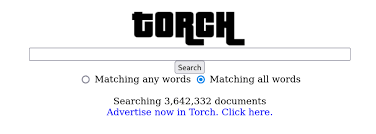
We cannot talk about the dark web without mention Torch dark web search. The dark web does not operate like the surface web. There is no central index, no stable directory, and no universal way to discover onion services unless someone already knows where to look. Because most Tor sites change addresses or disappear without warning, discovery remains one of the hardest problems inside hidden networks.
For that reason, specialized tools have emerged to help researchers, journalists, and analysts navigate this unstable environment. One of the oldest and most referenced tools is Torch dark web search, a long-running onion search engine designed to locate and surface Tor-based websites.
In this guide, we examine what Torch is, how it works, why it became widely known, and where its limitations now exist. More importantly, this article explains how professionals view Torch today—and how it fits into the modern dark web research ecosystem. For more insight, reference to comparison with Haystak and onion search engine indexing
What Is Torch dark Web Search and Why It Became Popular
Torch is an onion search engine that indexes Tor-hosted websites and makes them searchable through a keyword interface. Unlike curated directories, Torch relies primarily on crawling and automated discovery rather than strict manual filtering.
Early on, Torch gained attention because it offered something rare at the time: a large searchable index of onion services. While many directories required manual browsing, Torch allowed users to actively search across thousands of hidden sites.
As a result, it quickly became one of the most cited tools in discussions about how dark web search engines work and evolution of dark web search engines
However, popularity did not come from safety or structure. Instead, Torch grew because it indexed aggressively and surfaced far more results than most early competitors.
How Torch Dark Web Search Indexes Onion Sites
Torch relies heavily on automated crawling. Rather than waiting for verified submissions, it explores onion services, follows links between them, and builds a constantly shifting database.
In practice, Torch’s indexing model includes:
• Automated onion crawlers
• Link discovery from forums and directories
• Minimal content filtering
• Large-scale snapshot indexing
• Rapid inclusion of new services
Because onion infrastructure changes frequently, Torch focuses on volume rather than permanence. Consequently, its index refreshes often, but accuracy decays quickly.
Unlike research-driven engines, Torch does not attempt to stabilize its results. Instead, it mirrors the chaos of the Tor network itself.
This approach makes Torch useful for observing breadth, but unreliable for verification.
How Torch Compares to Modern Onion Search Tools
Today’s onion search ecosystem has shifted. While Torch remains operational, newer tools now emphasize filtering, categorization, and long-term research value.
For example, some platforms prioritize:
• Content moderation
• Scam-network suppression
• Infrastructure mapping
• Academic usability
Torch, by contrast, continues to emphasize:
• Index size
• Rapid discovery
• Open visibility
• Minimal restriction
Because of this difference, professionals often use Torch differently than beginners.
Rather than treating it as a navigation system, analysts view it as a signal generator—a way to observe what exists, not what can be trusted.
For a deeper look at this evolution, Torbbb’s analysis of the evolution of dark web search engines shows why discovery tools now serve different research roles.
What Torch Shows — and Why That Matters
Torch indexes a broad range of onion services. These include:
• Discussion forums
• Privacy projects
• Archived sites
• Scams and fake services
• Market mirrors
• Technical resources
Because filtering remains limited, Torch often exposes users to unstable or misleading content. However, this same openness makes it valuable for observing network behavior.
Researchers use Torch to:
• Identify emerging forums
• Track service replication
• Detect mirror networks
• Observe migration patterns
• Monitor link ecosystems
In other words, Torch reveals how hidden networks interconnect—even when the content itself lacks reliability. Checkout darknet market shutdown pattern for deeper insight
This becomes especially relevant when studying how communities reorganize after shutdowns.
Safety, Risk, and Responsible Use
Although Torch provides access to large portions of the onion ecosystem, it does not protect users from malicious infrastructure.
Therefore, responsible use becomes critical.
Professionals who access Torch typically follow strict habits:
• Use the official Tor Browser
• Disable unnecessary scripts
• Avoid clicking unknown downloads
• Never enter personal information
• Treat all results as unverified
More importantly, they browse with analytical distance rather than curiosity.
Because Torch surfaces unfiltered environments, risk exposure increases when users treat it like Google.
For a broader framework, Torbbb’s guide on safe dark web browsing tips explains how researchers reduce digital and psychological risk.
Torch’s Role in Dark Web Research
Despite its age, Torch still plays a role in dark web intelligence.
However, that role has changed.
Instead of serving as a primary discovery platform, Torch now functions as:
• A breadth scanner
• A link-ecosystem sampler
• A change-detection source
• A pattern-observation tool
When analysts investigate scam clusters, mirror networks, or rapid site replication, Torch often surfaces those structures earlier than curated engines.
This makes it useful for early-stage observation.
However, verification usually happens elsewhere.
For example, studies on darkweb vendor trust show why onion indexes alone cannot establish legitimacy.
Common Misconceptions About Torch dark Web Search
Torch is often misunderstood, especially by new users.
It is not:
• a verified directory
• a trusted marketplace list
• a safety layer
• a stable navigation system
Instead, Torch functions as a raw visibility layer.
Because of this, errors happen when people treat Torch results as recommendations.
In reality, every onion service surfaced through Torch requires independent analysis, behavioral study, and cross-platform confirmation.
Understanding this difference protects both researchers and casual readers from one of the most common dark web mistakes.
How Torch Fits Into the Modern Onion Ecosystem
Today, most professional workflows combine several layers:
• Search engines like Torch
• Filtered platforms like Ahmia
• Forum monitoring
• Leak-site observation
• Infrastructure mapping
Within that system, Torch supports discovery, not decisions.
It helps analysts answer early questions:
• What is appearing?
• What is replicating?
• What networks are growing?
• Where are communities migrating?
Once those signals appear, deeper tools take over.
For example, community movement often becomes clearer when comparing forums and markets.
Trusted External Sources
For broader technical and legal research perspectives related to onion networks:
Tor Project – Official documentation on Tor and onion services
Electronic Frontier Foundation – Research on anonymity, privacy, and Tor
Europol – Public reports on hidden-service crime ecosystems
BleepingComputer – Investigative reporting on dark web infrastructure
Frequently Asked Questions
Is Torch illegal to use?
No. Torch itself is a search engine. Legality depends entirely on user behavior and accessed content.
Does Torch verify onion services?
No. It indexes sites but does not authenticate them.
Is Torch safe for beginners?
It presents higher exposure risk because of minimal filtering.
Why do researchers still use Torch?
Because it reveals emerging infrastructure and link ecosystems.
Is Torch better than Ahmia?
They serve different research purposes.
Conclusion On Torch dark Web Search
Torch dark web search reflects the dark web’s original problem: visibility without structure.
Rather than organizing hidden networks, Torch exposes them.
That exposure makes it useful for discovery, pattern observation, and early-stage intelligence. At the same time, it limits Torch’s reliability for navigation or trust assessment.
When used responsibly, Torch helps researchers understand how onion ecosystems form, fragment, and rebuild. When misunderstood, it increases risk without insight.
Ultimately, Torch does not simplify the dark web. It reveals it.