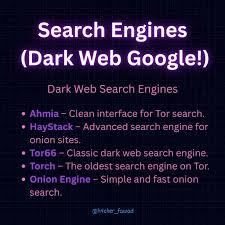
The surface web depends on centralized search engines. However, hidden networks operate without that infrastructure. Most onion services never appear on Google, Bing, or commercial indexes. Because of that gap, researchers rely on a growing darkweb search engines list—a collection of tools designed to observe, catalog, and monitor parts of the Tor ecosystem.
Rather than offering convenience, these platforms provide limited visibility. They help journalists, analysts, and cybersecurity teams track emerging sites, monitor forums, and follow marketplace shifts. This guide explains how these tools work, what they realistically provide, and why no single engine ever shows the full picture. For a profound dive, checkout Torch indexing model, Haystak indexing model, how to find onion sites safely and identify markets across their lifecycle
🔍 What a “DarkWeb Search Engine” Actually Means
Unlike surface-web search tools, dark web engines operate inside unstable, frequently disappearing networks. Onion services change addresses, shut down without warning, and often block automated access. As a result, indexing becomes observational rather than comprehensive.
Most platforms rely on a combination of:
- Slow Tor-based crawlers
- Manually submitted links
- Forum and paste monitoring
- Historical mirror tracking
- Threat-intelligence feeds
Consequently, any darkweb search engines list reflects fragments, not completeness.
This is the same instability Torbbb documents in its breakdown of darknet marketplaces and how darknet markets build vendor reputation where entire ecosystems vanish overnight.
🧠 Why DarkWeb Search Engines list Exist at All
Hidden networks evolve constantly. Communities migrate. Markets collapse. New forums replace seized ones. Therefore, researchers need tools that reveal movement, not permanence.
These platforms help analysts:
- Detect emerging forums
- Observe scam infrastructure
- Track post-shutdown migrations
- Identify leak hubs
- Follow extremist propaganda shifts
Torbbb’s investigation into darknet market shutdown events shows how monitoring tools help map what surfaces after enforcement actions.
Without search tools, most of these transitions would remain invisible.
⚙️ How Onion Search Engines Index Hidden Sites
Traditional crawlers scan billions of pages per hour. Onion crawlers cannot. Tor limits request speed. Many sites block bots. Others require credentials.
Therefore, indexing relies on:
- Seed link expansion
- Low-frequency crawling
- Snapshot archiving
- Human validation
- Community reports
Instead of ranking by popularity, these systems prioritize:
- Availability
- Category relevance
- Risk indicators
- Historical continuity
This technical gap is also why Torbbb’s comparison of darknet forums vs marketplaces, difference between dark web and darknet and how cryptocurrency payments work on the dark web highlights how communities often outpace monitoring tools.
🗂️ Categories Inside a Dark Web Search Engines List
Not all platforms serve the same function. Understanding categories prevents unrealistic expectations.
1. Directory-Style Indexes
These resemble wikis or curated lists.
- Submission-driven
- Frequently outdated
- Useful for early discovery
2. Automated Onion Crawlers
These attempt broader coverage.
- Limited depth
- High link decay
- Valuable for monitoring shifts
3. Threat-Intelligence Platforms
These support cybersecurity work.
- Leak detection
- Fraud tracking
- Marketplace analysis
Torbbb’s research into darkweb vendor trust demonstrates how these tools expose impersonation networks and reputation manipulation.
🔎 Key Platforms Commonly Found in Dark Web Search Engines Lists
Although dozens exist, a few appear consistently in academic and investigative work.
▪ Ahmia
Focuses on transparency and academic indexing. It removes known abuse content and publishes crawl methodologies.
▪ Haystak
One of the largest known onion indexes. It combines crawling with commercial intelligence services.
▪ Torch
Among the oldest onion search engines. It prioritizes availability over content vetting.
▪ DuckDuckGo on Tor
Provides surface-web privacy through Tor, not onion indexing. Often misunderstood.
Each platform reflects a different approach to discovery.
The Tor Project explains why onion indexing remains structurally constrained.
⚠️ Risks Embedded in Dark Web Search Engine Platforms
While these tools enable research, they also amplify exposure.
Common risks include:
- Phishing directories
- Malware-hosted mirrors
- Imposter marketplaces
- Illegal content proximity
- Psychological exposure
Torbbb’s investigation into darkweb vendor imposter scams illustrates how fake listings spread rapidly through indexing tools.
For this reason, professionals treat results as intelligence leads, not destinations.
The Electronic Frontier Foundation outlines best practices for privacy-preserving exploration.
🧪 How Professionals Use DarkWeb Search Engines Lists
Researchers rarely browse. Instead, they extract patterns.
Typical applications include:
- Keyword trend monitoring
- Forum migration mapping
- Leak surface detection
- Scam network correlation
- Marketplace lifecycle tracking
Torbbb’s analysis of the psychology of darkweb scams shows how repeated search results reveal behavioral infrastructure.
Security teams often integrate onion search feeds into breach-monitoring pipelines rather than manual workflows.
Europol routinely documents how hidden-network monitoring supports cybercrime investigations.
🧭 What No DarkWeb Search Engines List Can Provide
Despite popular myths, these tools cannot:
- Map the full dark web
- Guarantee safety
- Verify authenticity
- Replace investigation
- Prevent exposure
They remain partial observation layers built on unstable infrastructure.
Torbbb’s research into the future of darkweb markets and new dark web marketplaces discovery demonstrates how ecosystems consistently outpace indexing technology.
📚 FAQs
Are dark web search engines illegal?
Accessing research tools is legal in many countries. However, the content indexed may not be.
Do they function like Google?
No. They lack scale, ranking systems, and verification layers.
Why do links vanish?
Because onion services frequently shut down, migrate, or get seized.
Can search engines verify trust?
No. They only surface what exists. Validation remains a human task.
🧩 Conclusion: Understanding Their Real Function
Dark web search platforms exist because hidden networks resist visibility. They do not solve that problem. Instead, they reduce it slightly.
When used carefully, a darkweb search engines list supports research, cybersecurity, and investigative reporting. When misunderstood, it creates false confidence and unnecessary exposure.
Ultimately, these tools matter not because they map the dark web—but because they reveal how anonymous ecosystems evolve.