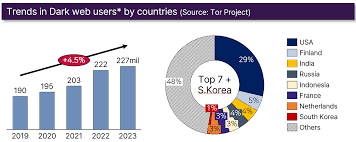
The digital underground evolves quickly, and each year introduces new patterns in technology, security practices, and anonymous online communities. In 2026, researchers, journalists, and cybersecurity analysts are paying close attention to several dark web trends that reveal how anonymity networks continue to change.
While many people associate the dark web with marketplaces or hidden forums, the ecosystem is much broader. It includes privacy-focused communication tools, encrypted hosting services, anonymous search engines, and experimental platforms built around decentralized technologies.
Understanding these developments helps explain how hidden services adapt to new security challenges, law enforcement pressure, and changing user behavior. As anonymity tools mature, the broader structure of the dark web continues to shift in ways that affect both privacy advocates and cybersecurity investigators. For a deeper knowledge, visit our article on growth of dark web forums, AI dark web cybercrime trends and AI scams shaping dark web trends
Emerging Dark Web Trends Shaping the Ecosystem
Several dark web trends have become particularly visible in 2026. Many of these developments are influenced by improved anonymity tools, stronger operational security practices, and a growing interest in decentralized systems.
Key developments include:
- increased adoption of privacy-focused cryptocurrencies
- stronger identity verification systems for vendors
- growth of decentralized hosting models
- improved anti-phishing security features
- expansion of anonymous communication platforms
Although the dark web remains relatively small compared to the open internet, these changes show how its infrastructure continues to mature.
For readers exploring how hidden services become searchable, our guide explaining how onion search engines index hidden services, emerging dark web privacy tools and anonymous browsing on the dark web provides useful background on discovery mechanisms.
Privacy Technologies Driving Dark Web Trends
Privacy infrastructure remains the foundation of anonymity networks. Without encryption and distributed routing, most hidden services would not function.
The technology behind many dark web platforms was pioneered by the Tor Project, which developed onion routing as a method for protecting online identity.
This system routes traffic through several encrypted nodes before reaching a destination server. As a result, it becomes difficult to trace the origin of a connection.
Privacy advocates often highlight the importance of these technologies for protecting journalists, activists, and individuals living under censorship.
Organizations like the Electronic Frontier Foundation regularly publish research supporting the development of privacy-preserving internet tools.
The Growth of New Marketplaces and Vendor Migration
Another noticeable pattern among current dark web trends is the rapid appearance of new marketplaces following the shutdown of older platforms.
When established markets disappear, vendors often migrate quickly to newly launched alternatives. These migrations frequently create waves of marketplace launches as administrators attempt to rebuild communities.
Many new platforms emphasize features designed to rebuild trust, such as:
- multi-signature escrow systems
- stronger vendor verification
- encrypted dispute resolution tools
- transparent fee structures
Our analysis of new dark web marketplaces emerging in 2026 and AI-driven cybercrime trends explains how these platforms attempt to replace earlier markets and attract users.
Reputation Systems Becoming More Sophisticated
Trust mechanisms have also improved significantly. Marketplace communities increasingly rely on complex reputation systems to reduce fraud.
These systems often combine several signals:
- verified vendor history
- transaction success rates
- customer feedback ratings
- dispute resolution records
Reputation frameworks help buyers evaluate unknown vendors while maintaining anonymity.
A deeper breakdown of these trust mechanisms can be found in our article on darknet market reputation systems, which explains how anonymous platforms build credibility among users.
Cryptocurrency Innovations and Payment Privacy
Financial transactions remain central to many hidden services. As a result, cryptocurrency infrastructure continues evolving alongside the dark web ecosystem.
One important development among modern dark web trends is the shift toward privacy-focused payment methods.
Newer platforms increasingly promote features such as:
- multi-signature escrow wallets
- privacy-enhanced cryptocurrencies
- delayed transaction verification
- encrypted payment communication
However, blockchain analysis has also become more advanced. Investigators sometimes trace transactions across public ledgers to identify suspicious activity.
Our guide on dark web cryptocurrency payments explores how these financial systems operate inside anonymity networks.
Search and Discovery Tools Expanding
Another significant change involves the way users discover hidden services.
Traditional search engines cannot index .onion addresses because these services exist within private networks. As a result, specialized search tools continue evolving.
Modern dark web search engines rely on several methods:
- automated Tor-based web crawlers
- community-submitted onion links
- curated hidden service directories
- link discovery from existing onion sites
For readers exploring the development of these systems, our article on the evolution of dark web search engines explains how indexing tools have changed over time.
Increased Law Enforcement Monitoring
While anonymity networks continue evolving, they remain under significant scrutiny from investigators.
Agencies such as the Europol frequently publish reports detailing investigations involving online marketplaces, cryptocurrency activity, and cybercrime groups.
These investigations sometimes lead to major enforcement operations targeting administrators or infrastructure providers.
Cybersecurity journalists from outlets like BleepingComputer often report on these operations and the resulting shutdown of hidden services.
Because of this pressure, many operators place greater emphasis on operational security and infrastructure resilience.
Decentralized Platforms and Experimental Services
A smaller but growing trend involves decentralized hosting systems.
Some developers are experimenting with distributed networks that attempt to reduce reliance on single administrators or centralized infrastructure.
These experimental services aim to create:
- censorship-resistant hosting
- peer-to-peer content distribution
- decentralized marketplaces
- community-governed platforms
Although these systems remain relatively small, they represent an interesting direction for the future of anonymity networks.
FAQs About Dark Web Trends
Why do dark web trends change frequently?
Hidden services often disappear or migrate, which leads to rapid changes in marketplaces, forums, and search tools.
Are dark web technologies only used for illegal activity?
No. Many privacy technologies were originally created to protect secure communication, journalism, and political activism.
How do researchers study the dark web?
Researchers analyze network traffic patterns, hidden service directories, and public cryptocurrency records.
Are anonymity networks legal to use?
In most countries, accessing anonymity networks is legal, although illegal activity conducted through them remains prosecutable.
Key Definitions
Dark Web
A portion of the internet accessible through anonymity networks rather than standard browsers.
Hidden Service
A website hosted on a privacy network using specialized addresses such as .onion.
Onion Routing
A method of encrypting internet traffic in multiple layers to protect user identity.
Operational Security (OpSec)
Practices designed to prevent personal information from being exposed during anonymous activity.
Conclusion
The latest dark web trends in 2026 reveal an ecosystem that continues adapting to technological innovation and external pressure. New marketplaces appear, search tools evolve, and privacy infrastructure becomes more sophisticated.
At the same time, investigators and cybersecurity researchers continue studying these networks to better understand how anonymity technologies function.
As privacy tools develop further, the dark web will likely remain an important area of study for both digital rights advocates and cybersecurity professionals.