
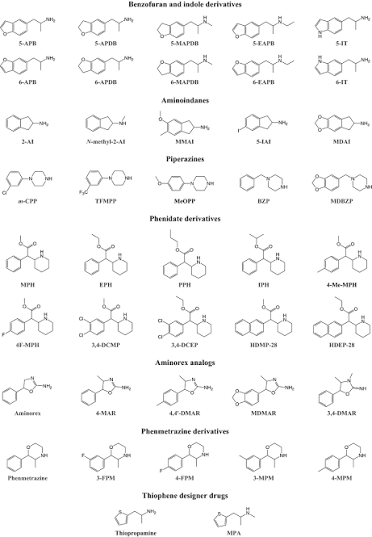
Stimulant research chemicals are a growing area of scientific, public-health, and drug-monitoring interest. These compounds may affect alertness, energy, attention, mood, heart rate, or other body systems. However, many newer substances have limited human research and uncertain long-term effects. This article examines stimulant research chemicals through an educational lens, focusing on evidence, risks, emerging patterns, and the questions researchers still need to answer.
For more insight, please explore the drug awareness overview.
What Are Stimulant Research Chemicals?
The term “research chemical” does not identify one specific substance or chemical family. It often describes a compound with limited scientific history, emerging research, or incomplete public information. Some substances were first developed for laboratory study. Others emerged through changes to known chemical structures. To understand more, please visit alpha-PVP effects and severe stimulant toxicity
Stimulants generally increase activity within the central nervous system. Depending on the compound, reported effects may include increased wakefulness, greater energy, reduced fatigue, or changes in concentration. However, these broad effects do not make different stimulants interchangeable. Each compound can have a distinct pharmacological profile.
Scientific knowledge may also vary widely. Some substances have established research histories, while others have little published human evidence. Therefore, a broad label should never replace compound-specific evaluation.
Why Stimulant Research Chemicals Attract Attention
New stimulant compounds can attract attention for several reasons. Researchers may study their chemical structure, receptor activity, metabolism, or possible effects on the nervous system. Public-health agencies may also monitor them when they appear in toxicology reports or changing drug markets.
At the same time, online discussion can grow faster than scientific evidence. A compound may receive widespread attention before researchers understand its short-term or long-term effects. This gap can encourage speculation and create misleading comparisons.
For more clarity, please see how new research chemicals emerge. Understanding how newer compounds enter scientific and public discussion can explain why evidence often remains incomplete.
How Stimulant Compounds Affect the Nervous System
Stimulant effects often involve chemical messengers that influence alertness, motivation, movement, and attention. Researchers commonly examine dopamine, norepinephrine, and serotonin systems. However, different compounds may affect these systems in different ways.
Some substances may increase signaling activity. Others may alter how nerve cells release or reabsorb certain neurotransmitters. These differences can influence both reported effects and potential health concerns.
Biology also adds complexity. Metabolism, genetics, health conditions, and other factors may affect how a person responds. Therefore, one person’s experience cannot predict another person’s outcome.
Common Chemical Families and Why Classification Matters
Scientists may group stimulant compounds according to chemical structure or pharmacological activity. These classifications help researchers compare related substances. Still, chemical similarity does not prove that two compounds have the same effects or risks.
Several broad groups may appear in scientific discussions:
- Synthetic cathinones: These compounds may have stimulant effects and can vary greatly in potency and biological activity.
- Phenethylamine-related stimulants: Some compounds in this broad family may affect energy, mood, or attention.
- Amphetamine-related analogs: Structural changes can produce substances with different pharmacological properties.
- Other novel stimulants: Some emerging compounds do not fit neatly into familiar public categories.
Classification provides a starting point. Researchers still need to examine each compound’s receptor activity, metabolism, toxicology, and health effects.
For a closer look, please check synthetic cathinones explained. This topic provides useful context about one important group of emerging stimulant compounds.
Stimulant Research Chemicals and the Problem of Limited Evidence
Early research often answers narrow questions. A laboratory study may examine receptor activity without showing how a compound affects people. An animal study may identify possible concerns without predicting human outcomes.
Human research may also remain limited. Small studies, short follow-up periods, or narrow participant groups can restrict what scientists conclude. As a result, researchers may know more about a compound’s chemistry than its long-term health effects.
This uncertainty matters because public descriptions may sound more certain than the evidence allows. Responsible reporting should separate established findings from preliminary observations.
For additional knowledge, please read research chemicals explained. The broader guide helps readers understand why evidence levels differ across emerging compounds.
Reported Effects and Important Differences
Stimulant compounds may produce changes in energy, alertness, attention, mood, or physical activity. Some reports also describe reduced fatigue, increased talkativeness, or changes in appetite. However, reported effects can differ by chemical structure and individual factors.
Potential physical effects may include increased heart rate, higher blood pressure, sweating, restlessness, or sleep disruption. Some compounds may also affect body temperature or increase strain on the cardiovascular system.
Psychological effects can vary as well. Anxiety, agitation, irritability, confusion, or unusual thinking may occur in some situations. Researchers need stronger evidence to explain how often these outcomes occur and which factors increase risk.
Why Similar Names Can Create Confusion
Chemical names can sound alike even when compounds differ in important ways. Online sources may also use informal names, abbreviations, or inconsistent descriptions. These practices can make reliable research more difficult.
A small structural change may alter receptor activity, metabolism, duration, or physiological effects. Therefore, an analog of a known stimulant may still require independent study.
For a deeper dive, please explore designer drugs explained. The article explains why chemical modification can create new scientific questions rather than predictable outcomes.
Accurate naming also supports public-health monitoring. Laboratories and researchers can compare findings more effectively when they identify compounds consistently.
Why Chemical Identification Is Essential
Researchers cannot evaluate a substance accurately when its chemical identity remains uncertain. Incorrect identification can distort toxicology reports, health assessments, and scientific discussions.
Analytical laboratories use specialized methods to examine chemical composition. Techniques may include chromatography and mass spectrometry. These methods help researchers identify compounds and compare them with verified reference information.
Reliable identification supports stronger monitoring. It can also help researchers recognize new compounds and track changes over time.
For more details, please visit darknet stimulants. The article provides additional context about stimulant-related discussions and the uncertainty surrounding online drug information.
The Difference Between Scientific Evidence and Online Claims
Scientific research follows defined methods. Researchers explain their study design, data, limitations, and conclusions. Peer review adds scrutiny, although it does not make every finding final.
Online claims may follow weaker standards. Some sources summarize research accurately. Others repeat unsupported statements or confuse related chemicals.
Readers can assess information by asking:
- Does the source identify the compound clearly?
- Does it cite original research or trusted public-health information?
- Does the evidence involve laboratory, animal, or human research?
- Does the source explain uncertainty?
- Is the information current?
These questions help readers separate evidence from speculation. They also support more responsible discussions about emerging stimulant compounds.
Why the Stimulant Research Landscape Keeps Changing
Scientists continue to identify new compounds and examine changing chemical patterns. Public-health agencies also update monitoring systems as new substances appear.
Research methods continue to improve. Better analytical tools may help laboratories identify unfamiliar compounds more quickly. However, scientific understanding can still take time.
For more insight, please explore research chemical trends. Trend analysis can help readers understand how scientific attention, public-health monitoring, and emerging compounds develop.
The next section examines health concerns, psychological risks, evidence gaps, public-health monitoring, and the wider trends shaping this field.
Health Risks Linked to Stimulant Research Chemicals
Health concerns can vary because stimulant compounds differ in potency, duration, and biological activity. Limited research can make risk assessment difficult. In addition, uncertain chemical identity may prevent researchers from connecting symptoms to a specific substance.
Stimulant-related concerns may involve the cardiovascular, neurological, and psychological systems. Reported problems can include rapid heart rate, elevated blood pressure, overheating, severe anxiety, confusion, or disturbed sleep. Serious outcomes may also occur, especially when several risk factors overlap.
Researchers should avoid treating all stimulant compounds as equally dangerous. However, limited evidence does not mean a substance is safe. It often means scientists still need more data.
Stimulant Research Chemicals and Cardiovascular Concerns
Many stimulants increase activity within systems that regulate heart rate and blood pressure. This response may place additional strain on the cardiovascular system. The level of concern can depend on the compound, individual health, and surrounding conditions.
Some reported effects include:
- Rapid or irregular heartbeat
- Increased blood pressure
- Chest discomfort
- Shortness of breath
- Increased body temperature
- Physical restlessness
Existing heart conditions may increase concern. Dehydration, sleep loss, or intense physical activity may also add stress. Therefore, researchers and public-health professionals evaluate stimulant-related risks within a wider health context.
For more details, please see research chemical safety. That guide examines how uncertainty and limited evidence affect broader safety assessments.
Psychological and Neurological Concerns
Stimulant effects can influence mood, attention, perception, and behavior. Some people may experience anxiety, agitation, irritability, or panic. Others may report confusion, suspicious thinking, or unusual perceptions.
Sleep disruption can also affect mental functioning. Extended wakefulness may reduce concentration and impair judgment. It may also increase emotional instability.
Researchers continue to study how different compounds affect the brain. However, evidence remains uneven across newer substances. Long-term neurological effects may remain unclear when human studies are limited.
Why Dose-Response Information May Be Uncertain
Scientists often study how different exposure levels affect biological systems. This process can help researchers identify patterns and possible risks. Yet newer compounds may lack reliable human dose-response data.
Several factors can complicate interpretation:
- Uncertain chemical identity
- Inconsistent laboratory findings
- Limited human research
- Differences in metabolism
- Unreported health conditions
- Exposure to multiple substances
Because these variables can overlap, researchers should avoid simple conclusions. A reported outcome may not reveal which factor caused it.
The Risks of Unknown Composition
Uncertain composition creates a major challenge for public-health research. A label or online description may not match the actual chemical content. In some cases, researchers may identify unexpected compounds during laboratory analysis.
This uncertainty can affect risk communication. Researchers cannot accurately evaluate effects when they do not know the substance involved. It can also make medical and toxicology reporting more difficult.
For more clarity, please see darknet drug scams. The article discusses how unreliable claims and inaccurate descriptions can create additional uncertainty.
Chemical testing supports stronger evidence. However, testing systems may not detect every new compound immediately. Laboratories must continually update reference materials and analytical methods.
Polysubstance Exposure and Added Complexity
Researchers sometimes encounter cases involving more than one substance. This situation can complicate health assessments because different compounds may affect the body at the same time.
Combined exposure may increase cardiovascular or neurological strain. It may also make symptoms harder to interpret. Researchers may struggle to determine which compound contributed to a specific outcome.
Public-health reports should acknowledge these limitations. A case involving several substances cannot always establish the effects of one compound. Therefore, researchers often describe associations rather than direct causes.
How Public-Health Agencies Monitor Emerging Stimulants
Public-health agencies use several methods to identify changing drug patterns. These systems may collect information from laboratories, hospitals, toxicology reports, and other monitoring networks.
Early warning systems can help agencies recognize unfamiliar compounds. They may also identify changes in reported harms. However, monitoring data often contain gaps.
A rise in reports may reflect increased exposure, improved detection, or greater awareness. Therefore, researchers examine several data sources before drawing conclusions.
For further information, please refer to novel psychoactive substances. This broader topic explains why monitoring systems must adapt as new compounds emerge.
Stimulant Research Chemicals in Changing Drug Markets
Drug markets can change quickly. New substances may appear as regulations, supply conditions, or chemical trends evolve. Researchers monitor these shifts to understand public-health concerns.
Market information does not always show how common a substance is. Online visibility can increase without widespread use. Likewise, limited discussion does not prove that a compound has disappeared.
Researchers compare market observations with laboratory and health data. This approach provides a more balanced picture. It also reduces the risk of treating isolated reports as broad trends.
Why Regulation Can Change the Research Landscape
Drug laws differ across countries and may change over time. Some legal systems regulate specific substances. Others use broader approaches that address chemical groups or structural similarities.
Legal status does not establish safety. A regulated substance may have extensive research, while an unregulated compound may have little evidence. Therefore, readers should separate legal classification from scientific risk assessment.
Regulatory changes can also influence research priorities. Agencies may increase monitoring when new compounds appear. Scientists may then study their chemistry, toxicology, and potential health effects.
For more context, please explore darknet drug risks. The article provides broader awareness information about uncertainty, health concerns, and changing online drug environments.
Research Gaps That Still Need Attention
Many questions remain unanswered. Scientists may lack information about long-term effects, metabolism, interactions, or population-level outcomes. These gaps can limit public-health guidance.
Important research areas include:
- Long-term neurological effects
- Cardiovascular outcomes
- Metabolic pathways
- Toxicity patterns
- Drug interactions
- Mental-health effects
- Differences across age groups
Researchers also need stronger human data. However, ethical and practical limits can make these studies difficult. Therefore, scientific understanding may develop gradually.
How to Evaluate Claims About Emerging Stimulants
Readers may encounter strong claims about effects, risks, or scientific status. A careful review can reduce confusion.
First, identify the original source. Scientific papers, public-health agencies, and established research institutions usually provide stronger evidence than anonymous posts.
Next, examine the type of evidence. Laboratory findings can explain biological activity. Animal studies can identify possible concerns. Human research may provide more direct information, although study quality still matters.
Finally, look for limitations. Reliable sources explain what researchers know and what remains uncertain. This approach supports informed awareness without exaggeration.
A Responsible Framework for Discussing Emerging Compounds
Responsible discussion should avoid both alarmism and false reassurance. New compounds may create serious concerns, but evidence can remain incomplete. Clear language helps readers understand this balance.
A strong educational framework should:
- Identify the compound accurately
- Separate evidence from speculation
- Explain research limitations
- Avoid unsupported safety claims
- Use current and credible sources
- Recognize changing legal contexts
- Encourage professional help during emergencies
This approach supports public understanding. It also helps prevent misleading information from spreading.
Why Evidence Quality Matters
Not all research provides the same level of confidence. Study design, sample size, methods, and limitations can affect how researchers interpret findings.
A single report may identify an important concern. However, scientists often need additional studies before reaching broader conclusions. Repeated findings can strengthen confidence.
Readers should also consider publication dates. Emerging chemical research can change quickly. New evidence may clarify earlier uncertainty or challenge previous assumptions.
The final section will examine authoritative resources, answer common questions, summarize the article, and provide the complete SEO, reverse-linking, and indexing package.
Authoritative Resources for Stimulant Research
Reliable information can help readers understand emerging substances without relying on anonymous claims. Public institutions, research organizations, and established cybersecurity sources can provide useful context. However, readers should still check publication dates and review the evidence behind major claims.
For more details, please visit the Europol drug-related threat assessments. Europol examines organized crime trends and changing drug markets across Europe. Its reports can help readers understand broader enforcement and market developments.
For additional knowledge, please explore the Tor Project’s educational resources. These materials explain privacy technology and responsible online awareness. They do not provide chemical safety guidance, but they can support safer research practices.
For more insight, please read BleepingComputer’s cybersecurity coverage. Its reporting can provide context about online threats, scams, and digital risks. Readers should still use scientific and public-health sources for chemical information.
Frequently Asked Questions
What are stimulant research chemicals?
Stimulant research chemicals are compounds that may affect alertness, energy, attention, mood, or nervous-system activity. The term covers many substances with different chemical structures. Some have limited scientific histories or incomplete human research.
Evidence can vary greatly between compounds. Therefore, researchers should evaluate each substance separately. A broad category cannot predict a specific compound’s effects or risks.
Are stimulant research chemicals safe?
Scientists cannot assume safety when evidence remains limited. A lack of published harm does not prove that a compound is harmless. It may simply show that researchers need more data.
Potential concerns may involve heart function, blood pressure, sleep, mood, or neurological activity. Individual health factors can also influence outcomes. Reliable risk assessment requires compound-specific research.
Why do new stimulant compounds appear?
New compounds may emerge through scientific research, chemical modification, or changing drug-market conditions. Researchers may study structural changes to understand biological activity. Public-health agencies may then monitor unfamiliar substances.
New compounds can appear faster than researchers can study them. This gap may leave important questions unanswered. Monitoring systems help identify emerging patterns.
How do scientists identify new stimulant compounds?
Analytical laboratories use specialized techniques to examine chemical composition. Methods such as chromatography and mass spectrometry can help identify known and unfamiliar compounds.
Laboratories also compare results with reference materials. However, newly emerging substances may require updated methods. Accurate identification can take time.
Can online information about stimulant compounds be trusted?
Some online sources provide accurate summaries. Others repeat unsupported claims or confuse related chemicals. Readers should examine the source, evidence, publication date, and stated limitations.
Scientific papers and public-health agencies generally offer stronger evidence. Anonymous posts and promotional pages deserve greater caution. Reliable sources explain uncertainty instead of making absolute claims.
What makes emerging stimulants difficult to study?
Researchers may face limited human data, uncertain chemical identity, changing compound patterns, and incomplete toxicology information. Ethical limits can also restrict human research.
Scientists may begin with laboratory or animal studies. These findings can identify possible mechanisms or concerns. However, they cannot always predict human outcomes.
Are stimulant research chemicals the same as prescription stimulants?
No. Prescription stimulants undergo formal evaluation for specific medical uses. Their quality, labeling, and clinical information follow regulated standards.
Emerging research compounds may lack comparable human evidence. Chemical similarity does not make two substances medically equivalent. Each compound requires independent scientific evaluation.
Conclusion: Understanding Stimulant Research Chemicals
Stimulant research chemicals remain an important subject for scientific research and public-health awareness. These compounds can differ in chemical structure, biological activity, and evidence quality. As a result, broad assumptions may create confusion.
Current research highlights several concerns. Cardiovascular effects, psychological changes, uncertain composition, and limited long-term evidence require careful attention. Researchers also need stronger data about metabolism, toxicity, and interactions.
A responsible approach depends on accurate identification and credible evidence. Readers should distinguish scientific findings from online claims. They should also recognize uncertainty when research remains incomplete.
As monitoring systems improve, scientists may identify emerging compounds more quickly. Even so, evidence will continue to develop over time. Careful reporting can support awareness without exaggeration.