
LSD is one of the most studied hallucinogens, yet many misunderstand its psychological and physical impact. In this guide, we examine lsd effects and risks through a research-focused lens, focusing on cognition, perception, and potential long-term outcomes. The goal is to clarify how this substance interacts with the brain and why outcomes vary so widely between individuals. To dig deeper, please review Ayahuasca effects & risks, Mescaline effects & safety and comparing the effects & risks of psychedelic substances
At the same time, discussions around LSD often overlap with broader drug markets and misinformation online. For more insight, please explore drug awareness resources.
Understanding both short-term effects and long-term risks helps separate scientific evidence from online myths. Additionally, this article integrates findings from clinical studies and public health reports to present a balanced overview.
Understanding LSD and Its Psychological Impact
LSD primarily affects serotonin receptors in the brain, and this interaction significantly influences mood, perception, and cognition. As a result, lsd effects and risks often begin with intense sensory distortions, altered time perception, and heightened emotional amplification.
Variability plays a key role, since two individuals can experience completely different reactions even when similar doses are taken. This unpredictability makes LSD particularly complex in both clinical and non-clinical settings. In some cases, individuals report heightened creativity or introspective thinking, while in others they experience confusion or psychological distress.
Hallucinations may also continue during the active phase of the substance, a period commonly referred to as a “trip.” These experiences extend beyond visual distortions, as users often report auditory changes and shifts in self-perception. Negative outcomes become more likely when psychological stress is present, especially in environments that lack structure or support.
From a broader context, LSD is often discussed alongside other psychoactive substances in structured comparisons such as
- to understand better, please review psychoactive drug trends overview:
Although LSD is not physically addictive in the traditional sense, its mental effects can still be significant and long-lasting for some users.
Short-Term LSD Effects on Mind and Body
Short-term reactions typically begin within 30 to 90 minutes and may last several hours. During this phase, users often experience sensory amplification, emotional fluctuations, and altered spatial awareness as part of lsd effects and risks.
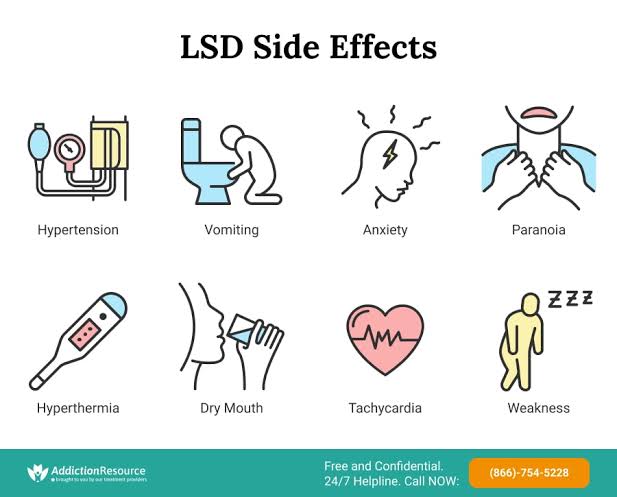
Physiological responses may include dilated pupils, an increased heart rate, and mild changes in blood pressure. Although these effects are usually temporary, individuals can perceive them as intense or disorienting without proper context or supervision.
Psychological effects tend to be more pronounced during the short term. Anxiety, paranoia, and panic reactions can emerge, particularly in unfamiliar environments. The concept of “set and setting”—referring to mental state and physical surroundings—plays a critical role in shaping outcomes.
Individuals with high stress levels or pre-existing mental health conditions may experience stronger adverse reactions. In such cases, disorganized thinking or temporary detachment from reality can occur, especially when external support is limited.
LSD is also sometimes discussed in relation to synthetic substances and broader drug ecosystems. For example:
- to explore further, please check darknet drug risk patterns
- for a closer look, please check stimulant-related compounds
These comparisons help highlight how different substances interact with neurological pathways in distinct ways.
Long-Term Risks and Psychological Considerations
Long-term effects are less predictable but remain an important part of understanding lsd effects and risks. While most users do not experience permanent physical damage, psychological aftereffects are documented in certain cases. To understand better, please checkout psychoactive substance effects and health risks
One known condition is Hallucinogen Persisting Perception Disorder (HPPD), where visual distortions may reoccur long after use. Although rare, it highlights the complexity of how LSD interacts with perception systems.
Another concern involves latent mental health conditions. Individuals predisposed to anxiety, schizophrenia, or mood disorders may experience symptom activation. However, research remains ongoing, and causation is not fully established.
Additionally, emotional recall of intense experiences may linger, influencing mood or cognitive patterns. In some cases, individuals report lasting shifts in perception or worldview.
For broader context on drug environments and risks:
- for additional knowledge, please read synthetic substance risks
- to understand the process, please read pharmaceutical exposure concerns
These connections show how LSD is often grouped within larger discussions of psychoactive compounds and emerging drug categories.
Authority Insights and Why They Matter
Reliable information on LSD requires referencing public health and cybersecurity organizations that study drug trends and online distribution patterns.
For more insight, please explore Tor Project research on anonymity and online ecosystems
For more insight, please explore EFF digital rights and privacy research
For more insight, please explore Europol drug trafficking and synthetic substance reports
These sources provide structured, evidence-based insights into how substances like LSD are discussed, distributed, and regulated globally. Importantly, they help distinguish academic research from unverified online claims.
Outbound references are included here to strengthen context reliability, not to promote usage. Instead, they anchor the discussion in verified institutional research and public safety frameworks.
External References
For more insight into drug policy, research safety, and controlled substance regulation, please explore Europol’s official drug monitoring reports.
Europol provides structured intelligence on drug trends across Europe, including emerging synthetic substances and distribution patterns. While LSD is not always the primary focus, its classification within broader psychedelic and illicit drug ecosystems is often referenced. These reports help contextualize how hallucinogens are monitored at a policy and enforcement level, especially in relation to public health risks and market behavior.
For more insight into digital privacy, drug information access, and harm-reduction advocacy, please explore Electronic Frontier Foundation (EFF) resources.
The EFF focuses on digital rights, privacy, and the ethical implications of online information sharing. In the context of LSD research discussions, EFF materials are useful for understanding how information about controlled substances circulates online and how privacy tools intersect with public access to harm-reduction content. This helps frame LSD-related information within broader digital rights and information transparency debates.
For a deeper technical and research-based understanding of anonymity networks and information flow, please explore The Tor Project.
The Tor Project provides insight into anonymized communication systems and privacy infrastructure. While not directly related to LSD pharmacology, it is relevant when examining how drug-related information is accessed, shared, and protected online. This is particularly important in studies of digital ecosystems where discussions about substances like LSD often occur in anonymized environments.
For additional insight into cybersecurity incidents, misinformation tracking, and drug-related online threats, please explore BleepingComputer research articles.
BleepingComputer covers security trends, online fraud, and emerging digital threats. In relation to LSD discussions, such sources are useful for understanding how misinformation or unsafe guidance can spread across online platforms. This helps build awareness of how digital environments can influence perception and risk around psychoactive substances.
FAQ: LSD Effects and Risks
1. What are the most common LSD effects on perception?
Sensory processing is primarily altered by LSD, resulting in visual distortions, intensified color perception, and modified time awareness. These effects are often experienced subjectively and may vary significantly between individuals. Emotional states are frequently amplified, and this may result in either heightened introspection or increased anxiety. A duration of several hours is typically observed, with variation influenced by dosage and environmental conditions.
2. Are there long-term health risks associated with LSD?
Long-term risks are generally understood to be psychological rather than physical in nature. In some cases, lingering visual disturbances, known as Hallucinogen Persisting Perception Disorder (HPPD), may be experienced. Additionally, symptom intensification may be observed in individuals with pre-existing mental health conditions. However, the frequency and likelihood of these outcomes are still being studied through ongoing research.
3. Can LSD cause addiction or dependency?
LSD is not classified as physically addictive, as withdrawal symptoms are not typically produced. However, patterns of psychological dependency may be developed in rare cases, particularly where repeated experiential use is sought. Rapid tolerance development is also observed, which reduces the effects of repeated short-term use. As a result, compulsive usage is generally less commonly reported compared to other substances.
4. How does environment influence LSD experiences?
The overall experience is strongly influenced by environmental conditions. Anxiety may be reduced when calm and controlled settings are maintained, whereas distress may be increased in chaotic or unpredictable environments. This relationship is commonly referred to as “set and setting.” Additionally, perception and psychological response are strongly shaped by the emotional state present prior to exposure.
5. Why is LSD studied in medical research?
LSD is studied due to its interaction with serotonin pathways and its effects on consciousness. Potential therapeutic applications for conditions such as depression and PTSD are being explored in controlled research environments. However, studies are conducted under strict regulation, and findings remain experimental. The primary objective is to understand neurological mechanisms rather than support general use.
Conclusion: LSD Effects and Risks
A balanced evaluation of lsd effects and risks requires consideration of psychological, neurological, and environmental factors. Although experiences are highly variable, strong interactions with perception and cognitive processing systems are consistently observed.
Short-term effects are often characterized by sensory distortion and emotional fluctuation, while long-term outcomes are influenced significantly by mental health history and contextual factors. As research progresses, clearer conclusions regarding safety and therapeutic potential may be established.
Ultimately, lsd effects and risks are best understood through a scientific framework in which subjective experiences are analyzed alongside controlled research findings.