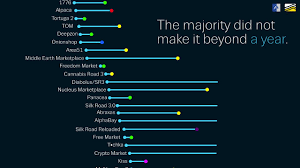
The darknet market lifecycle follows a predictable yet volatile pattern. Although each marketplace presents itself as unique, most platforms move through the same structural stages: launch, expansion, maturity, pressure, and eventual shutdown.
Understanding this lifecycle helps researchers, cybersecurity analysts, and digital investigators identify patterns early. More importantly, it explains why even the largest platforms eventually collapse.
In this investigative guide, we examine how markets emerge, scale, destabilize, and disappear — and why the cycle continues. For additional knowledge, checkout reputation systems used by darknet markets and how darknet networks operate
What Is a Darknet Market?
A darknet market is an anonymous online marketplace accessible through Tor-based onion services. These platforms rely on:
- Cryptocurrency payments
- Escrow systems
- Vendor reputation scores
- Encrypted communication channels
Unlike surface web marketplaces, these ecosystems operate under constant legal and technical pressure. Consequently, their operational models prioritize anonymity, speed, and trust-building.
For a broader understanding of how marketplace infrastructure operates over time, see our breakdown of active darkweb markets and operational patterns, which explains how platforms maintain listings, payment systems, and dispute resolution models.
Phase One: Launch and Trust Formation in the Darknet Market Lifecycle
Every darknet market lifecycle begins with trust creation.
At launch, administrators focus on credibility. Without trust, no buyer deposits funds and no vendor lists products.
Typical launch strategies include:
- Forum-based announcements
- Early vendor recruitment
- Reduced commission fees
- Transparent escrow rules
Initially, administrators often attract experienced vendors from recently closed platforms. As a result, reputation migrates from one market to another.
Moreover, escrow clarity becomes essential. Our breakdown of darknet market escrow systems explained shows how dispute processes directly influence early adoption.
However, rapid launches without technical preparation often fail. Therefore, many new markets disappear within weeks.
Phase Two: Expansion and Vendor Growth
Once initial trust stabilizes, the platform enters growth mode.
Traffic increases. Listings multiply. Transaction volume rises steadily.
During this stage:
- Reputation systems mature
- Feedback ratings gain influence
- Vendor tiers emerge
- Moderation teams expand
Simultaneously, community forums begin discussing uptime reliability and dispute fairness. Our analysis of how darknet vendors work illustrates how sellers adapt to platform rules and build customer loyalty.
Nevertheless, growth introduces new vulnerabilities. As visibility expands, so does scrutiny.
Phase Three: Operational Stability and Market Maturity
At maturity, the platform appears stable and structured.
Indicators of this stage include:
- Consistent uptime
- Fast escrow release cycles
- Organized product categories
- Clear dispute timelines
However, maturity also attracts investigative attention. International law enforcement agencies such as Europol regularly coordinate large-scale takedown operations.
Furthermore, cybersecurity researchers and outlets like BleepingComputer analyze operational mistakes and cryptocurrency tracing events
Although Tor infrastructure protects network anonymity, the Tor Project itself emphasizes that operational security remains the administrator’s responsibility.
Therefore, even mature platforms operate under growing external pressure.
Warning Signs: Structural Stress Before Collapse
Mid-to-late in the darknet market lifecycle, subtle warning signs begin to appear.
These often include:
- Withdrawal delays
- Escrow release slowdowns
- Increased downtime
- Sudden rule changes
- Communication gaps
Initially, administrators may blame technical maintenance. However, users quickly notice patterns.
Consequently, buyers reduce deposits and vendors limit inventory. Our updated darkweb search engines list explains how researchers monitor onion service uptime during unstable periods.
Trust erosion rarely happens overnight. Instead, confidence weakens gradually.
Final Phase: Seizure or Exit Scam
Eventually, the platform reaches its conclusion.
There are generally two outcomes.
Law Enforcement Seizure
Authorities identify infrastructure vulnerabilities, trace cryptocurrency flows, and coordinate cross-border actions. When seizures occur, official notices replace marketplace homepages.
Operational errors — not encryption weaknesses — often expose administrators.
Exit Scam
Alternatively, administrators may shut down voluntarily.
In these cases:
- Withdrawals freeze
- Escrow funds remain locked
- Communication stops abruptly
Exit scams have increased in frequency. Because operators understand historical patterns, some intentionally design short-lived operations to maximize profits before disappearance.
For example, our analysis of darkweb market trends and vendor evolution shows that newer markets often demonstrate shorter operational peaks.
Thus, lifecycle compression has become a defining modern trait.
Why the Darknet Market Lifecycle Repeats
Despite technological evolution, structural drivers remain constant.
Key forces include:
- Trust volatility
- Cryptocurrency traceability
- Server exposure risks
- Internal disputes
- Cross-border investigations
Moreover, blockchain analysis tools have improved significantly. As a result, financial tracking capabilities now extend far beyond early market eras.
Consequently, operational risk increases year after year.
Economic and Psychological Dynamics
Technical vulnerabilities explain shutdowns. However, psychology explains speed.
When rumors circulate:
- Buyers withdraw funds
- Vendors pause listings
- Forums amplify speculation
Because anonymity limits accountability, panic spreads quickly.
Furthermore, vendor migration accelerates collapse. High-rated sellers often move first, signaling instability to others.
Therefore, confidence becomes the most fragile asset in any darknet ecosystem.
Modern Trends: Shorter Lifespans, Faster Cycles
Compared to early marketplaces, modern platforms display:
- Rapid growth spikes
- Shorter maturity windows
- Increased exit scam probability
- Higher cryptocurrency volatility
Additionally, administrators increasingly experiment with alternative escrow models, including multi-signature systems. While these reduce centralized risk, they introduce operational complexity.
As a result, today’s markets burn brighter but collapse faster.
Risk Factors That Accelerate Market Collapse
Certain structural weaknesses shorten lifecycle duration:
- Centralized escrow wallets
- Weak dispute resolution
- Overexposure on forums
- Poor server configuration
- Inexperienced administration
Markets that prioritize aggressive scaling without infrastructure reinforcement typically collapse sooner.
In contrast, gradual growth sometimes extends operational stability — although eventual risk remains inevitable.
FAQs: Darknet Market Lifecycle
How long does a typical market operate?
Lifespans vary. Some operate for several years, while others disappear within months.
What usually causes shutdown?
Seizure operations and exit scams remain the most common causes.
Can vendors rebuild after collapse?
Yes. Reputation portability tools and PGP verification allow sellers to migrate platforms.
Is escrow safe during instability?
Not always. Centralized wallets create heightened exposure during shutdown events.
Key Definitions: Darknet Market Lifecycle
Escrow System – A mechanism that holds cryptocurrency until transaction completion confirmation.
Exit Scam – Administrator disappearance with user funds.
Vendor Reputation Model – Feedback-based scoring system for sellers.
Onion Service – A Tor-hosted hidden service accessible via .onion addresses.
Conclusion: Darknet Market Lifecycle
The darknet market lifecycle reflects a repeating arc: launch, growth, maturity, stress, and shutdown. Although platform names change, structural pressures remain constant.
Trust fuels growth. Exposure increases risk. Pressure triggers instability. Eventually, collapse follows.
For researchers and cybersecurity analysts, recognizing lifecycle signals offers clarity without speculation. Markets may rebrand or relaunch, yet the underlying cycle persists.
Understanding that pattern remains essential for long-term analysis.