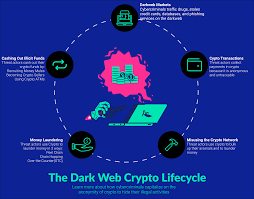
Online marketplaces and hidden services operating within anonymity networks often rely on digital currencies instead of traditional banking systems. Understanding dark web cryptocurrency payments helps explain how financial transactions function in environments where users prefer privacy and decentralized payment methods.
Unlike conventional payment platforms, cryptocurrency transactions operate through blockchain networks. These systems allow users to transfer value directly without relying on banks or centralized payment processors.
For hidden services and marketplaces running within privacy networks, cryptocurrency provides a payment method that works across borders and maintains a level of pseudonymity. However, the mechanics of these transactions are more complex than many people assume.
This guide explores how cryptocurrency payments operate within dark web ecosystems, how marketplaces handle transactions, and why digital currencies became the preferred method for anonymous online payments.
Our list of darkweb search engines used to locate hidden services explains how users find marketplaces, forums, and other Tor-based platforms.
Why Cryptocurrency Became the Default Payment Method
Traditional payment systems require identity verification and financial institution oversight. In contrast, cryptocurrency transactions operate on decentralized networks.
Because of this structure, cryptocurrencies became widely used within hidden service ecosystems.
Several factors explain this shift:
- Decentralized payment infrastructure
- No reliance on traditional banks
- Global transaction capability
- Pseudonymous wallet addresses
These characteristics allow digital payments to move across networks without revealing personal identities in the same way traditional financial systems do.
However, cryptocurrency transactions are not completely anonymous. Blockchain records remain publicly visible, and forensic analysis tools can sometimes trace transaction patterns.
How Dark Web Cryptocurrency Payments Work
To understand dark web cryptocurrency payments, it is important to examine the transaction flow used by many hidden marketplaces.
Most payments follow a multi-step process designed to reduce risk for both buyers and vendors.
Vendor payments also connect closely with seller operations and delivery workflows. If you want to understand how sellers manage listings, shipping processes, and transaction verification, our guide on how darknet vendors operate inside marketplaces explains the structure behind vendor activity.
Step 1: Creating a Cryptocurrency Wallet
Users first generate a wallet address through cryptocurrency software. Wallets allow individuals to store digital assets and send or receive transactions.
Each wallet contains a unique address that functions similarly to a bank account number.
Step 2: Funding the Wallet
Before making a purchase, users must acquire cryptocurrency. This typically occurs through exchanges or peer-to-peer trading platforms.
Common digital currencies used in hidden marketplaces include:
- Bitcoin
- Monero
- Litecoin
These currencies differ in transaction speed, privacy features, and network design.
Step 3: Sending the Payment
After selecting a product or service, the buyer sends cryptocurrency to a payment address provided by the marketplace.
Rather than transferring funds directly to vendors, many marketplaces route transactions through escrow systems.
The Role of Escrow in Cryptocurrency Transactions
Escrow systems play an essential role in maintaining trust within anonymous marketplaces.
Instead of paying vendors directly, buyers send funds to a temporary escrow wallet controlled by the marketplace.
The payment process typically works like this:
- Buyer sends cryptocurrency to escrow address
- Marketplace confirms transaction on the blockchain
- Vendor ships the product or provides the service
- Buyer confirms completion
- Escrow releases funds to vendor
This structure reduces fraud risk and provides a dispute resolution process if a transaction fails.
Our detailed guide on darknet market escrow systems explained describes how these payment protection mechanisms operate
Escrow remains one of the most important safeguards within anonymous marketplace ecosystems.
Privacy Considerations in Cryptocurrency Transactions
Although cryptocurrencies offer greater privacy than traditional payment systems, they are not fully anonymous.
Blockchain networks record every transaction publicly. Each payment includes information such as:
- wallet address
- transaction amount
- timestamp
- blockchain confirmation data
Researchers have developed blockchain analysis tools capable of linking transaction patterns to known addresses.
For example, investigations conducted by the Europol often analyze cryptocurrency flows connected to cybercrime cases.
Because of this, some users prefer privacy-oriented digital currencies designed to obscure transaction metadata.
Privacy Coins and Transaction Obfuscation
Certain cryptocurrencies incorporate advanced privacy features that attempt to hide transaction details.
One widely discussed example is Monero, which uses several techniques to obscure transaction data.
These mechanisms include:
- ring signatures
- stealth addresses
- confidential transaction amounts
By contrast, Bitcoin transactions remain publicly visible on the blockchain.
This difference explains why privacy coins gained popularity within certain online communities seeking stronger transaction confidentiality.
However, even privacy-focused cryptocurrencies continue to evolve as researchers study their anonymity guarantees.
Security Risks and Cryptocurrency Scams
Cryptocurrency transactions introduce unique risks, particularly in decentralized environments.
Some common threats include:
- fake wallet addresses
- phishing marketplaces
- exit scams
- malware targeting wallets
Cybersecurity researchers regularly analyze these risks. Reports published by BleepingComputer often document malware campaigns and cryptocurrency wallet attacks.
Because cryptocurrency transactions are irreversible, victims cannot rely on traditional financial dispute systems.
As a result, careful verification of payment addresses and marketplace legitimacy remains essential.
Cryptocurrency and the Darknet Marketplace Ecosystem
Digital currencies enabled the growth of hidden marketplaces by providing a borderless payment system.
Without cryptocurrency infrastructure, many anonymous marketplaces would struggle to operate.
Payments often connect closely with other market mechanisms, including:
- vendor reputation systems
- escrow protection
- dispute moderation
For instance, understanding darknet market reputation systems can help explain how vendors build trust with buyers over time
Similarly, the lifecycle of many marketplaces depends heavily on financial infrastructure and transaction management.
Our research on darknet market lifecycle patterns explores how payment systems influence marketplace longevity
These interconnected systems form the backbone of many hidden online economies.
How Researchers Track Cryptocurrency Transactions
Blockchain transparency allows investigators and cybersecurity analysts to study transaction networks.
Although users may operate under pseudonyms, transaction data remains permanently recorded.
Researchers often analyze:
- wallet clustering patterns
- transaction graphs
- exchange withdrawal records
- blockchain timestamps
Organizations such as the Electronic Frontier Foundation also discuss the broader implications of financial privacy and digital surveillance in cryptocurrency systems.
These debates highlight the ongoing tension between privacy rights and financial transparency.
FAQs About Dark Web Cryptocurrency Payments
Are darkweb cryptocurrency payments completely anonymous?
No. Most cryptocurrencies provide pseudonymity rather than full anonymity. Blockchain transactions remain publicly visible.
Why are dark Web cryptocurrencies Payments used in hidden marketplaces?
They allow decentralized payments without relying on banks or payment processors.
What is escrow in cryptocurrency transactions?
Escrow temporarily holds funds during a transaction and releases them once both parties confirm completion.
Which dark Web cryptocurrency Payments Are most commonly used?
Bitcoin historically dominated hidden marketplaces, although privacy-focused alternatives have gained popularity.
Key Definitions: Dark Web Cryptocurrency Payments
Cryptocurrency
A decentralized digital currency that operates through blockchain technology.
Blockchain
A distributed ledger that records transactions across a network of computers.
Escrow Wallet
A temporary wallet used to hold funds until a transaction is completed.
Privacy Coin
A cryptocurrency designed to obscure transaction details and user identities.
Conclusion: Dark Web Cryptocurrency Payments
Understanding dark web cryptocurrency payments provides insight into how anonymous online transactions operate within hidden service ecosystems. Digital currencies enable decentralized payments that bypass traditional banking systems while offering varying levels of privacy.
Although these technologies support financial independence and cross-border transactions, they also introduce risks and regulatory challenges. As blockchain analysis tools improve and privacy technologies evolve, the relationship between anonymity networks and cryptocurrency payments will continue to shape discussions about digital finance and online privacy.