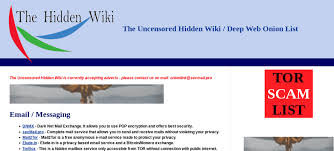
Asking about what is hidden wiki? One must bear in mine that the dark web does not work like the surface web. Instead of a central Google or a universal index, it operates without a reliable way to browse anonymously hosted services unless you already know where to look. Because of this, directories exist to help users navigate an otherwise fragmented environment.
As a result, one of the most referenced starting points is the Hidden Wiki. For many newcomers, the first question is simple: what is hidden wiki, and why is it mentioned so often in conversations about Tor, onion links, and dark web navigation?
In this guide, you’ll find a grounded, educational explanation. Specifically, it explores what the Hidden Wiki is, how it works, what it contains, and the risks and realities that many articles leave out.
Rather than relying on hype or fear-based framing, this piece focuses on how directories function inside hidden networks and, more importantly, how users, researchers, and investigators actually encounter them in practice.
Understanding the Hidden Wiki’s Role in the Dark Web
The Hidden Wiki is not a single official website. Instead, it refers to a category of onion-based wiki pages that attempt to list, organize, and describe dark web services.
Most versions operate as link directories. They publish collections of Tor addresses pointing to:
• Forums
• Anonymous email services
• Whistleblowing platforms
• Privacy tools
• Marketplaces
• Scam sites
• Mirrors and archives
Because onion sites frequently go offline, many Hidden Wiki versions disappear, relaunch, or fork into new copies. As a result, there is no permanent or “verified” Hidden Wiki.
This instability reflects how the dark web itself functions. Sites migrate. Operators vanish. New versions appear. Links rot quickly. Directories attempt to keep up.
To understand how these ecosystems shift, Torbbb regularly analyzes patterns across hidden communities, including how users regroup after major darknet market shutdowns. Directories often become the first place those migrations surface.
What Is Hidden Wiki and Why Do People Use It?
At its core, the Hidden Wiki tries to solve a structural problem: discovery.
The Tor network does not support traditional indexing. As a result, most onion services cannot be found unless someone actively shares the address.
To bridge this gap, Hidden Wiki pages attempt to:
• Collect user-submitted links
• Categorize dark web services
• Preserve mirrors of offline sites
• Act as informal navigation hubs
Because of this, beginners often find them appealing. They seem to offer a map inside an otherwise disconnected network.
However, that same openness also makes them unreliable.
Since anyone can submit links, clone a directory, or insert malicious entries, trust becomes difficult to establish. In most cases, there is no centralized moderation or long-term accountability.
For this reason, security researchers rarely treat Hidden Wiki pages as trusted sources. Instead, they use them only as starting points for deeper investigation.
A Short History of the Hidden Wiki
The earliest Hidden Wiki versions appeared in the mid-2000s alongside Tor’s growing public adoption.
They borrowed the wiki format because it allowed:
• Rapid updates
• Community editing
• Easy cloning
• Anonymous contribution
Over time, hundreds of copies emerged. Some focused on activism and privacy tools. Others centered on marketplaces. Some were purely scams.
When major forums or markets collapsed, directories often splintered alongside them. New versions appeared reflecting new power centers.
Today, most Hidden Wiki pages function less like encyclopedias and more like rotating bulletin boards.
Understanding how communities move between platforms is a recurring theme in Torbbb’s research on darknet forums versus marketplaces. Directories frequently reflect those shifts before they are documented anywhere else.
What You Actually Find on Hidden Wiki Pages
While every version differs, most directories share similar structural categories.
Common sections include:
Privacy and Infrastructure
• Tor mirrors of surface websites
• Secure email providers
• Anonymous hosting services
• Cryptocurrency tools
• VPN and encryption resources
These links often overlap with legitimate privacy communities.
Forums and Communities
• Political discussion boards
• Technical forums
• Whistleblower drop sites
• Research communities
• Archival libraries
These areas are where long-term trust systems develop.
Torbbb’s analysis of dark web vendor trust shows how reputation systems evolve when identities are unstable. The same mechanisms appear inside forum-based communities.
🧪 Monitoring and Intelligence Sources
• Leak indexing platforms
• Breach notification services
• Threat research portals
• OSINT-oriented communities
These sections are frequently used by journalists and cybersecurity teams.
High-Risk Areas
• Market links
• Impersonation pages
• Fraud hubs
• Phishing mirrors
This is where most harm occurs. Many links are outdated, hijacked, or intentionally malicious.
Torbbb documents these behavioral risks extensively in its work on dark web scam psychology.
What Is Hidden Wiki Not?
Despite how it is portrayed, the Hidden Wiki is not:
• An official Tor service
• A verified directory
• A safe browsing environment
• A reliable index
It does not vet links. It does not guarantee legitimacy. It does not prevent tracking, malware, or impersonation.
It also does not represent the dark web as a whole. It reflects only what contributors choose to publish.
In practice, most experienced users treat directories as temporary reference lists, not navigation systems.
How Hidden Wiki Pages Are Created and Maintained
Most versions of the Hidden Wiki run on simple wiki software hosted as onion services. Typically, these sites rely on loose, decentralized maintenance models.
In practice, those models usually include:
• Anonymous editors
• Minimal moderation
• Community-reported link changes
• Automated mirror generation
Because hosting on the Tor network is inherently unstable, operators frequently move directories between servers. When one version goes offline, clones often emerge in its place.
Over time, this cycle creates an ecosystem where:
• Old links persist long after sites vanish
• Fake versions outnumber legitimate ones
• Trust erodes quickly
• Search engines cannot verify content
For this reason, directories are best understood as snapshots rather than maps.
Security Risks Beginners Rarely Consider
The largest danger is not content. It is structure.
Hidden Wiki pages concentrate links. That makes them ideal attack surfaces.
Common risks include:
• Phishing mirrors impersonating real services
• Malware-embedded pages
• Credential-harvesting clones
• Traffic correlation traps
• Scam aggregation hubs
Even clicking links can expose users to hostile environments.
The Electronic Frontier Foundation’s Tor safety guidance explains why operational security matters before exploring hidden services. The Tor Project also emphasizes that onion services do not imply safety, only anonymity. Directories do not protect users from poor decisions.
Who Actually Uses the Hidden Wiki?
Despite media framing, most directory traffic does not come from criminals.
Common users include:
• Journalists researching hidden networks
• Cybersecurity analysts monitoring leaks
• Academics studying anonymous communities
• Privacy advocates exploring infrastructure
• New users learning Tor navigation
Law-enforcement agencies and researchers often monitor directories because they surface early signals of ecosystem change.
Europol has documented how online underground platforms reorganize after takedowns and seizures.
Directories are often where those reorganizations first appear.
What Is Hidden Wiki’s Place in Today’s Dark Web?
Over time, its role has shrunk.
Most serious communities no longer rely on public directories. They use:
• Invitation systems
• Private forums
• encrypted channels
• verified mirrors
• reputation-based discovery
Today, directories primarily serve as:
• Educational reference points
• Link archives
• Monitoring surfaces
• Beginner orientation pages
They are entry points, not destinations.
Torbbb’s ongoing work on dark web community trends shows that trust now flows through relationships, not directories.
FAQ
Is the Hidden Wiki illegal?
No. A directory itself is not illegal. However, some links may lead to illegal content. Responsibility lies with the user.
Is it safe to use?
It carries risk. Many links are unverified. Security hygiene is essential.
Does one official Hidden Wiki exist?
No. There are many unrelated versions.
Can Google index it?
No. Onion services are not indexed by surface web search engines.
Why do people still reference it?
Because it remains one of the most recognizable starting terms for dark web discovery.
Conclusion
Understanding what is hidden wiki requires separating myth from function.
First, it is not a gateway to the dark web. Likewise, it is not a master list. Most importantly, it is not a reliable directory.
Instead, it represents a recurring attempt to organize something that fundamentally resists organization.
Over time, Hidden Wiki pages have persisted because people continue trying to map anonymous networks. Therefore, their value lies not in perfect accuracy, but in what they reveal about how communities surface, fragment, and rebuild.
For beginners, they can provide helpful context. Meanwhile, for researchers, they often deliver early signals. Ultimately, for everyone else, they serve as reminders: the dark web is not hidden because it is secret — it is hidden because it was designed to be unstable.